Showing posts with label philosophy. Show all posts

Saturday, October 23, 2021

Don’t fall for the Activist’s Fallacy

Intent is not the only thing to judge policies or theories on.


Within the expanding debate and political controversies over CRT (Critical Race Theory), the Activist’s Fallacy is regularly on display.

The Activist’s Fallacy operates as follows:
We are doing X because we are against Y.
You are against X
Therefore
You are for Y.
The Fallacy can be recast in negative terms:
We are doing X because we are for Z.
You are against X.
Therefore
You are against Z.
Either way, the Activist’s Fallacy is about making declared intent the dimension on which the entire controversy turns.

It also comes in cry-bully versions, such as:
We want to control speech to stop trans folk harming themselves.
You are against such control of speech.
Therefore
You are against stopping trans folk harming themselves.
In the case of Critical Race Theory, the Activist’s Fallacy comes in versions such as:
Critical Race Theory seeks to confront racism.
You are against Critical Race Theory.
Therefore
You are against confronting racism.
Or:
Critical Race Theory allows us to learn about racism.
You are against Critical Race Theory.
Therefore
You are against learning about racism.
The Activist’s Fallacy relies on declared intent being the only important motivational feature of whatever theory or policy is being put. With motivation being the dimension that all responses have to be graded on.

As a rhetorical and status strategy, this is highly effective. As long as everything can be construed as being first and foremost about intent, then any opposition becomes opposition to the declared intent, just as support becomes support for the declared intent.

Since the intent is, of course, going to be noble, that elevates the nobility of those pushing the theory or policy and de-legitimises any critics. They become malicious, callous, some sort of -ist or -phobe.

There is a lot of colonising of people’s decency going on. As well as people not wishing to have their status as one of the smart and good stripped from them by use of stigmatising labels against them: the submit-or-be-stigmatised choice.

So, by making intent the dimension upon which the controversy turns, motivation becomes the key grading factor. You can’t decide you are against Critical Race Theory because it is false, or because you think it has pernicious social implications. No, it is all about the declared intent of Critical Race Theory and whether you are “anti-racist” or not.

If one accepts the theory that society is a structure of oppression and domination, and that social interactions (including discussions) are all about power relations, then the Activist’s Fallacy is not merely a rhetorically useful status play, it is a natural implication of your world-view.

Which, of course, implies that there are things deeply wrong with your world-view. For the Activist’s Fallacy is still a fallacy. It is still bad reasoning, no matter how rhetorically useful it is. Nor how much of a congenial status play it is.

There are a whole lot of things wrong with Critical Race Theory, starting with it simply not being true that racism is pervasive in contemporary Western societies, or that disparities between groups are primarily the result of current racism, or that persistent disparities demonstrate systemic racism. It is a false analysis of social dynamics. Critical Race Theory’s racialisation of everything is also deeply pernicious in its effects on social dynamics and public policy.

Structural roles

Something that is very clear from the history of investing grand social meanings onto race, aided by “race” having visible physical markers, is that elite race talk is always a divide-and-dominate mechanism. And Critical Race Theory is very much elite race talk: it came out of elite universities.

We tend to over-rate the importance of conscious intent in human actions. As Polish psychiatrist Andrzej Ɓobaczewski (1921–2007) noted:
Unconscious psychological processes outstrip conscious reasoning, both in time and in scope, which makes many psychological phenomena possible…
Political Ponerolology: A Science on the Nature of Evil Adjusted for Political Purposes, p.163.
The over-rating of the role of conscious intent tends to be particularly likely when there are powerful social, institutional or organisational feedbacks and incentives in play. We find it very easy to tell congenial narratives about ourselves — to ourselves and to others — about beliefs (and actions) that may have other reasons to resonate with us. Especially if they also resonate with other folk in similar social positions, so that there are selection processes in favour of developing mutually congenial patterns of action and accompanying justifying narratives.

Instead of asking about conscious intent, let’s consider interests and feedbacks. Let’s instead ask the Who-Whom? question; the who benefits? question.

Who benefits if Critical Race Theory is not subject to searching critique about its factual accuracy and its social implications? Who benefits if US society is more intensely racialised? Who benefits if race-delineated divisions increase? Who gains status and career opportunities from spruiking up such racialising? Probably not workers, local residents or the general citizenry.

Those wielding the Activist’s Fallacy want to tell a noble story about their own intentions and a malicious story about the intentions of those who disagree with them. If they want to play that game, a deeper look at incentives and interests, about why certain narratives are so appealing and to whom, may not take analysis where they want to go.

Recognise the Activist’s Fallacy for what it is: a self-serving evasion. And don’t fall for it. Be prepared to call it out for the dishonest, self-aggrandising, rhetorical ploy it is.

[A previous version was posted on Medium.]

Tuesday, June 15, 2021

Narrative self-enforcement and the refusal to notice

If believing X makes one a good person, then avoiding evidence to the contrary preserves one’s virtue.

Don’t see, hear or speak anything that threatens my identity and standing.

Contemporary progressivism regularly treats failure to embrace various beliefs or narratives as a sign of intellectual or moral delinquency (or both). The various -ist or -phobe terms that get bandied about label people as suffering morally crippling cognitive delinquency.* At its most trenchant, this attitude to dissent leads directly into an ongoing pattern of “submit or be stigmatised”: either accept claim X or be stigmatised as an -ist or a -phobe.

The claim that those who significantly disagree are morally delinquent is often also tied to a claim of intellectual delinquency: that there are either (1) obvious facts or truths about the world that such dissenters are ignoring or denying. Or (2) that there are facts or truths about the world that folk clever enough to notice understand and yet those who disagree are ignorant of. Moreover, ignorant of in a way that is typically taken to either condemn them, or elevate those who do so understand, or both.

Both sorts of claims are claims about being well-informed. That the folk making such judgements are so very well informed about how the world is, what other’s beliefs are, how the crucial factors work, and so on. Such claims imply a certain willingness to make an effort to be so informed.

It is therefore quite striking to see a pattern of quite the opposite. A pattern of people using various techniques to not be informed. Or, more precisely, to not be inconveniently informed. Comedian Konstantin Kisin has observed that, in the Soviet Union, you would avoiding looking at (or into) certain things, for if you did, that would lead to wrong-thinking, which was dangerous. A similar pattern has become increasingly pervasive in Western societies.**

The protective flaw
The most common technique I have observed to avoid being inconveniently informed is finding some reason why some commentator, publication or other source is so inherently flawed that nothing that they say can be taken seriously. What that typically means in practice is that the source in question does not adhere to the correct narratives and perspectives.***

As a way of self-policing the information one receives, it is excellent. As a way of genuinely understanding what is happening the world around us, it is dreadful. Even if the alleged flaws ascribed to the source are actually in some serious sense a problem, just because a source has problem X it does not mean it is not an accurate source about Y. For instance, just because Sir Isaac Newton engaged in numerological examination of Biblical texts does not mean that he was not a great scientist.

Statements should be judged on their factual merits. But this is precisely what is not being done. Instead, their author or bearer’s alleged position in the moral universe is taken to eliminate the possibility of them providing useful information.

This is both a very bad strategy to being genuinely informed about the world and an attitude that is deeply corrosive to freedom, democracy and science. If a person, group, publication or whatever can be so comprehensively dismissed, then their entire participation in public discourse becomes “problematic”. The narratives of virtue are apparently so powerful, that it enables people and sources to be entirely cognitively dismissed in advance. While that is a deeply self-flattering attitude to take, it is also utterly incompatible with any serious commitment to freedom, democracy and science in its utter dismissal of any legitimacy for dissent and its blocking of anything resembling serious discovery processes.

A version of this strategy is to dismiss some perspective or analysis because of who also endorses, propounds or agrees with it. This is, if anything, even worse because it makes cognitive and moral illegitimacy contagious.

Such strategies are very obviously products of status strategies. They exemplify a sense of being profoundly morally and cognitively superior to any proponents of dissent.

Hijacking science
As part of the rhetoric of moral dominance, the hijacking of science to support narratives of virtue has become a recurring pattern. Such hijacking is a perversion of science in the service of establishing moral authority and narrative dominance. Philosopher Matthew B. Crawford, author of Shopcraft as Soulcraft (a nice review of which is here), expresses the fundamental conceptual error involved well:
You can’t really follow the science because science does not lead anywhere. It can illuminate various courses of action, for example by quantifying the risks that attend each, to specify the trade-offs. But it can’t make the choices for us.
Via such slogans as “follow the science”, science is being used as a rhetorical bludgeon in service of moral presumption. Any notion of rule by or through experts, including alleged moral experts, has to involve some moral framework, typically embedded in some legitimating discourse, that frames and directs the expertise. By pretending proper social action is a matter of “following” “the” science, the underlying moral framework is both hidden behind science (or claims about “the” science) and elevated out of the realm of the legitimately contestable.

As Crawford points out, falsifiability is a key to what makes science, science. Authority, on the other hand, requires certainty (or, at least, an aura of certainty). Turning science into a tool and prop of authority means trading in what makes science, science in the service of generating deference. Science becomes incorporated in alleged certainties, so a faith system, so becomes something more like a religion.

To wield science in such a way is to profoundly undermine it as a discovery process. This undermining is very congenial to all those who regard science as a tool of patriarchal, heteronormative, white supremacy. It is not remotely a path that is in any way good for the health of science. Nor for freedom of thought, nor for democracy, as any dissent becomes “anti-science” and so illegitimate.

Crawford makes the point that the expanding rule-by-expertise, which is also to a significant degree rule through emergency, involves:
... a de-legitimising of common sense as a guide to action.
This fits in very nicely with “woke” progressivism, which characterises the entire existing society as a set of moral emergencies due to being a structure of power, oppression and marginalisation. Such progressivism also pushes moral narratives regarded as of such obvious moral power that any significant dissent is inherently delinquent. It grounds its justifications in complex theory. It sets up a structure of ever-evolving linguistic taboos developed by, and selected for, the highly educated in a way that naturally tends to exclude those who are less educated from the realm of legitimate public discourse. “Follow the science” and the de-legitimising of common sense supports all these elements.

One of the reasons I have trouble identifying contemporary critical constructivist (i.e. “woke”) progressivism as “left” is because it is so profoundly antithetic to popular, and particularly working class, participation in public debate.

Identity self-protection
This hijacking of science as a moral bludgeon in the service of the prestige-and-dominance plays that are central to contemporary progressivism fits in very well with narrative self-enforcement. If progressivism is just “follow the science”, then any dissent must be “anti-science”. Anything that is “anti-science” is clearly not worth attending to, so can be excluded from one’s consideration, thereby protecting your adherence to the narratives that establish one as one of the smart and good people.

Such narrative self-enforcement, such not noticing, is required to sustain the claim that one has to believe X to be a good person, the more so the more particular to a time and place such a belief is. And many of the current you-have-to-believe X-to-be-a-good-person claims are very particular to this time and place. Such as all the results of conflating sex (which gametes your body is structured to produce) with gender (the sets of behaviours, expectations and cultural narratives associated with how your body is structured).

When folk wonder how mad and destructive claims keep spreading, the short answer is because so many folk have come to believe that either endorsing them is required to show you are a good person, that you are an informed person, that you are a smart person, or that adversely noticing their spread deprives you of such status. So long as such claims, or such avoidings of noticing, continue to be successfully paraded as being what the smart-and-good-people believe and do, people will continue to practice narrative self-enforcement so that they can stay within the set of persons who constitute the smart and the good.

If I wanted to summarise contemporary progressivism in one sentence it would be (1): the systematic sacrifice of discovery processes in the service of moral status. (Including shielding one's moral status.) Or (2) the possessors of human capital and the possessors of commercial capital getting together to screw over the working class. (But that is a pattern for another time.)

Narrative self-enforcement, blocking one’s own acquisition of inconvenient facts or confronting realisations, is engaging in such systematic, sacrifice of discovery so as to protect one’s sense of being one of the smart and the good. Doing so, so as to clothe oneself in the protective public status of being such.

I used to wonder how people in the past could not notice that the social system, or key parts thereof, that they relied upon was threatening to, or was, collapsing around them. I now realise that it can be remarkably easy to simply refuse to see what is too cognitively threatening to notice.

ADDENDA

*For instance, finding some statement that, if you squint at it in just the right way, can be derided as racist, thereby discrediting everything from that person or source.

**Commentator Steve Sailer has just about built a career on noticing how (progressive) folk refuse to notice.

***This can be used to discount an individual, a group of individuals or an entire organisation.

[Cross-posted from Medium.]

Monday, June 14, 2021

The One-Stop Explanation of Why Marxism is Toxic Crap

The human disasters of actually existing Marxism flow directly from Marx’s theories.

Two toxic theorists and three mass murdering tyrants.

The most obvious feature of Marxism is that it has been the ruling ideology of a series of tyrannies, some of which murdered millions of their own citizens and all of which performed worse, typically disastrously worse, than their “capitalist” equivalents in promoting human well-being. The last point has been established by a series of clear natural experiments (North and South Korea, East and West Germany, China and Taiwan) but it also obvious if one just compares outcomes between reasonably similar states.

Communism (i.e. revolutionary Marxism) was strategically the best thing that ever happened for the US because it hobbled the two states most able to rival it, Russia and China. Both states have significantly fewer people, less wealth and lower standards of living, than they would have if neither had ever become Marxist.

Despite this disastrous history being the most obvious feature of Marxism, there are plenty of people who still call themselves Marxists. They give this appalling history a series of hand-waving evasions that they would not, for a moment, grant to “capitalism”. Apparently, around a 100 million deaths in purges, persecutions and terror famines (i.e. from deliberate policies of Marxist regimes) and an unbroken series of tyrannies is not enough evidence that there might be something a bit wrong with the original theory.

The justification will be something like “they did Marxism wrong”. This is just a hand-waving evasion. If you get the same basic pattern every time, then the outcome is inherent in the ideology.

Marxism is based on two (interacting) fables that go back at least to Adam Smith (1723–1790). One is the labour theory of value whereby any return from production that does not go to the workers is return on labour that labour does not get. The other is the theory of class that emerges from the labour theory of value.

Getting class completely wrong
Marx’s theory of class is that it is based on the extraction of surplus (the return from labour that labour does not get) by landlords and capitalists. The state is the instrument or manifestation of the underlying class structure of society. This is a version of an historical fable that, even today, most social scientists accept some version of and has long dominated scholarly thinking about the state.

This historical fable is that when humans developed farming, farming created surplus and social hierarchy from which the state arose. The state can therefore be understood as essentially an extrusion of the society that creates it. Marx’s famous statement that in capitalist societies [t]he executive of the modern state is but a committee for managing the common affairs of the whole bourgeoisie belongs firmly within this standard historical fairytale tale, one promulgated by Adam Smith and his intellectual heirs (which includes Karl Marx).

Almost every element of this fable is incorrect. First, farming does not, by itself, create a surplus (that is, production in excess of subsistence). Farming does greatly increase food production, increasing the ability to extract useable calories from the arable landscape by up to a hundredfold, but that just leads to more people.

For most of human history, extra food mainly meant extra babies. That is, more humans, more human biomass. This was a far stronger result from farming than any creation of more resources per person. Especially as it generally did not result in any such increase.

Farming created more human niches rather than noticeably larger human niches. Indeed, it tended to create smaller human niches (in the sense of health and nutrition quality) than foraging, just (a lot) more such niches. The health of people living in farming societies was persistently worse than that of foragers. 

The metabolic health costs of farming were worth it adaptively because they lowered the cost of individual children, so enabling people to have more children. In the genetic replication game that is evolution, farming was definitely a big winner over foraging.

Human societies thus remained within the social dynamics originally analysed by the Rev. Thomas Malthus (1766–1834) of population tending to increase to consume the food available. For farming to create a continuing and substantial surplus, food had to be intercepted and diverted before it led to more babies. (Technological and commercial surges in available resources provide complications that need not detain us.)

Direct expropriation of food on any scale was only practical if there was significant stored food. This is why most farming societies did not create states. States arose in only a relatively small minority of farming (and no foraging) societies. Though all societies, including all farming, pastoralist and foraging societies, eventually had states imposed upon them.

Farming generally results in significant amounts of stored food only if one is harvesting seasonal crops, notably grains. (Also potatoes, as potatoes are a seasonal, temperate crop that is relatively non-perishable, so function like a grain.)

If one grows crops that can be harvested all year around, there is normally no significant storage, so no significant amounts of food to be systematically, and recurrently, seized before it supports more babies. New Guinea, in all its thousands of years of farming, trade and conflict, never produced anything resembling a state, or even a chiefdom, because it is a land of crops harvested all year round, with minimal storage of food. It lacked the taxable resource-base for chiefdoms and states to arise.

Moreover, if one is living off seasonal crops, it becomes vital to ensure that (1) the stored food is available between harvests and (2) the stored seed-grain is available to sow next year’s harvest. Seasonal crops thus create a particularly intense protection problem. Even more so if there were other groups, especially pastoralist nomads, within raiding range. That protection problem encouraged the rise of specialist protectors (or organisers of protection), thereby providing a basis for the development of coercive power across generations: the basis for creating chiefdoms and states.

The benefits of coordinating protection opened up the possibility for the systematic and recurrent appropriation of stored food sufficient to create and sustain chiefdoms and then states. Societies did not easily nor simply go from farming villages to states. There had to be some build-up of the capacity to defend, to coordinate and to appropriate. Hence chiefdoms preceded states (but not all chiefdoms created states).

So, the farming-leads-to-surplus-leads-to-states fable about the origin and nature of states falls over at the start. The story about hierarchy is not much better. Most farming societies did not create much in the way of social hierarchies. Stored food was the dominant source of social inequality and hierarchy. Though inequality and hierarchy was also a feature of controllable resources generally (such as salmon runs). But only some farming leads to stored food and only some stored food comes from farming. To generate enough surplus to support a state requires systematic and recurrent generation of enough stored food that the state can then appropriate sufficient food to reliably support itself.

Sedentary foraging societies with stored food (e.g. salted fish) could and did generate social hierarchy, chiefdoms, slavery and warfare. It was stored crops, particularly grains, that usually generated the scale of resources required to generate states. (Sub-Saharan Africa, with its mixture of seasonal and non-seasonal crops, generated trade-and-slavery states, but trade also generates a storable goods protection problem.)

States and class
Once the state evolved in (or was imposed on) any society, it dominated the generation of surplus in that society. In a real sense, each state had to remake its originating society so as to sustain itself (and then impose the same remaking on any areas it conquered).

The state was almost invariably not some “extrusion” of a society, it was the dominant structuring element in its society. If it could not structure society so as to sustain itself, it would either not arise in the first place or, if it could not sustain the required structuring of society, it would collapse. Even cooperative-bargaining (i.e. non-autocratic) states remade their societies. An example being the abolition of lineage-based tribes within both Athens and Rome and their replacement by territorial designations depending on where in the city one lived. (Judging by the disappearance of kin terms differentiating male- and female-line kin from classical Greek, such replacement of lineage-based kin groups seems to have been a general pattern in Mediterranean city-states.)

The first, and arguably the greatest of historical sociologists, Ibn Khaldun(1332–1406) discussed states structuring their societies, using the Aristotelian language of form for structure rather than the more economistic language that we are, post-Marx, used to. Thus he writes:
… dynasty and royal authority have the same relationship to civilization as form has to matter. (The form) is the shape that preserves the existence of (matter) through the kind of (phenomenon) it represents. It has been established in philosophy that one cannot be separated from the other. One cannot imagine a dynasty without civilization, while a civilization without dynasty and royal authority is impossible, because human beings must by nature co-operate, and that calls for a restraining influence. Political leadership, based on either religious or royal authority, is inevitable. This is what is meant by dynasty. Since the two cannot be separated, the disintegration of one of them must influence the other, just as its nonexistence would entail the nonexistence of the other.
(Ibn Khaldun, Muqaddimah, Chapter 4, Section 1.)
In other words, the state structures society. It cannot be assumed to be the extruded product of a society.

Perhaps the most extreme example of such structuring is provided by Egypt, which generated the quickest, and most thorough, transition from seasonal-crop farming to highly centralised state. Yet, from the flight of pharaoh Nectanebo II in 343BC to the officers’ revolt which overthrew the Albanian Alawwite dynasty in 1953, Egypt was ruled by foreign empires or foreign dynasties. For almost 23 centuries, there was a state in Egypt, but there was not an Egyptian state. Even if each iteration of the state in Egypt adopted the techniques for exploiting Nile valley farmers developed by the pharaohs, whatever state ruled Egypt was not an extrusion or product of the society it ruled. It imposed structures on that society congenial for its continued rule and reflective of its (external) origins.

States are typically not creations of class structures. Typically, they have been the dominant creators of class structures. States have dominated the creation of class structures as they have dominated the extraction of surplus and, typically in alliance with priesthoods and clerics or (in the case of China) secular clerisies, dominated the socialisation of function: what status various social groups had; what access to surplus they had and on what basis; what were their rights and obligations. Surplus + socialisation of function => class structure.

So, states themselves are, historically, the dominant extractors of surplus and the dominant creators of class structures. The former is still true, by the way. Look at the size of the tax take in any Western democracy. It is way larger than the profit share of GDP. (Though, in the sense of income above subsistence, technology and economic structures dominate the creation of surplus, with the state taking far more of that surplus than do company profits.)

But the most dramatic example of states as the dominant creators of class structures is provided by every revolutionary Marxist state. In each case, the ruling regime seized the state, atomised society and restructured society to serve its own power and purposes, thereby creating the class structure of its society. Marx’s theory of class proved to be self-refuting by Marxism.

Marx’s theory of value claimed that surplus came from exploitation of labour by landlords and capitalists. So, if you abolished such exploitation, you abolished class. Marxist regimes abolished such designated exploitation by concentrating all social power in the hands of the ruling regime via the state: the actual historically dominant extractor of surplus and creator of class structures. So, of course Marxism-in-power created murderous tyrannies run by elites who extracted the surplus from society for their own ends.

Stalin was able to extract far more surplus for his own purposes from a smaller-in-territory-and-population Soviet Union than Tsar Nicholas II had from the larger-in-territory-and-population Russian Empire. Stalin created one of the largest slave systems in history. He (re)imposed serfdom, as people were not allowed to leave a workplace without the workplace’s permission. The Kim regime in Korea is, in effect, a recreation of the dynastic God-kings of early states, with more advanced technology.

This pattern of tyrannical regimes extracting surplus for their own ends was not some weird, recurring accident. It was a direct result of Marx getting class fundamentally wrong.

Getting value wrong
So, why did Marx get class so completely wrong? Because he got value profoundly wrong.

On this point, as elsewhere, there is not much point in engaging in some forensic analysis of what Marx actually wrote. While he was a rhetorically powerful reasoner (and asked some good questions), he was also a persistently dishonest one. That is, when he makes some claim that might be critiqued he adds in some fudging protection, so that he can always point to the protective fudge to evade critique. As he put it in a letter to Engels, one just uses a bit of dialectic to get out of any difficulty in analysis.

So, consider Marx’s basic characterisation of profit: the return on labour that labour does not receive. Why do people engage in labour? Why did our original foraging ancestors engage in effort? To gain something they wanted. Why did they want it? Because it has some feature of characteristic they needed (nutrition) or otherwise valued (it tasted good, it was fun, it made getting food easier, and so on).

So, the labour was directed to what people valued. That is the basic connection between labour and value: labour is typically directed to what people value. If the labour is successful, the value is gained. If the labour is not successful, then the value is not gained. Since success is not measured by the labour, labour is not the source of value. It “creates” value only in specific circumstances.

So, labour is the “source” of value only if one completely ignores the discovery process involved in applying labour, in putting in effort, to successfully achieve value. Human history is fundamentally a history of discovery. The way labour is applied always relies on some previous process of discovery. Indeed, all of evolution is fundamentally a process of discovery: discovering what can be successfully replicated.

What increases the value that labour, successfully applied via discovery processes, provides? Well, land for one. Foragers engaged in a lot of search activity to find that which they valued. What was available to be discovered made a big difference in how they went about that (how they applied their labour) and what they were likely to discover (what was the outcome of doing so).

Foraging, especially hunting, is a skilled activity. People had to learn skills to be effective foragers. In contemporary foraging societies, the productivity of foragers peaks at about 45 years of age. As humans increasingly adopted skill-based foraging techniques, that meant that older males could be desirable mates. The older the male, the longer the telomeres of their offspring tend to be, so the longer such offspring tended to live. This resulted in more human females living past menopause, which enabled them to finishing raising the children they had when they were about 40 and to invest in the children of their children (as they stopped having children of their own).

The learned skills that meant productivity of the provisioning human males peaked at an older age were the cognitively incorporated — indeed embodied, including via muscle memory — results of discovery processes. Labour is always effort + (past or present) discovery. Skilled labour simply incorporates a higher level of (past) discovery.

What’s another thing that increases the value that labour, successfully applied via discovery processes provides? Tools. Which are a form of capital, the produced means of production. Humans became tool makers because that made their labour more productive. As skills are learnt, they are also a produced means of production, so human capital.

So, the more (useful) land, the more capital (including human capital) and the better the discovery processes, the more value the application of labour is likely to provide. Workers in developed economies have much higher wages than folk generally do elsewhere, or in the past, because they are supported by a great deal of productive land, capital and accumulated discovery processes.

How does one get folk to look after the land, provide capital and engage in discovery? Make sure they gain benefit from doing these things. Why does every society ever known generate returns to land, capital and discovery? Because these things magnify the value that labour can achieve.

Together, they create value in the sense of providing things people value. But the value comes from people’s reaction to the things provided. Economic activity “creates” value in that sense, and that sense alone. It “creates” value if it is successfully directed towards providing things people value and does not “create” value if it is not, regardless of how much labour and other resources might have been applied to such activity.

There is another feature of economic activity not yet covered in the above. That is risk. The notion of discovery implies the possibility of not discovering. Or even of disastrous discovery (e.g. that thing that tasted OK was actually poisonous). Search involves risk. Effort involves risk. Not doing anything involves risk. Risk has to be managed. Good risk management is a very useful thing. It makes creating value, particularly doing so recurrently, from the application of a given amount of resources much more likely.

Human foraging is cooperative. In contemporary foraging societies, individuals vary in their social connections, what anthropologists call relational wealth and economists social capital. Such connections function as information (i.e. discovery) networks and risk management networks, as they are constructed by exchanges of favours. Management of risk has always been part of human activity and social organisation. So has land, so has capital.

The analytical advantage of starting with foragers is:
  • that is where we came from, and
  • we can see basic economic patterns without exchange being a major factor. (Though evidence for exchange dates back to our emergence as a species.)
If exchanging something we produced or acquired for something that someone else produced or acquired has been going on for our entire history of a species, a mere 200,000 years or so, then we are probably adapted to engaging in exchange. Producing things for sale, for exchange, is not, in any useful sense, inherently alienating.

Though it is not exchange itself that is allegedly alienating. Rather, if labour creates (all) value, then any value from productive effort that does not go to labour is return from labour they did not receive. That is allegedly the source of alienation.

Those familiar with Marx’s writings, or Marxist theory, will notice I have ignored the use-value/exchange-value distinction. (Mainstream economics calls the first utility, and the second price, where cost is what you pay or imposed, which may or may not be priced.) This is because:
  1. exchange-value is driven by use-value, including use in exchange, as all exchange is driven by variation in valuations: we exchange what we value more for what we value less; and
  2. it is perfectly possible to make key points by considering foraging economies where exchange is not a major factor — they are instead dominated by connection and pooling. It makes it easier to see that that use-value/exchange-value distinction does not get you where Marx wants to go with it.
So, moving to an exchange economy, you put land, labour and capital together in the hope of creating more value than was consumed. Suppose you fail. That is, you make a loss. Who covers the loss? Who is in the best position to cover the loss?

Generally speaking, not the workers. They generally lack the resources to do so. More importantly, they lack the control to do so. Forcing folk to cover losses from processes that they do not control is a very bad incentive structure. So, the person who covers the loss better have sufficient control over the processes of production to affect the pattern of risk. Why would they cover the loss? Because of some hope of gain.

You could pay them to cover the risk of loss. That is how one gets an insurance industry. Or, you could have them not only cover the losses, but also gain the profits. That provides them with an incentive to cover losses and to organise production so that profits are more likely.

Hence the structure whereby business are owned by the people who put up the capital to cover the risk of loss and, in return, receive the profits. Does this remotely look like “the return from labour that labour does not gain?” Or does it look like the return from taking on the risks, from engaging in discovery, from organising land, labour and capital to be productive?

Would labour be as productive without those things? Does doing those things make the labour more valuable? Does doing those things increase the return to labour? No, yes, and yes. Hence firms and workers can contract for mutual gain.

The labour theory of value “works” by assuming success. By assuming that production of value is successfully achieved when labour is applied to production. So you don’t have to worry about discovery, risk, consuming more value than you produce, etc. But that just assumes away a whole set of hard questions.

If all the value of production is returned to the workers in an enterprise, how do you pay for upkeep of land, acquiring and maintaining capital, managing risk, discovery processes? No enterprise can operate for any length of time by returning all the value it produces to labour. So, burbling on about “return to labour that labour does not receive” is nonsense on stilts. Especially given how much all these things affect the success of the application of labour. Firms generally don’t happen by workers congregating together and assembling the processes for creating value, as there is a lot more involved than labour.

Marxist states were appallingly bad at looking after the land and at maintaining buildings and equipment, were not good at providing capital for anything beyond the convenience of the regime. Nor were they good at discovery processes (apart from stealing other folk’s discoveries). Why? Because they were command economies and based on Marx’s labour theory of value, with the latter tending to exacerbate the problems of the former. All value was deemed to be created by labour: not by land, capital or discovery. Folk owning land or capital was inherently exploitive because they extract a “return from labour” that labour does not receive. The consequences of this fundamental misreading of the processes of creating value were predictable, and predicted.

Pretending that payment for use of land, for creating and maintaining capital, managing risk, and discovery processes is not payment for value received is just another hand-waving evasion. As is pretending that it is payment for labour. Value is what labour (and use of land, and use of capital, and discovery processes, and risk management) is directed towards. Value is only produced by any of these things, including labour, if it is successfully so directed and is much more likely to be achieved if all these things are successfully so directed.

Property as incentive structure
The notion of private property emerges very early in human history, though it does not become a major feature of human societies until the development of sedentism, farming and pastoralism. The basic idea of property is not mine! — any silverback gorilla male with a harem can do that — but yours!

Exchange is a fundamentally normative activity: it makes what was yours, mine and what was mine, yours. We humans engage in exchange so readily because we are a far more normative species than are our primate near relatives. Our normative and cooperative capacities have made us the global ape.

Chimpanzees conform much more to the predictions of game theory in strategic games than do humans because they are less normative than are humans. A Pan troglodytes in a lab is distinctly more homo economicus than are Homo sapiens.

As a group-living species that also pair-bonded, some notion of yours! had to develop to permit pair-bonding to happen. That is, both the males and the females in the group had to acknowledge some sense of the pairing being off limits to others.

In contemporary foraging societies, young folk do not “break even” in their calorie contribution to the group until about age 20. On average, in such societies, males dominate the provision of protein to the group, provide a majority of calories to the group and overwhelmingly dominate the provision of protein and calories to children, once they are weaned. There was no evolutionary stable alternative than investment in children that they could be reasonably confident were theirs to getting males to provide for children at the consistency and level needed to raise such remarkably helpless human infants into adults, a process taking about 20 years.

(Investing in one’s sister’s children — i.e., substituting unclehood for fatherhood — is a possible alternative, but it operates as the main mechanism of male provision for children in a very small number of societies. Given that nephews and nieces are more genetically distant from oneself than are sons and daughters, it is an inferior gene replication strategy. One typically adopted in circumstances of high uncertainty about the paternity of individual children.)

Once you have farming and pastoralism, then property rights develop in earnest. Having someone gain the benefits from controlling some thing (or some attribute of the thing) is often the only stable way to get around free rider problems and tragedy of the commons. It motivates better use (and maintenance) of the owned thing. This is why property rights are such a pervasive feature of human societies. Indeed, substituting control of attributes by their agents for more widely distributed property rights is often done by the powerful so as to make it easier for them to appropriate the labour, or products of the labour, of others. This was as true in Pharaonic Egypt as in Stalin’s Russia, Mao’s China or Kim Dynasty Korea.

When regulation in modern societies goes wrong, it often does so by poorly aligning effective control over an attribute with the incentives to productively use said attribute. This is particularly likely to be true when discretionary power is given to an official. Especially as corruption is essentially the market for official discretion: the more official discretions there are, the more extensive such corruption is likely to become.*

Regulation, especially if it involves considerable official discretions, can often be a considerable source of commercial risk. This tends to favour larger enterprises, as they can better manage such risks. Being larger provides them with more capacity to influence, even manipulate, regulatory processes. This perverse interaction between regulation, risk and response can be seen in any jurisdictions that engage in extensive land management via official discretions.

The coercive basis of the state, and its consequent ability to operate with, even benefit from, poorly aligned incentives makes it a much less reliable mechanism for encouraging human flourishing than is often assumed. Especially as you functionally pay an organisation to do what makes its income go up. Thus, government health systems get more income if the metabolic health of the citizenry gets worse, not better. Government health systems colonise the ill-health of the population, so have pervasive institutional interest in metabolic health getting worse, as it has. Hence crap official nutrition guidelines that are not based on sound science but are generating obesity even in the US armed forces.

When Western states gave up their territorial colonies, they switched from colonising other people’s societies to colonising their own. (We call this process of internal colonisation “the welfare state”.) Much of that has involved colonising social pathologies, with the income streams received by state organisations tending to increase as the social pathologies that they are tasked with “solving” increase.

Perhaps the best protection for state action is being judged by the publicly declared intent of policies. (Which is, of course, much easier to do than ferreting out actual effects, especially as they often require consideration of counterfactuals.) Marxism has very grand intentions. So do Marxist states. As they will tell you. At great length.

Command economies become increasingly corrupt over time because they are so pervaded by official discretions. Informal “grey” market or illegal “black” ones emerged to try and keep the command economies working. They were both necessary to get around the pathologies of the system and a result of those pathologies. Command economies are also bad at managing and maintaining assets as those in control of such assets do not get sufficient (sometimes any) return from better management.**

When Austrian school economists von Mises and Hayek criticised command economics on the basis of the inability to calculate value, they under-estimated the resilience of actually existing socialism because people adapted to the pathologies of the system. The informal and illegal markets, and other adaptations, were not enough over the long run. But they kept the command economies functioning longer and better than they otherwise would have. (Especially as it turned out that the planners were surreptitiously putting market information from the West into their plans.)

As all human societies have to grapple with free rider problems and the tragedy of the commons they have evolved a range of responses to deal with them. Which can include local resource management regimes. How arrogant do you have to be to think that abolishing all the mechanisms that evolved to deal with such problems was remotely a clever thing to do? Marxist-level arrogant.

Though, with critical social justice and its associated forms of critical constructivism, we are getting a new wave of such arrogance, one concentrated more on cultural rather than economic revolution. Then again, critical constructivism is, like Marxism, also a form of transformative, golden-future progressivism. One that traces much of its intellectual lineage back to Marxism and, like Marxism, represents the worship of the golden-transformative-future splendour in progressive heads.

Not only crap, but toxic crap
Marxism has disastrous outcomes because it is a crap theory of class based on a crap theory of value. Marxist historians can only make their analytical framework work by either ignoring whatever parts of history don’t fit or by ignoring the framework whenever it gets in the way of doing good historical scholarship. But Marxism does give its adherents a reassuring, though false, sense of understanding how societies work, how history works and the direction that history is going in.

Marxism is a manifestation of progressivism: of belief in a transformative golden future that is taken to inherently ennoble its adherents. It encourages mutual worship of the splendour in their heads. It provides a heroic narrative that adherents can write themselves into. All based on disastrous falsehoods.

With enough mutual worship of the splendour in progressive heads, any amount of tyranny, mass murder and mass death is possible. As we have seen again and again.***

This is what makes Marxism not only crap, but toxic crap. Marx’s “From each according to his ability, to each according to his needs” (Jeder nach seinen FĂ€higkeiten, jedem nach seinen BedĂŒrfnissen), a vision of a society without alienation — a vision of a splendid future so golden that any sacrifice for it is worthwhile — is combined with a disastrously wrong conception of value and economic processes and, as a consequence, a disastrously wrong conception of class and, as further consequence, a disastrously wrong conception of the role and dangers of the state.

The awful human cost of Marxism in power is not a result of some perversion of Marx’s thought. It is a direct consequence of his theories. It is a result of Marxism’s disastrous pretensions to, but profound failures of, understanding combined with justifying moral grandeur.

Tens of millions of dead in an unbroken series of tyrannies testify to how much Marxism is toxic crap. It represents neither understanding nor moral grandeur. Just delusions of understanding lost in self-flattering heroic narratives that shield those adherents from self-understanding. Or asking the right questions to gain understanding. Marxism is toxic crap at so many levels.

Yet Marxism remains profoundly influential, including via critical theory and its offshoots. Not due to its analytical value, still less its moral value, but because of its rhetorical power and its ability to generate self-flattering, but profoundly mistaken, senses of moral and social understanding.

We are a group-living species. So we are a status-concerned and status-driven species. Between the heroic narrative, the sense of moral grandeur, the mastery of arcane terminology, the sense of purpose, meaning, and understanding, Marxism--like golden, transformative future progressivism generally--is the basis of an industrial-strength collective status strategy. It turns out it does not need to be accurate about the world, it just has to provide the right motivation, the right sort of appeal, to enough folk who are happy to derive their sense of status and identity from what is in their heads. Apparently, no amount of tyranny and mass murder can trump that.

ADDENDA

*Corruption need not be financial. There can also be moral and intellectual corruption whereby officials substitute status strategies, that is personal social or cognitive benefits (including ideological self-satisfaction), for genuinely public-interest-focused performance of their duties.

**It is a misnomer to think of command economies as abolishing property rights. They confiscate private property and allocate legal property rights to the state. But economic property rights, control of things and attributes of things, are distributed across the apparatus of the state because such control has to be distributed for production and resource management to function. Distributing economic property rights across the state apparatus does so in ways that tends to suppress key information feedbacks, misaligns incentives, undermines quality control and encourages waste. Command economies are, in no sense, “solutions” to any alleged problem of property rights. They magnify such problems in ways fundamentally antithetical to human flourishing.

***There is also the problem of such regimes selecting for pathological personalities. The notion that commitment to the transformative golden future is ennobling provides cover for Dark Triad personalities while the creation of a single hierarchy of power in revolutionary command economies provides them with a single target to aim at. Their narcissism makes them self-focused on personal advancement, their Machievallianism makes them effective players of the self-advancement game and their psychopathy minimises any self-constraint on their actions, making them more ruthless players of the self-advancement game. Needless to say, selecting for pathological personalities, and handing them great power over others, is not good for promoting human flourishing.

[Cross-posted from Medium.]

Sunday, June 13, 2021

“Scene-missing” Progressivism

Progressivism has great strategic and rhetorical power, and recurring intellectual patterns, yet institutions it dominates tend to decay.


Progressivism, in all its forms, justifies itself, both as a system of belief and in its rhetoric, by its commitment to a golden, transformative future. This is an enormous rhetorical advantage, as the imagined future can be much more morally grand than any actual existing present or past, with all the trade-offs, inconsistencies and failures anything that actually exists must entail.

It is commonly held by progressives that that very commitment to the golden, transformative future, free of whatever sins or evils a particular form of progressivism focuses on, is itself morally ennobling. This is, of course, very self-flattering. But it also strategically useful, as it is a great way to hide, both from themselves and from others, strategic behaviour for their own benefit. Something we humans are very good at doing.

Strategising status
It is much easier to pursue shared interests if such interests can be paraded as, and bundled within, a noble cause while those with different interests and concerns can be portrayed as motivated by malign, or otherwise morally reprehensible, interests or concerns. A sense of one’s own righteousness can be an excellent cover for self-interest. Especially if it is used to block awkward information.

The commitment to the golden, transformative future that is the hallmark of progressivism is typically taken to be so ennobling, that no serious dissent from the golden intent is regarded as legitimate. Claiming to be motivated by inherently ennobling concerns is a potentially powerful prestige-and-dominance strategy.

The ostentatious moral concern provides a path to prestige, but only if dissent from the commitment to the golden, transformative future, and it attendant claims about the world, lacks prestige. Indeed, the more dissent is taken to involve negative-prestige (i.e. moral shame or malice) the more prestigious is the ostentatious moral concern.

Conversely, if alternative views are legitimate, there is far less prestige to be had from taking any particular position. There is thus strong pressures and motives to pass off the attendant beliefs of progressivism as being what the smart and good people believe. So, if you dissent, you are clearly either not smart, not good, or neither smart nor good.

The delegitimisation of dissent from the noble progressive concerns then provides a path to dominance: to destroying the reputation, career, standing, the ability to participate in public discourse, of others because they are clearly morally shameful or malevolent in failing to embrace the intent that flows from embracing the golden, transformative future. All of which makes it easier to increase the standing of, and resources flows and opportunities to, people like you.

Progressivism, with its belief in the morally ennobling nature of the commitment to the golden, transformative future, is thus naturally inclined to become the mutual worship of the splendour in progressive heads. A highly motivating conjunction of cognitive identity, a sense of belonging, a sense of status, and a sense of purpose and meaning, all wrapped up in said mutual worship of the splendour in their heads. With, in contemporary society, much of institutional (and social) media operating to intensify these effects.

For much of the institutional media has become organised around both following the status strategy themselves and in playing to the status strategy in others. Hence the pushing of various media narratives as establishing what good (and smart) people believe. And, of course, who to despise and reject. Which is the other side of status strategies. Journalists within institutional media have increasingly become frightened of what the reactions of other journalists would be if they publicly departed from what has become the “proper” opinions.

We are a group-living, pair-bonding species. So we tend to have very strong status drives as well as concern for reputation. The status benefits, and rhetorical advantages, of progressivism have clear motivational power. Especially if they get reinforced by mutual signalling. Fear of being cast out if one dissents from any views that status strategies, and cognitive identities, embrace is another motivator to avoid dissenting.

Heroic narratives
We are narrative beings. We seek to be the heroes of our own life narratives. Each form of progressivism offers precisely such a heroic narrative. One both grand (so psychically inflating) and shared (so mutually reinforcing). For what can be more grand than transforming society, transforming human possibilities, transforming the global order?

But a heroic narrative naturally also entails allocation of villainy. The more wicked the villains, and the pervasive the villainy, the more heroic opposing them is. This is why “fascist!” and “Nazi!” are so commonly part of progressivist rhetoric, for it makes their moral heroism all the grander (above all to themselves). It both manifests, and intensifies, their heroic life narratives.

Hence also the emotional and relational aggression which is so much a part of progressivism. It is as if they are looking for reasons to despise millions of their fellow citizens. As, of course, they are. Hence the characteristic public emotions of progressivism, ranging from smug condescension (to all those not as good and clever as them) to vicious hatred. Such pervasive emotional aggression then generates among others submission (to avoid being subject to it) and counter-aggression (in defensive reaction).


Any process of polarisation, any forming of in-groups and out-groups, will have tribalised emotional aggression attached to it. The expanding progressive domination of the cultural commanding heights gives the emotional aggression of progressivism a great deal of institutional power and rather stronger patina of (pseudo-)sophisticated intellectual justification and cover.

Emancipation movements
Pausing here, we need to distinguish progressivism, the belief in the golden, transformative future, from the sequence of emancipation movements that has unfolded across the last two centuries or so: the abolition of slavery, Catholic Emancipation, Jewish Emancipation, adult male suffrage, votes for women, the civil rights movement, the expansion of women’s rights, queer emancipation. While progressives were somewhat involved in some of the above movements, none of these movements were primarily driven by progressivism. They were not based on creating some golden, transformative future but instead sought inclusion in what already was. They sought a common moral status, a common civil status, based on a common humanity. They also represented, in the context of falling communication and transport costs and rising mass prosperity, the widening of participation in political bargaining that reaches deep into the history of Latin Christendom that was, Western Civilisation that it became.

Contemporary progressives claim ownership of these movements. That is a case of having tickets on themselves without historical justification. A way of burnishing the splendour in their heads by a bit of historical hijacking. Meanwhile, contemporary progressivism is seeking to overturn the basic claim and aim of these emancipation movements in seeking inclusion in a common moral and civil identity, especially as pushed by the civil rights movement, by denying a common moral status and a common civil identity and attacking the notion thereof.


Contemporary progressivism has become very much about judging people by the colour of their skin, as a mainstay of the dominant, convenient and available, progressive status strategy. A status strategy originally developed in academe. Notably via Critical Race Theory and Intersectionality. Which are themselves offshoots of Critical Theory.

Critical theory, by embracing the notion that the failure of working class to fulfil the revolutionary role that Marxist theory presumed for said working class demonstrated the cognitive delinquency (“false consciousness”) of the working class, as distinct from the clear vision and superior intent of the critical theorists, intensified the progressive, heroic narrative, status strategy already inherent in Marxism.

Progressivism as academic catnip
Academics are particularly prone to progressivism, especially the more their output is ideas and the weaker that empirical feedback is within their discipline. Academics operate in very status-conscious and reputation-concerned milieus. They typically have little experience of running anything except other academics. They seek status thorough their ideas. Their identity is typically wrapped up in being folk-who-know.

The ennobling nature of commitment to the golden future, especially if it can be tied to theory that signals knowing-insider status, is thus inherently prone to appeal to academics and intellectuals. Hence the enduring appeal of Marxism (despite its track record of being the ideology of regimes of tyrannical mass murder) within the academy. But progressivism in general has become a default presumption in much of academe. One sign of this is that voting centre-left is treated in much academic output as unproblematic but voting centre-right is regularly analysed as displaying some of moral or cognitive delinquency (racism, xenophobia, authoritarianism, etc.).

There has been a long process of evolution within academe, and the graduate-employing advocacy economy, to optimise the various status strategies of contemporary progressivism. To cultivate, and intensify, a sense of the splendour in progressive heads. To find the most resonant heroic narratives and patterns of emotional and relational aggression. This includes constructing academic literatures to support and legitimate such status strategies and narratives. (What has been nicely labeled as ideas laundering.) They have evolved heroic-narrative status strategies that require remarkably little in the way effort, still less genuine achievement, to adopt and prosecute but can be used against folk of genuine human achievement remarkably effectively.

The demand for blank slate conceptions of the human
The mutual worship of the splendour in progressive heads, the progressive, heroic narrative status strategy, leads very naturally to particular patterns of ideas. The first is an attraction towards a blank slate notion of human nature. If human nature is a constraint, then there are limits to how wonderful the golden, transformative future, commitment to which is so ennobling, can be.

Worse, the imperfect trade-offs of present and past may actually have good reasons to operate the way they do, given the constraints of human nature. This undermines or limits any progressive critique of such trade-offs. The more limited the possibilities of the golden future, the more legitimate past and present social arrangements are, the less splendidly the golden future shines and the more legitimate are contrary perspectives. So, the more committed one is to splendour of the golden future, the more hostile one will be do notions of constraining human nature and the more committed one will be to blank slate conceptions of the human.*

Of course, commitment to blank slate notions of human nature involves rejection of evolutionary biology. Evolved beings are not blank slates. Indeed, we could not be so good at learning if we humans were blank slates. But plenty of folk have been, and are, willing to reject evolutionary biology. After all, the debate between radical feminists and trans activists is a debate between those who think evolution does not apply from the neck up (gender is entirely socially constructed) and those who do not think it applies from the neck down (gender is innate but not body-determined: so we can have women with penises and transwomen are as much women as ciswomen).

Tomboys, sissies and gay folk are gender-dysphoric (they feel alienated from common gender presumptions). Trans folk are sex-dysphoric (they feel alienated from their biological sex). Confusing gender-dysphoria with what we should call sex-dysphoria, but don’t, is proving a recipe for much, potentially disastrous, confusion. Just as calling transsexuals transgender also seriously muddies understanding. But the conflating of sex with gender arises out of blank slate notions of human nature.

Problems of nature
The mutual worship of the ennobling golden, transformative future, the heroic narrative progressive status strategy, also inclines progressives to discount the problems of simply dealing with nature, the problems of achieving subsistence and of creating wealth. If dealing with nature generates constraints, that once again limits how golden the golden, transformative future can be. It also risks giving existing arrangements stronger justifications while strengthening reasons to be sceptical about the golden, transformative future and the commitment to the same.

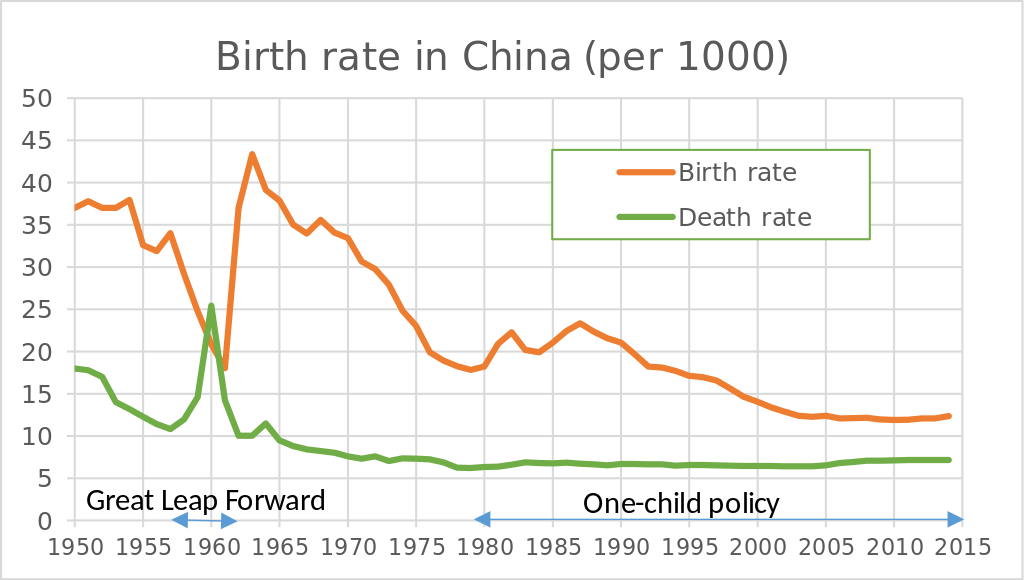
Hence the tendency of a great deal of progressive thought to just skip over the problems of wrestling with nature and creating wealth and treat the issue as merely being one of intent. If enough resources are concentrated in the hands of people with strong enough commitment to the right intentions, then all will be fine. The disasters of the Great Leap Forward in Mao’s China are a particularly intense manifestation of this wider pattern. Scepticism, on practical grounds, about whether such resources+intent arrangements will work as well as claimed are repeatedly treated as being hostility to the intent, to the noble motives, behind the commitment to the golden, transformative future and so are treated as illegitimate.

Marx’s “From each according to his ability, to each according to his needs” (Jeder nach seinen FĂ€higkeiten, jedem nach seinen BedĂŒrfnissen) is the most famous and resonant manifestation of such hand-waving evasion of the hard issues.**

The economic calculation problem is one manifestation of inherent problems of wrestling with nature. The problem being that markets provide ways of dealing with information on a scale that no central planning system can hope to successfully replicate. The experience of command economies proved correct the economic calculation critique of socialist claims that the state could do it all. Hence command economies resorted (openly or corruptly or both) to market mechanisms to keep going, eventually openly evolving into market economies. Though not without much death and suffering on the way through. Including various collectivisation and terror famines.

There are effective, thoroughly collective, economies in nature. Ants and other eusocial insects can do collective economies efficiently as they are hormonally directed within a stable technology, with relatively simple patterns of discovery and action, and most of the nest or hive is not seeking to invest in genetic replication via their own offspring. Sterile workers and soldiers have no evolutionary strategy (as they do not replicate). They are offshoots of the evolutionary strategy expressed through the queen. None of these features apply to human societies. Especially not to human societies that aspire to any level of technological or other innovative dynamism. Biologist E. O. Wilson was correct when he said of Communism, great idea, wrong species.

Problems of order
The final element of the evasion troika that the mutual worship of the ennobling golden, transformative future in progressive heads inclines progressives towards is profoundly discounting the problems of creating and maintaining social order; any social order.

The problems of order extend well beyond the economic calculation problem, beyond accessing and creating resources and wealth. Human aggression is innate. We (generally) learn not to be aggressive, but that does not always take. Hence the problems of crime; of protecting life, person and property.

Human children are very biologically expensive to raise. We have never found a system superior for the flourishing of children to being raised by one’s biological parents. And so on.

Yet progressives regularly talk as if there is no inherent problem of information, incentives, public order, family structure. As long as folk with the right intent apply resources in the right way, it will all be fine. Defund the police becomes a natural narrative, if there are no inherent problems of social order. Regardless of how much homicide deaths increase.

Scene missing
Film-maker Mike Nayna likes to point out that progressive ideology has what he calls a “scene missing” problem. There is the critique of what is. There is the extolling of what should be. But when it comes to explaining in detail how we get from where we are to that golden, transformative future, there is a blank. There is a scene missing in progressive political narratives.

We can see all these not-grappling-with-the-awkward, “scene missing” problems in The Communist Manifesto, as is nicely set out here. But this “scene missing” problem, this evasion of explaining the transition with any analytical seriousness, is pervasive in progressive thought.

For here is the difficulty. If one was going to set out in detail how to get from what currently is to the golden future, what would one have to grapple with? The constraints of human nature, the constraints of wrestling value from nature, the constraints of creating and maintaining order. But, if you did that, it might turn out the golden, transformative future is not attainable. Which would have the confronting implication that the progressive status-strategy, the cognitive identity, the sense of meaning and purpose are all misplaced. Perhaps disastrously so.

Hence, scene missing. Hence, the hand-waving evasions. Hence the rhetorical constructions used to cover analytical vacuity: white supremacy, structural racism, dictatorship of the proletariat, false consciousness … With critical social justice (“woke”) progressivism pushing the mad notions that society is all just structures of oppression, structures of power, inherently pervaded by racism, with no problems of order, social functionality, wrestling with nature or human nature driving what has evolved.

Progressivism is forever generating the social science equivalents of phlogiston [or, rather, luminiferous aether]. Analytically empty concepts without seriously analytical or empirical validity to cover the gaping holes where serious wrestling with the genuine problems that every single human society ever has had to wrestle with should be in progressive thought, but isn’t.

But such absence has been proving to be a huge rhetorical advantage. If the problems of human nature, of wrestling with nature, of maintaining social order are ruled out of consideration, there is no place to stand against the rhetorical power of commitment to the golden, transfornative future, of righteous intent. For that future can be as morally perfect as convenient and its perfection ennobles the ostentatious intent to march towards it. The intent to bring it about becomes rhetorical trumps. Any disagreement is an attack on the noble intent to do better.

Maximising contempt for what is, and what has been achieved through history, maximises the moral glow of the golden, transformative future. Talking endlessly about the sins of Western civilisation, and sneering at any notion of it having achievements, serves the golden, transformative future status-strategy very well. This is what the process of selecting for the most effective status strategy has strongly tended to produce. Of course, if you cannot acknowledge, or even recognise, achievement then you are very unlikely to build anything genuinely favourable to human flourishing. If you characterise success as vice, you are likely to build a great deal of failure.

Institutions decaying
Hence anything that progressivism (i.e., thorough Leftism) dominates eventually goes bad. Because human nature does impose constraints, as does wresting subsistence and wealth from nature, as does creating and sustaining social order while the golden, transformative future status-strategy, with its contempt for what is or has been, blocks genuinely learning from the rich tapestry of human experience.***

If you are not prepared to face the problems of human nature, of wrestling with nature, of social order seriously, if you treat dissent as illegitimate, if you close yourself off from discovery processes to protect your status strategy, your cognitive identity, your sense of meaning and purpose, your shared heroic narrative, then anything that folk like you dominate will become dysfunctional, with no response to the dysfunction except to double down on the ennobling worship of the golden, transformative future. That way lies massive losses in human well-being.

With enough mutual worship of the golden, transformative future splendour-in-progressive-heads, any amount of tyranny, mass murder and mass death is possible. As we have seen again and again.

For the moment, we are seeing a spreading pattern of progressive-led dysfunction in contemporary Western societies. Such as the collapse in productivity and quality of school systems, a collapse obscured by the growth of use of private tutors. (See examples here, here, here and a book length discussion here.) Such as the decay of the academy into increasingly fearful conformity. Such as the decay of institutional media. Such as the decline of comics, film, television. And so on.

Yet the current version of the progressive status strategy, arising out of the critical constructivism of critical theory and its derivatives, continues to go from strength to strength. Democracies seem to be unable to deal with systematic institutional capture by the progressive status strategy parading as righteousness. There may be a great deal of destruction of human well-being yet to come.

Added Notes

*Alternatively, one can seek to remake human beings so that they suit the golden, transformative future. That ways lies mass killings and, potentially, eugenic engineering of the population.

**The notion that profit is return to labour that labour does not receive also represents (and justifies) waving away the hard questions of wrestling with nature.

***The commitment to the ennobling golden, transformative future also encourages progressives to adopt historical narratives that feed the sense of the splendour in their heads. Mythic history, setting up the right notions of historical villainy (and progressive moral heroism) is regularly generated and adopted. Such history is typically not much interested in the genuine complexities of the past. Then again, progressives are often not much interested in inconvenient complexities of the present either.

[Cross-posted from Medium.]

Tuesday, June 8, 2021

The courtesy of clarity: a profound philosophical point can be stated in clear language

What Heidegger took reams of obscure prose to do, C.S.Lewis expressed in a few, clear paragraphs.

Monks debating philosophy at Sera monastery, Tibet.

I have been struggling to get through Martin Heidegger’s magnum opus, Being and Time. I gave up on my first attempt. Fortunately, I then completed reading Thomas McEvilley’s much clearer, and historically informative, magnum opus, The Shape of Ancient Thought: an examination of the history of Greek and Indian philosophy and the interactions between them. Re-attempting Being and Time, I found it still unnecessarily obscure, but somewhat more approachable.

It was more approachable because Heidegger is attempting to supersede the entire Western philosophical tradition by going back to pre-Socratic thinkers and their wrestling with question of what is, and what it is to be. Subjects that many Indian thinkers wrestled with. Hence reading a history of Indian philosophy (and its interactions with Greek philosophy) was helpful.

The shape of ancient thought
The Shape of Ancient Thought makes clear that Indian philosophy had much stronger rational (even rationalist) traditions than Western philosophers and historians of ideas have often assumed while the Greek philosophy had much stronger mystical traditions than Western philosophers and historians of ideas have typically been willing to admit or be comfortable with.

McEvilley also makes a powerful case for each set of traditions having influenced the other. At the time of the pre-Socratic Greek philosophers, there was precisely one state between the Greek world and the Indian world: the Achaemenid Empire, the first mega-empire. As the Achaemenid rulers patronised philosophers and sages (both Greek and Indian), and attracted them to their court, this made it relatively easy for ideas to flow each way.

Moreover, trade between Mesopotamia and the Indus Valley dates back many centuries prior to the Achaemenid Empire. Similarly for trade between Mesopotamia and Egypt and, particularly via Phoenicia, the wider Mediterranean world. There were plenty of vectors for Mesopotamian ideas (e.g. Babylonian astronomy and mathematics) to flow both east and west, influencing both Greek and Indian philosophy.

Later, in the person of Alexander the Great (student of Aristotle) and his armies, the Greek world violently intruded on the Indian world.

McEvilley traces all sorts of convergences between Greek and Indian philosophy, including levels of specificity in ideas that make happenstance convergence implausible. Embracing the reality of the mystical in Greek thought, and the power of rationality in Indian thought, makes tracing the interactions both easier and much more vivid.

Convergent concerns
In his introduction to Zen Buddhism: Selected Writings of D.T. Suzuki, philosopher William Barrett writes:
A German friend of Heidegger told me that one day when he visited Heidegger he found him reading one of Suzuki’s works. ‘If I understand this man correctly,’ Heidegger remarked, ‘this is what I have been trying to say in all my writings.’
This convergence in ideas between Heidegger and Zen is not surprising. First, the Indian tradition and its derivatives (which, via Buddhism, spread to China, Korea and to Japan) continued to explicitly wrestle with the nature of being. Second, influential German philosopher Schopenhauer had been directly influenced by what he understood of Buddhist thought, so it was part of the backdrop of German philosophy.

After the publication of Being and Time, Heidegger entered into discussions with various Japanese interlocutors. This may have helped lead to that fact that, in the words of philosopher David Storey:
… he later recanted the residual metaphysics of subjectivity that he came to believe encumbered [Being and Time].
Storey also makes the point that both Heidegger and Zen hold that:
... the drive toward metaphysics — in the sense of a theory about reality — is a hindrance that draws us away from the richness of experience.
Being and Time is still a very difficult text and, about a fifth of the way in, I am still wondering whether there is any valuable point to be had at the end of it. Especially as it is easy enough to find summaries and explorations of Heidegger’s thinking that are much more approachable. 

It was therefore striking to come across a short essay by C.S. Lewis, a preface to a forgotten book, Douglas Harding’s Hierarchy of Heaven and Earth: A New Diagram of Man in the Universe, that put the concerns Heidegger wrestles with much more clearly. Lewis writes: 
This book is, I believe, the first attempt to reverse a process which has been going on since the beginning of philosophy.
The process whereby man has come to know the universe is from one point of view extremely complicated; from another it is alarmingly simple. We can observe a single one-way progression. At the outset the universe appears packed with will, intelligence, life and positive qualities; every tree is a nymph and every planet a god. Man himself is akin to the gods. The advance of knowledge gradually empties this rich and genial universe: first of its gods, then of its colours, smells, sounds and tastes, finally of solidity itself as solidity was originally imagined. As these items are taken from the world, they are transferred to the subjective side of the account: classified as our sensations, thoughts, images or emotions. The Subject becomes gorged, inflated, at the expense of the Object. But the matter does not rest there. The same method which has emptied the world now proceeds to empty ourselves. The masters of the method soon announce that we were just as mistaken (and mistaken in much the same way) when we attributed ‘souls’, or ‘selves’ or ‘minds’ to human organisms, as when we attributed Dryads to the trees. Animism, apparently, begins at home. We, who have personified all other things, turn out to be ourselves mere personifications. Man is indeed akin to the gods: that is, he is no less phantasmal than they. Just as the Dryad is a ‘ghost’, an abbreviated symbol for all the facts we know about the tree foolishly mistaken for a mysterious entity over and above the facts, so man’s ‘mind’ or ‘consciousness’ is an abbreviated symbol for certain verifiable facts about his behaviour: a symbol mistaken for a thing. And just as we have been broken of our bad habit of personifying trees, so we must now be broken of our bad habit of personifying men: a reform already effected in the political field. There never was a Subjective account into which we could transfer the items which the Object had lost. There is no ‘consciousness’ to contain, as images or private experiences, all the lost gods, colours, and concepts. Consciousness is ‘not the sort of noun that can be used that way’.

For we are given to understand that our mistake was a linguistic one. All our previous theologies, metaphysics, and psychologies were a by-product of our bad grammar. Max MĂŒller’s formula (Mythology is a disease of language) thus returns with a wider scope than he ever dreamed of. We were not even imagining these things, we were only talking confusedly. All the questions which humanity has hitherto asked with deepest concern for the answer turn out to be unanswerable; not because the answers are hidden from us like ‘goddes privitee’, but because they are nonsense questions like ‘How far is it from London Bridge to Christmas Day?’ What we thought we were loving when we loved a woman or a friend was not even a phantom like the phantom sail which starving sailors think they see on the horizon. It was something more like a pun or a sophisma per figuram dictionis. It is as though a man, deceived by the linguistic similarity between ‘myself’ and ‘my spectacles’, should start looking round for his ‘self’ to put in his pocket before he left his bedroom in the morning: he might want it during the course of the day. If we lament the discovery that our friends have no ‘selves’ in the old sense, we shall be behaving like a man who shed bitter tears at being unable to find his ‘self’ anywhere on the dressing-table or even underneath it.

And thus we arrive at a result uncommonly like zero. While we were reducing the world to almost nothing we deceived ourselves with the fancy that all its lost qualities were being kept safe (if in a somewhat humbled condition) as ‘things in our own mind’. Apparently we had no mind of the sort required. The Subject is as empty as the Object. Almost nobody has been making linguistic mistakes about almost nothing. By and large, this is the only thing that has ever happened.
This does not remotely cover Heidegger’s entire enterprise in Being and Time. But it is the key problem he wrestles with, put far more clearly and succinctly than he does.

One is tempted to draw a distinction between English verbal parsimony seeking the courtesy of clarity contrasted with German verbal prolixity and insecure intellectual arrogance. But a deeper difference is that C.S. Lewis, as a Christian, has access to a wisdom tradition that Heidegger entirely lacks (despite going on about the importance of being rooted in a specific cultural tradition). Indeed, Heidegger’s lack of any connection to a wisdom tradition is also a difference between Heidegger and Zen thought more generally. A sense of the pervasiveness of blindness and error, including one’s own, so pervasive in wisdom traditions, perhaps gives one a clearer place to stand.

Heidegger’s influence on various French theorists is not surprising. Not only is there the grandeur of seeking to supersede the entire Western philosophical tradition, Heidegger also, in Storey’s words aimed
... at unseating the very notion of there being a master narrative, a complete system, a coherent body of doctrine.
Given how dominant Marxism, even Stalinism, had been in French intellectual life, those struggling with the shock of the manifest failures of Marxism could console themselves with not having made a singular mistake but a general one. A general mistake that they could now show everyone how to supersede. Heidegger’s own Nazi entanglements become, not a singular embarrassment, but the sort of error we all need to liberate ourselves from.

Heidegger’s opposition to the notion that philosophy could be a mirror of nature, his problems with language as a distorting medium, with subject-object distinctions, with the importance of lived experience, would all be picked up by the post-Marxist French theorists. As Storey says:
The attempt to get back to Being — to re-awaken to the forgotten meaning of Being, re-peat a heritage, re-tap some dormant reservoirs, to return to the roots and origins — that inheres in Heidegger’s early and late work lends itself to the idea that the modern world, and the mode of cognition by which it was constituted, namely, monological reason or calculative thinking, is a great mistake, a collective entanglement with entities in the world, and that we should therefore seek to regress to some sort of pre-modern, pre-rational form of society.
Or disconnect language from the world, and so from truth, and see Western society and civilisation as nothing beyond structures of power and oppression. The entire critical social justice apparatus that is grounded in the marriage of neo-Marxist critical theory with adaptations from post-Marxist French theory passing through Heidegger on the way.

The corruption from critical theory
The ‘social justice’ apparatus built on critical theory is grounded in a morally and intellectually corrupt choice. Faced with the failure of revolutions to either happen or, with the exception of Russia, succeed after the mass slaughter of the Great War, a group of German Marxists come together to answer why, even with all the blood and mass death of the Great War, the working classes failed to revolt, as Marxist theory says they should be primed to do.

One possibility was that the theory (or their understanding of it) was fundamentally wrong. The third possibility was that there was something wrong with the working class. As they were devout Marxists, the first hypotheses was unacceptable, the second version was too confronting for such self-consciously perceptive folk, so the third was adopted. The working classes were declared to be cognitively incompetent at judging their own interests. This was justified by notions such as false consciousness and cultural hegemony, Italian Marxist Antonio Gramsci famously going on to develop the latter idea. It also required some re-working of Marxism by going back to its Hegelian roots.

This morally and intellectually corrupt choice, protecting the splendour of their commitment to the transformative future at the cost of cognitively dismissing millions of their fellow citizens, the putative objects of their social concern, is the very opposite of wisdom. From this cognitively corrupt origin has grown a poisonous tree bearing many toxic fruits.

Such grounding of normative commitment in an unimpeachable imagined future functions much as revelation does in a religious system. It becomes the unchallengeable ground of authority. It is therefore not surprising that critical-theory derived faith systems have come to so resemble religions in their denunciation of sin and sinners, their blasphemy and heresy hunts, their identification of infidels. They even have, institutional penetration permitting, developed inquisitions. (In contemporary US academe, the flying squads of the new secular inquisition are called “bias response teams”.) One can even purchase latter-day indulgences, via diversity training and lectures. Hitler has become the secular Satan, the personification of evil, and Nazis (and the allegedly Nazi-adjacent) the demonic opposers of the unimpeachable future, the embrace of which is the source of all moral authority.

Embracing this collective self-worship of the splendour in their heads has meant a spiralling pattern of theorists and activists insulating said splendour from critique by declaring those who disagree cognitively delinquent. Thereby motivating and justifying using mimetic shaming to destroy the reputations and livelihoods of those that fail to conform. A mimetic shaming that the destructive attention-algorithms of Big Tech both encourage and give power to.

Enchantment fails
In a 1966 interview with Der Spiegel, published (as per his instructions) posthumously, Heidegger famously said “only a god can save us”. Only something superhuman in its reach and depth of meaning and psychic entanglement can save us from being lost in our technical, calculative, utterly disenchanted world. (One doubts that activists collectively worshipping the splendour in their heads was quite what he had in mind.)

Some folk have suggested that Western civilisation is suffering from a God-hole, a vacuum where the idea of God used to be. That we are suffering from the consequences of Nietzsche’s murder of God.

Yet monotheism is not the only basis for enduring culture and civilisations. I would suggest that we are suffering from a mythos vacuum, from the absence of a shared anchor of myth and meaning.

This is, after all, the burden of what C.S.Lewis is saying in the passage quoted above. In the search for explanatory power we shrank the realm which could provide such an anchor so completely that there is not enough to rest anything sufficiently useful and resonant on. Leading into what psychologist John Vervaeke calls the meaning crisis.

Destructive keyboard activism is a pathological response, fuelled by corporate algorithms seeking to profit from holding our attention, to a much deeper problem.

And always be wary of thinkers who do not seem to be able to manage the courtesy of clarity.

[Cross-posted from Medium.]