Showing posts with label natural law. Show all posts

Monday, July 24, 2017

The "race" delusion in American politics and society.

Ron Unz has produced two pieces of statistical analysis on ethnicity and crime in the US providing evidence that there is no distinctive tendency among Hispanics to have a higher crime rate, once other factors are controlled for, while there is clearly a much higher crime rate among African-Americans.

This being an American piece, anything to do with African-Americans is treated as a "race" issue, a "black" and "white" issue. Which is precisely where the whole debate goes wrong right from the beginning.

African-Americans are not, in any useful sense, a "racial" group. They are a cultural group: better labelled in a more distinctive way, such as Ebonic-Americans, so as to be distinguished from recent African migrants or even Afro-Caribbean migrants, who are culturally distinct groups with distinctively different histories and cultural legacies. Ebonic-Americans are group born out of the experience of mass slavery and the consequent trajectory of the descendants of those slaves in the US. That is precisely the distinctive social trajectory that creates an ethnic group and identity.

Those called "white" Americans are, in fact, European-Americans or Euro-Americans, an amalgam of ethnic groups who can reasonably be identified as a series of separate "American nations", as was famously done by historian David Hackett Fisher in Albion's Seed: Four British Folkways in America and more broadly by journalist Colin Woodward in American Nations: A History of the Eleven Rival Regional Cultures of North America. (See summary article here.) The wave of European settlement created an amalgam population distinct from the indigenous inhabitants and those imported from Africa as slaves. The obvious way to distinguish them was by skin colour, hence the "white" and "black" appellations.

But skin colour does not act in social affairs (though reactions to skin colour can do so). It is an easy marker of (entirely unearned) status (for good or ill), but not an analytically useful term. Thus the contemporary use of "white" in academic and progressivist circles is typically a misdirecting technique wiping out any notion of cultural heritage or civilisational achievement.

Humans are primed to notice ethnic cues. Small children will generally befriend someone of a different race who speaks the same dialect before they will do so (pdf) to someone of the same race who speaks a different dialect. This is hardly surprising: our hominid ancestors were forming ethnic groups deep in our prehistory: it allowed us, the cultural species, to cooperate beyond the foraging band (the Biblical story of shibboleth is all about ethnic cues.)

We began to systematically interact across the continent-wide groups we call races much more recently: far too recently and intermittently for it to be "hard-wired" into our cognitive architecture. Attempts to use implicit bias to show some deep racist cognitive programming suffers from the problem that the Implicit Association Test (IAT) has consistently failed to show the reliability (consistency across measurement) or the validity (connection to behaviour/social outcomes) to justify such use. Other attempts to make much of similarity bias have also failed to reach those benchmarks. Evidence suggests it is also relatively easy to (pdf) make other group markers trump race among adults.

Origins of racism
Due to our evolutionary history, we do have a deep tendency to tribalism or groupism. But this is a potentially "free-floating" tendency which can attach itself to all sorts of groups (such as, for example, political parties).

Racism as such was originally a product of the combination of mass slavery and universalising morality. In all its forms, racism originated as a justificatory explanation for what people were doing for other reasons. So, the first racist discourses grew up in the context of the mass slaving of sub-Saharan Africans and only appeared after the development of universalising morality (specifically, Christianity and Islam) because only a universalising morality is likely to have any problem with the systematic enslaving of others.

There was no moral problem about slavery for Romans--slaves were losers, Romans were winners, slavery was just a mark of losing. Indeed, there was so little problem that Romans ran one of the most open slave systems (pdf) in history, as freed slaves became full citizens. So much so, that people would sometimes use slavery as a path to Roman citizenship. Aristotle's attempt to provide a moral justification for slavery (as his ethical system did have a universalising tendency: hence its later incorporation into monotheist thought) just struck the Romans as Greek nonsense.

Once folk are all "children of God", then slavery causes a moral problem--why are you treating children of God as property? While there are some glimmers of racist discourse in the Roman Empire after the adoption of Christianity, the first significant racist discourse (that is, a systematic denigration by race) comes out of Islam. For example, in a C11th book of geography by geographer Said al-Andalusi (1029-1070) Al‐tarif bi-tabaqat al-umam (Book of the Categories of Nations): 
Chapter 3: Nations having no interest in science 
The rest of this [category], which showed no interest in science, resembles animals more than human beings. Those among them who live in the extreme North, between the last of the seven regions and the end of the populated world to the north, suffered from being too far from the sun; their air is cold and their skies are cloudy. As a result, their temperament is cool and their behavior is rude. Consequently, their bodies become enormous, their color turned white, and their hair drooped down. They have lost keenness of understanding and sharpness of perception. They were overcome by ignorance and laziness, infested by fatigue and stupidity. Such as the Slavonians, Bulgarians and neighboring people.
Also in this category are the people who live close to the equinoctial line and behind it to the populated world to the south. Because the sun remain close to their heads for long periods, their air and their climate has become hot: they are of hot temperament and fiery behavior. Their color turned black and their hair turned kinky. As a result, they have lost the value of patience and firmness of perception. They are overcome by foolishness and ignorance. These are the people of Sudan who inhabited the far reaches of Ethiopia, Nubia, the Zini, and others. 
Chapter 5: Science in India 
The Indians, as known to all nations for many centuries, are the metal [essence] of wisdom, the source of fairness and objectivity. They are peoples of sublime pensiveness, universal apologues, and useful and rare inventions. In spite of the fact that their colour is in the first stage of blackness, which puts them in the same category as the blacks, Allah in His glory, did not give them the low characters, the poor manners, or the inferior principles, associated with this group and ranked them above a large number of white and brown peoples.
Why were Slavs and sub-Saharan Africans being systematically enslaved rather than being conquered and/or converted to Islam (which would make them no longer able to be enslaved)? Because, the explanatory justification of racism went, slavery was what they were fit for.

Catholics were not supposed to enslave folk: so said Pope Paul III (r.1534-1549) in his 1537 encyclical Sublimus Dei. But they (and Christians generally) could trade and own slaves that other people had enslaved, so there was still a moral problem of owning fellow children of God. Add in Enlightenment notions about the rights of man and an even more serious moral dilemma was created, leading to a fairly intense racist discourse of explanation and justification--hence the Antebellum South running one of the most closed systems of slavery in human history: especially as freeing the slaves en masse would, in system based on citizen election of officials, create a serious political issue for the existing voters. Hence also the Constitution of the Confederate States of America absolutely entrenched slavery while the Jim Crow system tried to insulate Euro-Americans in the South from the political and employment implications of the end of slavery. 

Western racist discourses also arose out of the cleanliness of the blood laws in Reconquista Spain, blocking the children of Jewish converts from various positions and social benefits, creating a social cartel for the "Old Christians" and their descendants in Iberia and then in Spain and Portugal's American colonies. This language of inherited contempt, independent of religion, was then extended elsewhere in Europe to create specifically anti-Jewish (rather than anti-Judaic) discourses as a response to the disturbing social flux of modernisation and the creation of mass nationalisms.  

Maximum extents of European imperialism.
The last source of Western racism grew out of noticing that by the C19th Europeans dominated the globe, and trying to find language to both justify and explain it. It is not the case that racism caused slavery or imperialism or social cartelisation: racism was created to justify and explain the slavery, imperialism and social cartelisation that people were already doing for other reasons. (It is worth noting that the problem with Jim Crow was not that it was racist, but that it was oppressive--"race" was simply the dimension across which oppression was organised.)

As any sort of explanation for any of this, race is truly awful. Imperialism was just what states do when they can and when there is a return in it. Europe created particularly effective states, so particularly effective imperialism (much of which was directed against fellow Europeans).

Slavery is a response to control of people being more valuable than control of land (see economist Evsey Domar's classic essay on the subject) and there not being sufficient local population to bind to the land (if there is, some form of serfdom typically arises).

People can form social cartels on all sort of bases. (The current debates about the increasing lack of cognitive diversity in Western academe is precisely about a form of social cartelisation.)

As a way of creating unearned status and effortless virtue, and justifying treating other people badly, however, racism works very well. The modern innovation is to discover that discourses of anti-racism can work just as well as techniques for moral and political exclusion: we can ignore and despise them, they're racists! (Or even a basket of deplorables.)

Illusions of race
But racist discourses of justificatory explanation left a legacy of seeing people, and talking of people, in terms of race rather than ethnicity or meta-ethnicity. Such race-talk turns out to be very useful if you want to strip away any notion of cultural heritage or civilisational achievement. Which is really useful if you want to maximise your despite of fellow citizens--you just "explain" any bad social outcome on the basis of the presumption of malice: default explanation of differentiated social outcomes in terms of the malice (i.e., racism, misogyny, various phobic views) of fellow citizens (or civilisation members). It is an excellent basis for assertion of superior status: though much less useful for serious analysis as it relies on ignoring, explaining away or otherwise discounting differences between groups that lead to variable social outcomes.

Such talk has the great virtue of simplicity—you do not have to know the details, merely what are the correct signals. (And there is no more powerful contemporary signal than hostility to racism, defined so as to function as a social signal, not for careful analysis.) In an information-dense society, where displaying cognitive competence is at a premium, such virtue-signalling [piety display] allows massive economising on information as well as providing reputation protection and expectation convergence. Hence its particular importance for participants in transnational networks and workers in areas with a premium on cognitive competence. It has the wider disadvantage of committing people to social narratives that support such signals and so blocking consideration of contrary facts or concerns.


The two unspeakable truths of "race" in the US are:
(1) If African-Americans had the same average IQ and the same crime rates as other Americans, the "race" issue would disappear (as the experience of Asian-Americans and recent African immigrants demonstrates); and
(2) it is not a "race" issue but an ethnic one--Ebonic-Americans are a distinct ethnic group while "white" Americans are Euro-Americans, an amalgam of ethnic groups.

IQ but not genes
The moment one talks of differences in average IQ between groups, the automatic assumption is that one is "really" talking about genes (and so "race"). Not so, as the evidence strongly suggests that the role of genes in inter-group differences in IQ is relatively small. For example, urbanisation had its normal effect (after a lag) in significantly raising (pdf) the average IQ of Ebonic-Americans. Moreover, children of an Ebonic-American father and Euro-American mother have significantly higher average IQ than Ebonic-Americans generally and are not significantly distinguishable in average social outcomes (pdf) than other Americans while, in the case of reverse pairings, children of an Euro-American father and Ebonic-American mothers have much the same patterns as Ebonic-Americans in average IQ and social outcomes.

It is very unlikely that these results have a genetic explanation: it is very likely that there is a cultural-experiential explanation for the first result and a cultural explanation for the last two results--likely due to the experience of slavery being highly adverse to the development of social or human capital, or mechanisms for generating the same, as well as mothering practices [patterns], given that sub-Saharan parenting patterns are very distinctive (pdf).

Indeed, sub-Saharan parenting patterns, particularly the reliance on siblings to raise younger siblings and the very limited role of fathers in parenting and the unusually low levels of maternal attention, seems somewhat programmed to, in the right circumstances, generate gang culture, which fulfil a somewhat similar role (albeit rather pathologically) to that ritual societies perform in their origin cultures.

So, Barack Hussein Obama is not Ebonic-American (his father was a, temporary, Kenyan immigrant, his mother was Euro-American). Indeed, culturally, he had a Euro-American upbringing. Hence, the US has not yet had an Ebonic-American President. Instead, from 2009-2017, the US had a two-term culturally Euro-American President of partly African descent; which fits right in with the results from the studies cited above.

If the social outcomes of African-Americans continue to be discussed in racial terms, then the debate will continue to be deeply dysfunctional, as it will direct attention to all the wrong places.

Culture as a basis for friendship and social combination, or social friction, is much more rational than skin colour. The “it’s all about race” presumes “people are identical except for race” (that being only skin deep). But they are not culturally identical, with all the implications of that.

A comment by Malcolm Gladwell is apposite:
Well, yeah, there is something — well, I hesitate to say under-theorized, but there is something under-theorized about the differences between West Indian and American black culture, the psychological difference between what it means to come from those two places. I think only when you look very closely at that difference do you understand the heavy weight that particular American heritage places on African-Americans. What’s funny about West Indians is, they can always spot another West Indian. And at a certain point you wonder, “How do they always know?” It’s because after a while you get good at spotting the absence of that weight.
And it explains as well the well-known phenomenon of how disproportionately successful West Indians are when they come to the United States because they seem to be better equipped to deal with the particular pathologies attached to race in this country — my mother being a very good example. But of course there are a million examples.
Gladwell is talking here of people of common African descent, but who come from very different experiences because of distinct historical legacies that go with, and help create, culture. For good or ill.

If we talked about race a lot less, and talked about social capital, human capital, family formation, parenting practices [patterns], and other features of culture, much more, there might actually be some progress. But the story would also become more complex, and not create an easy basis for despising fellow citizens or setting up linguistic trip-wires (micro-aggressions anyone?) in the service of moralised status games. Moreover, a people who wait for others to redeem them will wait forever. But the primary role of the modern secular religion of antiracism is not to solve problems, it is to been seen to care and play the consequent games of moralised status and despite. 

Note that nothing I write above implies that oppression is not a key part of that historical trajectory of Ebonic-American culture: on the contrary, it is crucial to understanding that legacy—hence “the weight” that Gladwell speaks of. But a legacy where the multi-dimensional burden of slavery and the social exclusions of Jim Crow are crucial, with racism as justificatory overlay.

[Also posted at Skepticlawyer.]

ADDENDA People have switched cultural identities for millennia. If we stopped calling ethnic identities "racial" then "transracialism" would make more sense, as "transethnicity".

FURTHER ADDENDA I like the way William Saletan puts it: race is not a causal unit.

Wednesday, May 4, 2016

(Not) coping with the diversity of the real

The heterosexual/homosexual distinction is relatively recent, being coined in the mid C19th. Like all binary classifications, it is somewhat problematic in dealing with the diversity of the human. That being said, it is not merely a social construct: there is a real underlying diversity in human sexuality that it tries (somewhat clumsily) to grapple with.

The attempt by Michael W. Hannon in his essay Against Heterosexuality in the Catholic magazine First Things to employ the works of queer theorists and Michel Foucault to entirely dismiss the concepts of heterosexual and homosexual fails on various levels, but its most basic failure is simply not acknowledging any aspect of the sexual diversity of the human that the distinction tries to grapple with. (It is hardly surprising that the term bisexual does not turn up anywhere in the essay. [In contradiction to a famous study of a few years ago, it appears that bisexual males do exist.])

But there are a lot of problems with the piece. First, Michel Foucault is a notoriously unreliable source for historical facts. Second, just because the terms heterosexual and homosexual are relatively new, does not mean that a sense that people differed in sexual orientation was not much older. Rictor Norton's The Myth of the Modern Homosexual is a good source for that (see also here).

The reality of diversity
Third, there is now significant scientific evidence of diversity in sexual orientation. Such as differences in reaction to the smell of sweat, to visual stimulation (the more so among men than women), and in cross-gender brain structures and cognitive traits. (Really, is anyone surprised that lesbians tend to have more typically "male" cognitive features and gay men tend to have more typically "female" cognitive features?) This is still a developing field. There may well be problems with the heterosexual/homosexual construction as it has developed, but it is an attempt to grapple with a real phenomenon--human sexual diversity.

(Oh, and a tip for female authors in particular: gay men are not girls with penises, they have testosterone; it makes a difference. For example, gay and straight men may look at different porn, but they use porn in essentially the same way.)

If, as our author alleges, the matter is all social construct and not any underlying awkward reality, then one does not have to struggle with why said social constructions popped up in the first place, let alone why there has been a decades-long queer rights movement. Nor any awkward questions about why it has succeeded as much as it has.

The author does make reference to:
Over the course of several centuries, the West had progressively abandoned Christianity’s marital architecture for human sexuality. Then, about one hundred and fifty years ago, it began to replace that longstanding teleological tradition ...
The older teleological view measured morality against man’s rational-animal nature; in the sexual realm, this meant evaluating sex acts by reference to the common good of marriage, which integrated spousal union and the bearing and rearing of children.  
If the reality of human sexual diversity is ignored, then the long persistence of said "marital architecture" is completely unproblematic. Conversely, if humans are, and always have been, sexual diverse, then how did such a tradition persist for so long?

The short answer is brutality: it was brutally enforced. Somewhat intermittently, and with periodic moral panics and purges, but the basis of its maintenance was brutality. As the necessary enforcing brutality faded away, the reality of human sexual diversity began to emerge into the light, so to speak. Why the movement for gay rights? Because people were able to connect who were tired of being treated like crap. (There was also a much broader resistance to the very narrow and controlled conception of family the Church pushed that has won out.)

The growth of science provided non-religious grounds for knowledge and authority; the interaction with other cultures created an awareness of the diversity of human gender taxonomies and sexual ethics; the growth of transport and communication technologies allowed smaller and smaller minorities to connect; mass urbanisation allowed folk to congregate together. In other words, much the same patterns as underlay the other steps in the Emancipation Sequence. And you cannot put the genie back in the bottle without the necessary enforcing brutality.

Sodomising Scripture
But this does not exhaust the problems with the essay. The author tells us that:
The Bible never called homosexuality an abomination. Nor could it have, for as we have seen, Leviticus predates any conception of sexual orientation by a couple of millennia at least. What the Scriptures condemn is sodomy, regardless of who commits it or why. 
Well, that is not remotely true, because sodomy is not a Scriptural concept; for the New Testament predates development of the notion of sodomy by centuries, much of the Old Testament by about a millennia. 

Of course, later translations inserted sodomy into Scripture, but that does not make sodomy a Scriptural concept, no more than inserting homosexuality into Scripture does. 

Moreover, using Leviticus as an authority hardly works--Leviticus repeatedly insists that its proscriptions are an all or nothing matter: you have to either enforce the lot or none, you cannot pick and choose. (So tattoos, for example, are right out, as are priestly tonsures.) Every Christian, and every denomination of Christianity, is in breach of Leviticus.

If you are picking and choosing which bits of Leviticus to take notice of, your authority is not Leviticus, it is whatever basis you are using to pick and choose. Nor does Leviticus condemn same-sex relations per se, it condemns a man taking the female role in sex. The point, fairly clearly, is to enforce strict gender differentiation--more specifically, to not have men "unman" themselves by taking the female role. Women lying with women is, apparently, fine.

Sodomy refers, of course, to the story of Sodom and Gomorrah, the cities of the plain, in Genesis 19. A good exercise is to read the Scriptural story closely and clearly without the imposing the since-traditional "it's all about butt sex" interpretation on the text. Does that interpretation make any sense from the actual Scriptural passages? 

Put it another way, how do you turn attempted group rape of visiting guests who were messengers of the Lord into any sort of condemnation of any sexual practice as such? Especially given there is no divine intervention until it comes to saving Lot's daughters and the messengers are there to warn Lot that God has already given up on the cities. (Does, for example, the brutal group rape and murder in Judges 19 mean that there is something wrong with opposite sex sexual relations?) The answer is, you can't. You have to add to the text to elevate same-sex relations to being the key issue. 

Note that seeing the key issue as vile treatment of visitors and guests, of the stranger among you, is very much in accord with other Biblical passages, such as Exodus 22:21 and Exodus 23:9. The notion that the most important thing was the butt sex that didn't happen, is supported nowhere. 

So, how did the since-traditional interpretation arise? By an intellectual applying an academic theory to the text in order to score points in a cultural war. The intellectual was Philo of Alexandria (c.25BC-50AD), the academic theory was Greek natural law philosophy and the culture war was between monotheist Hebrews and polytheist Greeks. 

Here is Philo the culture warrior, condemning a pagan religious parade:
At all events one may see men-women continually strutting through the market place at midday, and leading the processions in festivals; and, impious men as they are, having received by lot the charge of the temple, and beginning the sacred and initiating rites, and concerned even in the holy mysteries of Ceres. And some of these persons have even carried their admiration of these delicate pleasures of youth so far that they have desired wholly to change their condition for that of women, and have castrated themselves and have clothed themselves in purple robes, like those who, having been the cause of great blessings to their native land, walk about attended by body-guards, pushing down every one whom they meet. (Special Laws III, VII, 40)
It could be any contemporary Christian, Jewish or Muslim cleric condemning the Gay Pride parade of your choice.

Since Sodom and Gomorrah, the cities of the plain, were the premier examples of God's specific wrath (apart from small matters such as the Flood), a range of (often not very specific) sins were attributed to its inhabitants in Scripture. Philo, however, focuses particularly on the consequences of prosperity:
As men, being unable to bear discreetly a satiety of these things, get restive like cattle, and become stiff-necked, and discard the laws of nature, pursuing a great and intemperate indulgence of gluttony, and drinking, and unlawful connections; for not only did they go mad after women, and defile the marriage bed of others, but also those who were men lusted after one another, doing unseemly things, and not regarding or respecting their common nature, and though eager for children, they were convicted by having only an abortive offspring; but the conviction produced no advantage, since they were overcome by violent desire; and so, by degrees, the men became accustomed to be treated like women, and in this way engendered among themselves the disease of females, and intolerable evil; for they not only, as to effeminacy and delicacy, became like women in their persons, but they made also their souls most ignoble, corrupting in this way the whole race of man, as far as depended on them. At all events, if the Greeks and barbarians were to have agreed together, and to have adopted the commerce of the citizens of this city, their cities one after another would have become desolate, as if they had been emptied by a pestilence. (On Abraham, XXVI, 135-6)
The concern for strict gender roles comes across very clearly. But it is also an introduction of the (Greek) notion of the "laws of nature" which the inhabitants of the cities of the plain sinfully discarded. It also establishes the utility of denying human sexual diversity, for such denial provides the best of both worlds: on one hand, by pretending anyone might do it, same-sex activity is turned into a huge moral threat bringing with it social sterility; on the other, by condemning something most people are uninterested in doing, you are selling very low cost virtue.

There is, in fact, a curious insecurity about opposite-sex attraction involved. (Though if being female is such a desperately inferior state, then perhaps the resilience of being attracted to them is something to be insecure about.) An insecurity there is no biological or social basis for--in no society, not even in societies where same-sex relations are a compulsory adolescent experience (yes, there have been some) do men give up having sex with women, or having children. Opposite sex desire is a reliable feature of human affairs. Merely not a universal feature of actual humans.

Philo was not conforming to the rabbinical oral tradition concerning the cities of the plain, which held that they were not immoral, but anti-moral: that is, they actually punished people for displaying moral behaviour towards the weak and vulnerable. Which has the virtue of making the both their punishment, and its extent, congruent with the moral message elsewhere in the Old Testament: it certainly makes much more sense than fearful insecurity about the power of opposite sex attraction or the apparently enormous moral significance of butt sex. (To the extent that sodomy has a precise theological definition, it means any non-reproductive sex to the point of ejaculation; but anal intercourse has always been the archetypal version of sodomy.)

Philo's conception was, however, an intellectual winner, winning converts outside Judaism, extending to Christianity and Islam. The Qur'an incorporates the notion that the cities of the plain were destroyed for their homosexuality, even claiming they were the first to engage in such.

Editing nature into convenient form
When one looks for the original argument that demonstrates same-sex acts to be unnatural, one comes across much assertion, but precious little argument. The original source seems to be Plato's The Laws. In Book One, the Athenian asserts that:
Now the gymnasia and common meals do a great deal of good, and yet they are a source of evil in civil troubles; as is shown in the case of the Milesian, and Boeotian, and Thurian youth, among whom these institutions seem always to have had a tendency to degrade the ancient and natural custom of love below the level, not only of man, but of the beasts. The charge may be fairly brought against your cities above all others, and is true also of most other states which especially cultivate gymnastics. Whether such matters are to be regarded jestingly or seriously, I think that the pleasure is to be deemed al which arises out of the intercourse between men and women; but that the intercourse of men with men, or of women with women, is contrary to nature, and that the bold attempt was originally due to unbridled lust. The Cretans are always accused of having invented the story of Ganymede and Zeus because they wanted to justify themselves in the enjoyment of unnatural pleasures by the practice of the god whom they believe to have been their lawgiver.
The implied argument, from the citation of animals, is that it is contrary to nature because we do not see same-sex activity amongst animals. In Book Eight, the Athenian says:
For if any one following nature should lay down the law which existed before the days of Laius, and denounce these lusts as contrary to nature, adducing the animals as a proof that such unions were monstrous, he might prove his point, but he would be wholly at variance with the custom of your states. ...
Our citizens ought not to fall below the nature of birds and beasts in general, who are born in great multitudes, and yet remain until the age for procreation virgin and unmarried, but when they have reached the proper time of life are coupled, male and female, and lovingly pair together, and live the rest of their lives in holiness and innocence, abiding firmly in their original compact:-surely, we will say to them, you should be better than the animals.
So, the argument seems to be that animals follow nature, animals don't do it, so it is against nature. If nature is the measure of the natural, then the argument is way out of luck, for nature is an incredible array of sexual, gender and mating diversity. Bruce Bagemihl's Biological Exuberance: Animal Homosexuality and Natural Diversity provides chapter and verse.

As for the purpose of sex being reproduction, nature is not helpful there either, as sex is used for a much wider range of purposes in nature than merely reproduction. Joan Roughgarden's Evolution's Rainbow: Diversity, Gender and Sexuality in Nature and People provides considerable detail on that. The Athenian of Plato's Laws is not a very good, nor a knowledgeable, observer of nature.

Folk became aware that nature did not live up to the alleged restrictions of the natural: animals such as hares and hyenas were identified as letting the side down. This was coped with in the way teleological conceptions normally cope with uncooperative diversity--the conclusion was used to police the premises. That is, evidence in nature which contradicted what was declared to be the natural order was declared to be unnatural--outside the "proper" order of nature. If one is allowed to simply exclude the contrary cases, then one is fine. (Marxists turned this into a fine art with respect to the social order, but natural law theorists were perfecting the technique centuries earlier.) Of course, one's theory then rests on nothing but itself, but that has never proved to be an insuperable difficulty for any faithful concerning the teleological apparatus of their devotion.

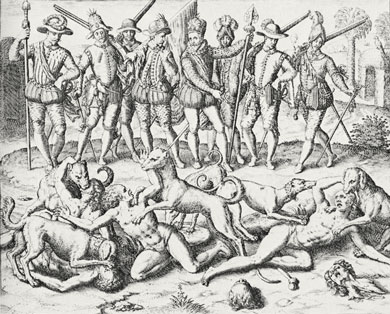
Based on nothing but assertion and a deemed license to exclude contrary cases it may be, but the classing of same-sex activity as unnatural had grim consequences when tied to monotheism. For the notion that same-sex activity is unnatural is then turned it into an act of treason against God, as nature's Creator. As early as the C4th, St John Chrysostom (c.349-407), the patron saint of preachers, is assuring folk that same-sex activity is worse than murder. (It being treason against God and all.) For:
All passions are dishonorable, for the soul is even more prejudiced and degraded by sin than is the body by disease; but the worst of all passions is lust between men…. The sins against nature are more difficult and less rewarding, since true pleasure is only the one according to nature. But when God abandons a man, everything is turned upside down! Therefore, not only are their passions satanic, but their lives are diabolic….. So I say to you that these are even worse than murderers, and that it would be better to die than to live in such dishonor. A murderer only separates the soul from the body, whereas these destroy the soul inside the body….. There is nothing, absolutely nothing more mad or damaging than this perversity.
One notes again the concern for male status and standing. Apart from St Paul in Romans, there is no Scriptural basis for claiming that women can commit "sodomy", and precious little Patristic support. (St Paul's wording fairly clearly shows the influence of Philo.)

By the medieval period, in the medieval best seller The Golden Legend, compiled by an Archbishop of Genoa later beatified for his editorial and compilation efforts therein, we are told that a miracle of the Nativity was:
And it happened this night that all the sodomites that did sin against nature were dead and extinct; for God hated so much this sin, that he might not suffer that nature human, which he had taken, were delivered to so great shame. Whereof S. Austin saith that, it lacked but little that God would not become man for that sin.
The Christmas day massacre--God kills all the sodomites so that Incarnation can happen and the Gospel of Love can be let loose on the world.

So, sodomy is not Scriptural; the claim that the sin of Sodom and Gomorrah was all (or even primarily) about same-sex activity is, to say the least, weak; the it-is-unnatural argument is based on a complete misreading of how nature actually is and the whole thing rests on an insecurity about opposite sex attraction which also has no basis.

(Though Christianity is a very broad tradition--St Aelred of Rievaulx suggests, in his Spiritual Friendship, that Jesus and John were married in Heaven.)

Having someone to pick on
So, what gives?

Several things. If entire sections of nature can be excised as "not counting", then a minority of humans can easily be so. The conspicuous thing about arguing that sex-is-only-for-reproduction, reproduction can only be properly done within marriage, it is all about human flourishing is that it relies on excluding the same-sex attracted--their flourishing clearly doesn't count. And that exclusion is the point.

I said there was no cost to most folk in banning something they have little or no interest in doing. But there is a cost: the cost is treating fellow human beings badly; which is actually the point--having a very vulnerable group to so easily and (mostly) costlessly pick on.

Queer folk grow up as isolated individuals in overwhelmingly straight families and social milieus. It is hard to think of any group that it is easier to isolate and pick on; particularly as it is hard to think of a group that it is easier to drive into hiding and not speaking up for themselves. They make such a splendid target--and that is the point.

For where do priests and clerics get authority most easily and graphically? From being gatekeepers of righteousness; from telling you what is righteous and what is not. And the more unexpected the markers of righteousness are, the more the "expertise" of the priest or cleric is need.

We don't need priests or clerics to tell us that murder is wrong, that theft is wrong--cultures either come to those conclusions or they don't get off the ground. But we do need a priest or cleric to tell us that heaven hates ham, that God hates butt sex, that dogs are unclean. It is not morality, but moral taboos that are priests and clerics distinctive stock-in-trade. (As it is, for that matter, for secular clerisies.)

A consequence of turning the archetypal instance of God's specific wrath into being all about butt sex meant that picking on this incredibly vulnerable group was "necessary" to preserve social order from the wrath of God. Which made it a desperately important issue--so much so, that discharging semen into someone's anus was apparently worse than murder. Well, it had to be, otherwise God was being pathological. Of course, if the story of the cities of the plain was really about systematically picking on the weak and vulnerable, then ... (One might also stop to note that the Gospel Christ has very little to say about secular authority, but a great deal to say about religious authority being used in cruel and oppressive ways.)

It is very clear that there are plenty of believers who are outraged that queers are being treated as "real people" not the targets of oppressive, no-voice repression that is how any Godly society should treat such folk.

Moreover, the queer (the sexually and gender divergent) are a natural target for monotheistic religions. First,  because the One God is not a sexual being in the way polytheistic deities are. In animism and polytheism, sex connects us to the divine. In monotheism, it separates us from the divine. Except in one form--reproduction, because that connects us to God the Creator. So, reproductive sex becomes the OK form of sex. Second, because such targeting provides a splendid point of divergence from polytheistic and animist religions; it being very clear, very low cost for most folk and picking on such a vulnerable group.

Third, because monotheism comes only from the Middle East, so only from plough-and-pastoralist societies--that is, patrilineal and patrilocal societies. If there is only one Ultimate Authority, that Authority is bound to be conceived as Male and with Male authority priests. (Polytheism tended to include third gender priests, animism third gender shamans: so another point of differentiation.) Which naturally encourages a very strict gender dichotomy.

All of which leads to monotheism's history of murderous hatred of the queer.

The various monotheisms do not use the same set of scriptures, they do not use the same set of justifications, or, in the case of Zoroastrianism, come from an entirely separate scriptural tradition, but they keep coming to the same conclusions.

But the reasons for the recurring pattern are not reasons anyone is going to use as justifications. Hence the need to create various legitimating theories when talking to non-believers (as Jews and Christians were). A need which way overshoots the actual scriptural and philosophical supports claimed for them.

Missing the irony
It turns out there is also another cost. What you do to others, others can do to you; especially if you have already set up the patterns and justifications. So Jews justified picking on pagans as against God; Christians picked that up and justified picking on pagans and Jews as against God; Muslims picked all that up, and justified picking on pagans, Jews and Christians as against God. The dhimmi, Pact/Conditions of Umar elements of Sharia are the anti-pagan, anti-Jewish laws of the Christian Roman Empire extended to Christians, theologised and generalised.

And they have all agreed about picking on the queers and never, ever saw any irony involved.

Now, in the increasingly intolerantly secular West, it is believing Christian and Jews who are on the receiving end. Folk being outraged by political correctness yet failing to see any parallels with previous gender and sexual correctness are, once again, not seeing the irony. (But, then, nor are the purveyors of political correctness at all grasping that moral fervour, far from protecting folk from being oppressive, is a great motivator and justifier of oppression.)

Though I wish queer folk would learn the lessons of history better and not join in. But it seems folk simply don't so learn, because their moral fervour is (always) true righteousness personified. Selling belief in collective moral narcissism is demonstrably a perennially easy sell.

And they always have a theory. It is just never a good one.


[Cross-posted at Skepticlawyer.]

Friday, October 24, 2014

Orientation and action

The case of Gordon College (via) in Massachusetts, which propounds a traditional Christian view of homosexuality with a rather less traditional coda of sympathy, puts into sharp relief the "orientation is not sinful, acts are" position.

The policy of Gordon College is:

The orientation/action distinction has two major problems with it. First, it sets up an utterly unreasonable standard. Homosexuals are not permitted to act upon their erotic desires or to seek intimate companionship. To see how unreasonable this is, consider telling heterosexual people: you cannot have sex with anyone of the opposite sex, but marrying someone of the same sex is just fine.

Clearly, this is a standard that people are (mostly) not going to achieve. When the (predictable) high level of failure to achieve it then occurs, homosexuals are held blameworthy for failing to keep to an utterly unreasonable standard.

This is, of course, very much in the interest of priests and clerics--that a vulnerable minority have this completely unreasonable standard, that they are mostly bound to fail, imposed upon them. (Remembering that queer folk grow up us isolated individuals in overwhelmingly straight families and social milieus.) When you are in the gatekeepers of righteousness business, differentiation, complexity and effortless virtue are very much part of the game. This imposing of an unreasonable standard on a vulnerable minority sells effortless virtue to the overwhelmingly heterosexual majority (imposing a standard that is little or no effort for them, but which they can feel terribly virtuous for keeping and terribly morally superior to those who do not), distinguishes between the "righteous" and the "unrighteous" and establishes a criteria of righteousness that has to be (at least originally) told to folk by said gatekeepers. (Most human societies, at least pre-monotheism, did not find such matters to be of much moral moment. Nowadays, it tends to be a differentiator between the West and much of the Rest, many of whom--outside Islam--were taught that it was of moral moment by European colonial masters. What this piece does not get is that queer folk being a relatively small minority is, and has always been, the point--much like with the Jews, really.)

Devaluing people
Second, the action/orientation distinction wildly devalues the moral fact that there are people--millions and millions of people--with such orientation. In theist terms it amount to "God made a mistake, again and again and again; millions upon millions of times, and God keeps making it". Claims about homosexuals having a "special calling" are nonsense on stilts, as we can see from the (finally now failing) endless efforts to deny homosexuals who act upon their erotic nature access to social goods. (That queer folk grow up as isolated individuals in overwhelmingly straight families and social milieus also means queer folk disproportionately benefit from urbanisation and improved information technology, hence the increased contemporary saliency of queer rights.)

More generally, the action/orientation distinction holds that people (and the moral implications to be drawn from that) are not to defined by how all people are, only by how some people are. I have been reading Pierre Manent's The Metamorphoses of the City: On the Western Dynamic, a book I find alternative frustrating and enlightening. Manent spends considerable time on Augustine's masterwork De Civitae Dei (The City of God), providing a revealing summary of Augustine's views on nature and will:
We have here a fundamental Christian thesis that Augustine more than anyone else contributed to formulate and sharpen: man's nature is good; his will is bad or inclined to evil ... The very definition of a bad will is that it is the perversion of a nature that is good or capable of good. Augustine explains at some length how the human will, naturally attracted by the good, can nonetheless choose evil. The bad will does not have its cause in good nature; it is some way without cause.
Augustine was not an Aristotelian as such, his philosophical roots were in Neoplatonism, but that in itself is very much a philosophy after Aristotle. Moreover, Augustine looked widely for ideas and was a child of Aristotle in the sense that almost all Westerners are (and Muslims are generally not), accepting that there was a moral realm beyond revelation and that the world has an independent existence beyond the habits of God--so Augustine argued that, being the direct creation of God, the created world had greater authority (if they were in contradiction) than Scripture, which was the word of God mediated by fallible humans. (The Quran, by contrast, is the eternal, direct word of God unmediated by anything.)

We can see here the issue with same-sex attraction in this worldview. On the one hand, it is simply perverted will against nature. On the other hand, it is an orientation--people are strongly inclined to such "perversion"; millions of people. Hence formulations such as being "intrinsically disordered". In the words of the then Cardinal Ratzinger:

At the same time the Congregation took note of the distinction commonly drawn between the homosexual condition or tendency and individual homosexual actions. These were described as deprived of their essential and indispensable finality, as being "intrinsically disordered", and able in no case to be approved of (cf. n. 8, $4).
As this author reminds us, Aquinas--the supreme reconciler of Catholicism and Aristotelianism--held that all sexual desire outside marriage was "intrinsically disordered". But there is a difference between heterosexual eros--which can find an approved outlet in marriage--and homosexual eros, which never has any approved expression ever, but must always be denied and sublimated. The latter is "intrinsically disordered" at a much more basic level.

Presumptions selectively natural
We can also see where the muddle comes from, at least in natural law terms. The typical natural law theorist is a heterosexual male, his sexual desires are directed towards women, casual empiricism shows that male and female animals mate to produce offspring. So, easy conclusion--his desires define human nature and mating defines the purpose of sex.

Where, in economics, the representative agent can only be properly modelled if they do not know they are the representative agent, the typical natural law theorist is much more arrogant. He, and folk like him, define human nature and what he has noticed about the natural world defines the nature of sex.

But some men have sex with other men and some women have sex with other women. Well, they are unnatural, they are acting against nature. Then folk even notice that some animals do the same (in the medieval period, hares, hyenas and partridges had that reputation). Well, they are being unnatural too, they are also acting against nature.

And so does the conclusion set the ambit of its premises. People who do not conform to the decreed nature do not count (as evidence toward human nature), observations of nature that do not conform to the decreed purpose of sex also do not count (as evidence about the purpose, function or role of sex).

The entire argument about queer emancipation is, at bottom, literally about whether they count as "real people" or not. Hence conservative monotheists define them out of such, and are outraged at any attempt to include them in. It is literally about defining the human and about whether everyone with a human face is "properly" human.

I (mostly) agree with Andrew Sullivan's plea for genuine liberalism (and Scott Alexander has a helpful post about political tribalism and tolerance which is apposite), especially as Gordon College has a general ban on sexual activity amongst its students. Even more so given the rather repellant "secular commissars" trend identified by Damon Linker:
Contemporary liberals increasingly think and talk like a class of self-satisfied commissars enforcing a comprehensive, uniformly secular vision of the human good. The idea that someone, somewhere might devote her life to an alternative vision of the good — one that clashes in some respects with liberalism's moral creed — is increasingly intolerable.
As someone has said in a related context, no one expects the Secular Inquisition.

And yet, the idea that Gordon College has, in a free society, a right to act upon has a deeply disturbing core. Even with the Christian missionaries in Africa Linker discusses, Christian evangelising has also had repellant consequences, notably in the recent attempts to make homosexuality a capital crime in Uganda. To be fair, it is not heroic doctors but more spin-offs from tele-evangelising (to which effortless virtue is such an attractive sell) that is responsible, but the latter are partly levering off the former.

The position that Gordon College takes has roots deep in Christian tradition and they are, if anything, being much more liberal than that tradition generally was. But the orientation/action distinction used to make that tradition more palatable remains deeply problematic in ways which very much touch on basic moral protections and participation in society.

[Cross-posted at Skepticlawyer.]

Tuesday, September 30, 2014

The eternal now of conservatism (3)


In my previous two posts, I looked at pieces by two conservatives--James Livingstone on gender and soldiering and Justice O'Scannlain on gender and marriage--who both imagine they are basing their reasoning on history and verities of human nature when they are doing nothing of the kind.

Sodom and genocide
In his 2013 lecture, Justice O'Scannlain alludes to the work of Robert George and associates on the nature of marriage, particularly in the context of US Supreme Court decisions such as Lawrence which, in the Judge's words:
struck down a Texas criminal prohibition on homosexual sodomy
The term sodomy, or, as Robert George likes to write, sodomitical, alludes to the natural law interpretation (in fact, perversion) of Genesis 19, the story of Sodom and Gomorrah. The terms invoke killing people for their sexual practices. To use the term sodomy and its cognates is to invoke "the people God wants dead", the people who should be dead--if not literally, at least to any definition of the human.

Ironically, in view of Justice O'Scannlain's hostile invocation of "abstract theory", that is precisely what is wrong with the natural law interpretation of Genesis 19, an interpretation that has since become traditional, at least in Christianity and Islam: the imposition of abstract theory to pervert understanding of the original text. The original rabbinical understanding of Genesis 19, based on oral tradition and close reading of Scripture, was that the sin of the Cities of the Plain was that they were anti-moral: that they actively punished those who looked after the weak and vulnerable. Being struck down by God's wrath for this makes at least some sort of grim sense, especially if Genesis 19 is read as a rape scene attacking that most vulnerable figure--the guest from afar. For a social pattern of stripping the vulnerable of moral and legal protections can go on and on: as the history of the Catholic Church's treatment of Jews and queers demonstrates.


What makes no sense is God destroying entire cities because He thought that butt sex was icky (especially as failure to engage in procreative sex means the "problem" goes away in a generation). But that is where the natural law interpretation of the Sodom story takes us--if only at some violence to the original scriptures. (Attempted rape no more invalidates same-sex activity than it does opposite sex-activity: and God had already decided to destroy the Cities before the apparent attempted rape of His messengers.) It makes entire sense if one's role is to be gatekeepers of righteousness--for then the more bizarre and unexpected the demands of righteousness, the more you need said gatekeepers to tell you what they are.

Thus God "purifies" human society by killing the sexually divergent. As evidenced in the charming Jesus-the-genocidal story in the medieval bestseller compiled by a beatified Archbishop of Genoa, The Golden Legend.  But we really should not be surprised by such a tale being part of Church literature; the terms sodomy and sodomitical explicitly invoke the notion that society is purified by the death of such persons, the "unnatural" committers of treason against the immanent purposes of God's natural order. 

Norman Cohn famously labelled the The Protocols of the Elders of Zion as a Warrant for Genocide. Actually, the original warrant for genocide was the natural law interpretation of Genesis 19: the notion that society is purified by mass murder, by the slaughter of the different-and-vulnerable. Rather than, as in the original rabbinical interpretation, God particularly enjoining moral attention to, and protection of, the vulnerable. Natural law reasoning displaying its dark, and morally impoverishing, side.

Free-floating notions
Robert George and confreres base their arguments on claims about the nature of sex and the nature of marriage. As previously noted, the anthropologically defining aspect of marriage is that it creates in-laws: that is, it broadens kinship connections, it creates wider patterns of social support. That, along with the commitment to pooling effort and resources, is what makes marriage the preferred social mechanism for raising children--hence the anthropologically widespread practice of adoption. But to such natural law theorists, such anthropological evidence does not count. Much of the appeal of natural law theory is precisely the belief that one's immediate apprehension of "the nature" of things is enough of a starting point.

There is also, in such writings, the perennial conflating, via the use of the terms procreation and procreative, of conception with child-raising (the bit marriage is actually useful for); a conflation which becomes bizarre in the significance given to acts of conceptive "form" even when actual conception is impossible. On the other hand, that such acts are in anyway problematised--as George and Bradly implicitly admit in their 1995 paper--is itself a mark of how they make the human dance to a conception of the narrowly physical so that structures of gonads become more important than the purposes of people.

That the approach problematises sexual activity so profoundly comes out when they write of, in said 1995 paper:
acts that might perform on each other's bodies
A bizarre way to express giving another profound psychical and emotional joy. Pleasure, catharsis, bonding, expressing love: these profoundly human things are all imprisoned within the dictatorship of (the form) of conception. An impoverishing of erotic understanding which is also an impoverishing of biological understanding, since animals use sex in nature much more broadly than just conception--and the more cognitively complex the species, the more that tends to be true.

As for the notion that acts non-conceptional in form are an assault on the moral integrity of persons because it is mere instrumental use of oneself and another; that is just another manifestation of th aforementioned impoverished understanding. Not to mention one that would apparently make all soldiering (for example) inherently immoral, as generals regularly use soldiers in a quite instrumental fashion, to the point of expending their lives. The "preserving moral integrity" argument is just an attempt to make more palatable the underlying moral principle that gonads are more important than people. Successful only to the extent that, once again, human experience is ignored--particularly as queer people discover again and again, being open to themselves and others about their sexual nature is the path to psychological (and moral) integrity. 

But, in such natural law reasoning, anything in human psychology, social arrangements or in animal behaviour that contradicts the assertion that the structure of gonads counts more than the purposes, aspirations and experiences of people does not count. It is a particularly striking example of the besetting sin of natural law reasoning--that the conclusion gets to set the ambit of its premises.

Useful for righteousness gatekeeping
Which makes such reasoning very attractive as a mechanism to buttress religious doctrine. As is fairly obvious in George et al talking of an "adequate reason" to have sex, thereby expressing monotheism's perennial problematising of sex that (in monotheism, but not animism or polytheism) separates us from, rather than connects us to, the divine--except via the creative function. Hence the rhetoric about the "unitive" nature of sex that is conceptual in form. 

So, those who fall in love with members of their own sex are not entitled to have sex, except with someone they are not erotically engaged with, but never with someone they are. The structure of human psyches--millions upon millions of them--are subordinated to a pathetically narrow characterisation of a specific organ. Queer folk become just perverted mistakes, natural law theory says so: natural law theory which is allegedly based on the objective facts of human nature and existence, said objective facts excluding the existence of queer folk except as perverted mistakes. Their existence, aspirations, even experience, do not count as evidence.

But, apparently, evidence is not actually required. George et al are very big on the notion of intrinsic value, though they note that not everyone grasps such value:
people who fail to grasp the intrinsic value of such basic human goods ordinarily do not judge them to be valueless. ...
If intrinsic value takes such special understanding to grasp, it seems a very unlikely basis for morality. But a very good basis for justifying the role of gatekeepers of righteousness. But we are not talking of something grounded in anything much:
Intrinsic value cannot, strictly speaking, be demonstrated. Qua basic, the value of intrinsic goods cannot be derived through a middle term. Hence, if the intrinsic value of marriage, knowledge, or any other basic human good is to be affirmed, it must be grasped in noninferential acts of understanding. Such acts require imaginative reflection on data provided by inclination and experience, as well as knowledge of empirical patterns, which underlie possibilities of action and achievement.
Except, as we have seen, great masses of experience and empirical patterns do not count. The conclusion gets to set the ambit of its premises, where experiences and aspirations contrary to those "imaginative reflections" are discounted. Which do not turn out to be very "imaginative" at all, but, in fact, profoundly impoverished.

So narrow as to be not reasonable
It is clear that for Justice O'Scannlain, and for Robert George and his collaborators, by reason is meant what I am aware of and pay attention to.  Since what they say is based on "reason" what they do not know does not count and thy need not enquire into it. So the invocation of reason becomes a commitment to ignorance and to ignoring. Hence being highly selective of whose experience, and whose voices, counts.

Understanding the past requires not imposing our own preconceptions on it. Human nature is that which encompasses all humans, not just a selected subsection thereof. Tradition has to be judged in its context, history is wider than what is congenial or convenient. As is experience. Social arrangements are adaptations to circumstances, not magically grounded in verities of human nature. Merely waving around the words history, experience, tradition, reason, does not mean that you actually understand the first three, or are properly using the last.

And if history is based on a "fixed" human nature, but only some history counts, then those whose history does not count do not get to be part of what defines human nature. They get to be defined as outside the "properly" human.

Robert Livingstone, Justice O'Scannlain, Robert George all mistake historical contingencies for verities of human nature; they all invoke the "eternal now" of conservatism. An invocation far more marked by willful ignorance than understanding.

Given the history and dynamics of monotheism--and natural law reasoning within monotheism--it is not surprising that matters of sex and gender should operate in such a way. (Especially for Catholic conservatives.) But what we want to see can be a very unreliable guide to what is. Pioneer sociologist Emile Durkheim's explanation of the sexual division of labour was remarkably patronising of women:
According to his theory, among the very primitive (both in the distant past and today) men and women are fairly similar in strength and intelligence. Under these circumstances the sexes are economically independent, and therefore "sexual relations [are] preeminently ephemeral". With the "progress of morality," women became weaker and their brains became smaller. Their dependence on men increased, and division of labor by sex cemented the conjugal bond. Indeed, Durkheim asserts that the Parisienne of his day probably had the smallest human brain on record. Presumably she was able to console herself with the stability of her marriage, which was the direct result of her underendowment and consequent dependence.
Apparently, it took a female anthropologist to put the pieces together.  Contrast the above with the key passage in anthropologist Judith Brown's 1970 note on the division of labour by sex:
Women are most likely to make a substantial contribution when subsistence activities have the following characteristics: the participant is not obliged to be far from home; the tasks are relatively monotonous and do not require rapt attention; and the work is not dangerous, can be formed in spite of interruptions, and is easily resumed once interrupted.
There is no necessary connection between what is congenial and what is true. Hence this is what happens when previously ignored or excluded perspectives get to have their say. We learn things and our understanding is broadened. But not if we invoke history, tradition and reason to block doing so under the delusion that the resultant "eternal now" is clear-eyed justification for anything much, beyond a certain smug, ignorant, self-righteousness.

Broadening moral understanding
Jonathan Haidt has argued that conservatives tend to have a broader range of moral foundations than do progressives (pdf). George and his confreres clearly believe that they have a profounder moral grasp than do supporters of same-sex marriage. But one is much more struck by how impoverished their viewpoint is, not merely in the sense of being factually impoverished (though it is profoundly that) but also morally impoverished in the lack of awareness, or active disregard, for the wider human implications of what they argue for.

It is beyond the capacity of  public policy to change human sexuality, but it can easily punish the vulnerable for being different. Treating people as being outside the "properly" human has dire consequences for family dynamics, for human relationships and human lives generally. Hardly surprising, as the point of morality is to permit us to live together in much richer lives than would otherwise be possible: so naturally, reducing the, or excluding from, moral standing entire categories of people blights lives. But if said categories of people are outside the properly human, their lives and experience do not count; at least not enough to change moral understanding.

Which is precisely why the arguments of George et al are losing. Because, in the words of Ghanaian philosopher Kwame Anthony Appiah:
The increasing presence of "openly gay" people in social life and in the media has changed our habits. And over the last 30 years or so, instead of thinking about the private activity of gay sex, many Americans and Europeans started thinking about the public category of gay people.
Or, in other words, that people are more important than gonads. This ongoing shift in opinion may represent a narrowing of what acts are regarded as morally significant, but it represents a broadening of who is accepted as fully human, as a fully legitimate manifestation of the human, as enjoying therefore the full protection of morality and the law. And that is a profound moral advance: not a loss of moral understanding, but an expansion of it.


 [Cross-posted at Skepticlawyer.]