Friday, June 7, 2019

Sex, Sexuality and doing evolutionary reasoning badly

This post by Darwinian Reactionary provides an excellent example of using evolutionary reasoning badly.

He is using evolutionary reasoning to critique the notion of sexual orientation. There are lots of problems with the concept of sexual orientation. Starting with the fact that human sexuality is multi-dimensional. There is (1) who you fall in love with, (2) who you are sexually attracted to and (3) who or what can provide sexual release. The randier you are, the wider (3) is likely to be, and the broader than (1) and (2) it is likely to be.

As lots of homosexual men down the ages have discovered, a significant proportion of straight young men are, in the right circumstances, seducible. That does not make them bisexual or homosexual, it just makes them randy. Men, particularly young men, in situations which systematically deny them social contact with young women are likely to use other men for sexual release. That is true in prisons, on long sea voyages and in countries which practise sexual apartheid.

The concept of sexual orientation does not really cover all those dimensions. It also does not cover terribly well the evidence that female sexuality seems to be moderately more fluid than male sexuality.

Evolutionary complexity
The problem with Darwinian Reactionary's critique is not that it is directed against the concept of sexual orientation, nor in invoking evolutionary reasoning, it is how evolutionary reasoning is used.

The first difficulty is simply assuming homosexuality is an absolute evolutionary disadvantage: in effect, that it completely blocks reproduction. Lots of homosexuals have had children. It is perfectly reasonable to suggest that homosexuality is somewhat of an evolutionary disadvantage in that homosexuality presumably does reduce the propensity to reduce. It is, however, an empirical matter how much it actually does. An empirical matter that, moreover, is likely to vary significantly from human society to human society.

How much a barrier to reproduction homosexuality actually is matters, because it affects how strong the evolutionary pressure is against any genetic basis for homosexuality. The less of a barrier to reproduction homosexuality turns out to actually be, the less evolutionary selection pressure there is against it, and the less a puzzle its persistence in human populations is.

Let us presume, however, that homosexuality is enough of a barrier to successful fertility as to create a significant and persistent element of evolutionary pressure against it. Then we have a puzzle to be answered: why is it persistent? Note that this is not quite the same puzzle as: why does it exist? The latter is a puzzle of identifying the causal mechanism, the former is a puzzle about the persistence of the causal mechanism.

The “gay uncle helps sibling reproduction” hypothesis has some empirical support, though probably not enough in itself to explain the persistence of homosexuality. Especially if we assume homosexuality is an absolute barrier to reproduction, there may be problems with making the evolutionary mathematics work. It would be an informative exercise to work out what level of depressed reproduction above zero is sufficient for the mathematics to work, remembering that the more children the gay uncle tends to have, the less plausible any advantage to sibling reproduction is. Perhaps both effects cancel each other out, but it seems worth checking range and scale.

Cognitive dimorphism
Leaving aside the problem of assuming an absolute selection disadvantage, a further problem with Darwinian Reactionary’s use of evolutionary reasoning is that it is not based in the complexities of being Homo sapiens.

What is missing from the evolutionary reasoning in Darwinian Reactionary’s post is what is often missing from such reasoning: any sense that we are specifically dealing with Homo sapiens. It is all just logic pertaining to a sexually reproducing species. Nothing specific to Homo sapiens is involved.

Three factors specific to Homo sapiens appear relevant: (1) we are the cultural species, (2) we are the non-kin cooperation species and (3) there are significant, at least partly innate, cognitive differences between men and women. (1) and (2) are relevant because homosexual men have a persistent, cross-cultural tendency to be disproportionately involved in cultural activities, (3) because homosexuals have a persistent, cross-cultural tendency to display cognitive traits more common in the other sex. Indeed, their defining characteristic—who they are sexually attracted to—is the most obvious example of this but, revealingly, not the only one.

As an aside, this makes all the more annoying the tendency to reason abut homosexuality and homosexuals in ways which make it blindly obvious that one has entirely failed to consult the experience of actual gay folk. (A tendency much more obvious in the comments on the aforementioned post than the post itself.) One may choose what one does (or does not do) for sexual release. One does not choose who one falls in love with or what one is attracted to.

Attraction to one’s own sex is just as visceral as attraction to the opposite sex. Indeed, it makes much more sense in terms of having a cognitive feature typical of the opposite sex than being something weirdly free-floating. Though it is then a cognitive feature embedded in a different hormonal pattern. Attraction to men plus testosterone is different than attraction to men plus oestrogen, just as attraction to women plus oestrogen is different form attraction to women plus testosterone. Seeing homosexuals as having a cognitive feature more typical of the other sex also separates homosexuality from genuine para-sexualities (such as paedophilia), which are much rarer and much more clearly connected to trauma and dysfunction.

If the persistent difference in cognitive patterns between the sexes is an evolutionary advantage (and it surely has to have been to be as marked as it is), then some mechanism or mechanisms need to persist to maintain the patterns of cognitive difference by sex. If cognitive convergence between the sexes to the extent of being homosexual discourages reproduction, that would be a mechanism which would help maintain cognitive differences between the sexes. Some of the distinctiveness in physiological tendencies among homosexual men and women may point in that direction. Working out the evolutionary mathematics involved is way, way beyond my mathematical knowledge and understanding, but it would seem a useful exercise. One that gives homosexuality a much broader functional role in evolutionary dynamics that may be sufficient for it to be low instance but persistent, particularly if added to the "gay uncle" effect.

A key feature to remember about evolutionary reasoning is that we are talking about population dynamics. For instance, the persistence of psychopathy and sociopathy (or whatever the current approved labels are) at such low levels in human populations illustrate that (1) lack of empathy and normative engagement are not evolutionary advantages except as, at best, parasitic strategies on the overwhelmingly more dominant strategy(ies) using empathy and normative engagement and (2) if they are not propagating as a minor niche parasite strategy, then they are much more likely to be recurring malfunctions of the mechanisms supporting the dominant evolutionary strategy(ies).

Cultural species
That homosexual men in particular have been persistently, disproportionately involved in cultural activities is not much of a puzzle. To the extent that one does not invest in children of one’s own, the greater the pressure to invest in activities that generate social support and status independent of having one’s own children. Providing cultural services does that.

Having cognitive traits that are more “cross-sex” may well aid in creating broadly resonant cultural services, giving homosexual men both more incentive to invest in, and more capacity to successfully provide, cultural services. (That homosexual women have not been so significant is explicable in terms of the value placed on female fertility being such that taking on other roles was discouraged: especially if their fertility was women’s dominant social leverage.)

In the cultural species, having a low instance but persistent minority disproportionately willing and able to invest in cultural services would seem a clear advantage in realising the benefits of culture. Whether this can plausibly be “cashed out” genetically seems doubtful. But add in the helping to block cognitive convergence plus some level of aid to sibling reproduction, and there may well be enough selection effect to lead to the persistence of a low instance sexual minority in human populations. Which makes Darwinian Reactionary's attempt to characterise homosexuality as "selected against" with therefore straightforward consequences to how homosexuality then can, or cannot, be reasonably characterised a naively simplistic application of evolutionary reasoning.

I am absolutely for using evolutionary reasoning to think about why Homo sapiens are the way we are. Applying evolutionary reasoning to Homo sapiens is, however, a much more complex issue than the sort of naive evolutionism that Darwinian Reactionary is using.

[Cross-posted at Skepticlawyer.]

Tuesday, May 28, 2019

Whiteness is not property: deconstructing critical race theory

This is a long post, in part because I do not have time to write a short one. It is a response to a 1993 Harvard Law Review essay by Cheryl L. Harris arguing for the notion of whiteness as property. I not only critique that claim, doing so gives me an opportunity to demonstrate the problems with the treatment of "race" by the critical race theory/intersectionalism/identity/diversity streams of thought that the essay is an example of.

Normally, when I discover a Law Review article on a matter I am concerned with, I am pleased. Law Review articles tend to be thorough, strongly evidence-based, with careful interrogation of key concepts, being thus very useful. The Columbia Law Review article “Polygamy, Prostitution and the Federalization of Immigration Law” (pdf) on immigration bars on Chinese entry, for example, epitomises these virtues.

Friday, May 24, 2019

A climate change election, just not in the intended way ...

Based on a comment I made here.

In its dynamics, the 2019 Australian federal election was 1993 re-run: an Opposition expected to win pre-releases an extensive policy manifesto which a "small target" "devil you know" Government is able to run a scare campaign on the awkward bits.

But it also seems to have turned out to be the climate change election, just not the way the fashionable folk thought. The regional/provincial working class is beginning to not only realise that the inner city elites want to sacrifice regional/provincial working class jobs on the altar of climate change, but to also vote accordingly.

Nothing Australia could do on climate change can make a lick of difference (at about 1% of world GDP, we are not a big enough economy and no one pays attention to what we do[, beyond the odd headline grab]) so the politics of "climate emergency" is sin-and-salvation politics, not practical trade-off politics.

The sacking of a star (Pacific Islander origins) rugby league player (Israel Folau) for quoting a biblical verse on social media probably did not help either. When the diversity totalitarians start coming for sporting heroes, folk you would not otherwise expect are likely to take notice.

Thursday, April 11, 2019

Bravado in the absence of order

Areo magazine has published another essay of mine, Bravado in the Absence of Order, which examines why African-American urban communities have such high rates of homicide and other violence. The essay uses medieval history, and contemporary societies other than the US, to illuminate social patterns that are less clear if one just looks at the US in isolation.

Wednesday, March 6, 2019

Piety Display not Virtue Signalling

I have an essay in Areo Magazine arguing that piety display is often a more accurate term than virtue signalling for what people are typically referring to. The piece then examines the dynamics of, and the reasons for, political correctness. Read it here.

Wednesday, February 13, 2019

Giving more power to entropy in its endless war against order

Merit and competence is often hard to measure. Give a bureaucracy some simpler metric (say, diversity points) and it will grasp it with all its tentacles. The resulting "boiling frog" decline in competence is too slow and removed to override the ease and short-term benefit of the simpler metric. Until the crash, or crashes even. (Another triumph of entropy over order.)

When progressives take over an institution, there is a strong tendency for the institution to slowly decline. First, because progressives typically do not take the problems of achieving and maintaining order seriously. (Hard for them to do so, because that would tend to make them conservatives.)

Second, because they are cognitively intolerant, tending to deem contrary ideas as evil and/or stupid. This creates a double-bubble. A bubble of like-minded people, as they drive away or refuse to hire those who do not ideologically conform (or, at least, appear to do so). A bubble of conformist thought, because contrary ideas are often simply blocked from consideration.

So, when things start to go wrong, they are only really left with doubling down on the original set of presumptions. Which speeds up the decline rather than reverses it. Helped by the fact that the decline often does not contravene their markers of wrongness but doing something effective about it is somewhat likely to.

Iowahawk expresses the above ideas much more pithily.
This somewhat harrowing description of the experience of teaching in the New York public school system shows what working inside the decline feels like. Basically, progressive ideology (particularly identity politics) + soviet mode of production => bad public schools.

Progressive ideology does, after all, tend to create simple metrics for bureaucracies to follow.

ADDENDA: But increased accountability, openness to innovation and a systematised pragmatic concern with what works can turn schools and school systems around.

Friday, January 11, 2019

India v Pakistan v Bangladesh

India is an extremely genetically diverse nation, with considerable cultural, religious and linguistic diversity. So, what are the common features of India?  English, common law and parliamentary democracy: all legacies of British rule.

Pakistan is a nation with considerable cultural and linguistic diversity. So, what are the common features of Pakistan? Islam, English, common law (being nibbled away by Sharia) and (on a it-comes-and-goes basis) parliamentary democracy. The Middle Eastern Islam (pdf) of Pakistan is eating away at its other institutional commonalities.

Bangladesh ('the country of Bengal') is a country with very little cultural or linguistic diversity. For it, Islam, English, common law and parliamentary democracy are part of a dominant ethno-nationalist identity. It seems to be doing somewhat better than Pakistan, but not as well as India, suggesting that the ethno-nationalist identity is somewhat ameliorating the negative effects of Islam. 

This blog has been quiet

This blog has been quiet because I am writing a book on marriage, to be published by Connor Court, and have been composing essays, hopefully for publication.

Monday, July 9, 2018

Migration complexities and the campaigns against social bargaining

This is based on a comment I made here.

Coming from a country (Australia) with a much higher proportional immigration flow than the US, I find US debates over migration odd.

First, the level of illegal immigration in the US is clearly a huge problem. It distorts the debate, creates a black market in labour and gives lots of voters the feeling of having no effective say (because they don’t). Without effective border control, and with significant inflows of illegal migrants, the effective value of the lever of the ballot is greatly reduced, and and ordinary voters have no other lever other than the vote to influence a policy area fundamental to the future evolution of any polity.

Second, treating immigrants as an undifferentiated mass is just silly. I know economics lends itself to that, with people as interchangeable utility-maximising machines, but what is missed is that culture affects framing, expectations and preferences so that the same situation can create quite different incentives to people of different cultural heritages. (See, for example, the ethnic complexities in who voted leave in the Brexit 2016 vote.)

It is an observable fact that, for example, (1) different groups of migrants have different crime rates and (2) mainstream Sunni Muslims, given that mainstream Sunni Islam is a religion of domination, create problems no other group of migrants do, and the more so the proportionately larger group they are. (As adherents of "permanent minority" forms of Islam IbadisAlevisIsmailis and Ahmmadis are not an issue: they have gone down the same path that rabbinical Judaism did, abandoning the tendency to become homicidally enraged over God's law being trumped by pagan/goy/infidel law.)

Denmark, for example, seems determined to be not-Sweden and to minimise the welfare/crime/cultural difference costs of migration. Cultural difference costs are particularly significant when operating a welfare model which effectively requires high degree of cultural homogeneity to work in order to minimise free riding and maximise information flows between officials and recipients.

Third, treating migrants as having no (negative) effect on incentives within the country of receipt is just silly. For example, the combination of lots of non-voting housing market entrants with positional goods is more or less guaranteed to create regulatory restrictions on the supply of housing land, with consequent upward effects on rents and house-prices. An effect likely to be particularly strong in coast cities with nice hills: economist Paul Krugman's Zoned Zoned versus Flatland effect. [Which means more of GDP goes to land rent.]

Fourth, I am deeply sceptical about “(all) migrants are (always) an economic positive” arguments. See the point about migrants not being an undifferentiated mass, the effect on housing markets, variable social welfare costs and differentiated effects on residents depending on access to capital and place of residence.

Obviously significant migration is a positive to capital holders if it thereby increase the relative scarcity premium from such capital. The effect on labour income is rather more complicated.  For high levels of migration on labour income to not lead to lower-that-it-would-otherwise-be income from labour for the resident providers of labour requires that demand for their labour increase, even though the overall supply of labour is increasing due to the inflow of other providers of labour. Robert Fogel, in his Without Consent or Contract (which I reviewed here) provided strong evidence that mass C19th migration to the US was not good for native-born workers.

Australian migration policy is essentially set up to not disturb the capital/labour balance. (We are the only country in the Western world, that is not a micro-state, whose migrants are a net gain to average human capital.)

Fifth, even in Australia, where popular opinion is generally strongly pro-migrant (but not illegal migrant: conflating the two issues poisons migration debates [and polling results are tending towards having less migration [pdf]), the congestion costs are beginning to wear away at support for current levels of migration. Making sure your physical, social and political infrastructure is up to a significant migrant influx is actually quite difficult. Especially as aforementioned housing market effect actually militates against having adequate physical infrastructure (by raising its costs and lowering its tax revenue benefit). The US political system does not strike me as currently functional enough to well manage such. The EU political system(s) in some ways, even less so.

Sixth, when reviewing "migration is a net positive" papers, relevant questions to ask are:

(1) Does it differentiate between effects on labour income and capital income for the existing residents? If the answer is no, the paper is useless to the point of effective dishonesty, as who gets what benefit (and what costs) is crucial to understanding the effects of migration. Even if it does look at resident labour and capital income effects separately, does it incorporate wage stickiness effects? In particular, does it incorporate that the most likely negative effect on labour income from migration is not to lower wages, but to block their rise? Merely observing that there is little evidence that wages are being actually lowered is not, in itself, proof that wages are not being "flattened".  See here for a relatively simple model which works from precisely that effect.

(2) Does it measure the fiscal/welfare effects? Including any crowding or congestion effects on access to government services and support? Different migrants groups and profiles have very different effects on demand and use of welfare services. It is not helpful, or even analytically sensible, to treat immigrants, in the felicitous words of one study (pdf), “as a homogeneous huddled mass”.

(3) Does it measure crime/distrust effects? Raising the level of ethnic diversity tends to decrease levels of social trust which tends to increase the level of crime even if the newcomers commit less crimes on average than the existing residents. If an incoming group has a higher tendency to commit crimes than the residents, the effect is magnified. (And popular views of relative level of criminality among different migrants groups can be relatively accurate [pdf], though in the US general stereotypes about migrants seems to be dominated by [pdf] perceived patterns among Hispanic migrants.) These effects are, however, likely to be highly localised, with little or no impact on national crime trends, which again points to distributional effects mattering. Though enough localised effects can start adding up, as in Britain's rape gang scandals.  [CORRECTION: It appears that economist Bryan Caplan's criticism of Putnam's original paper on diversity was spot on, that it is not diversity per se which lowers trust, but other features associated with high migrant neighbourhoods: which adjusts, rather than refutes, the point.]

(4) Does it incorporate infrastructure effects? If the paper effectively assumes that physical, social and political infrastructure is infinitely flexible, then it is pushing nonsense on stilts. Simply considering physical infrastructure effects alone, as noted above, the effect of raising the proportion of housing entrants who are non-voters in a situation of positional goods (normal in coastal cities, for example, particularly if there are also scenic-hill effects) greatly increases the likelihood of regulatory limitation of use of land for housing which raises the (opportunity) cost of building infrastructure (as the value of land-for-housing is increased) and reduces the net revenue value of building infrastructure (as regulatory restriction of land use drives up value of taxes on such land in itself).

In my own city of Melbourne, for example, anyone outside the inner city "bubble" is well aware that (1) traffic congestion has got noticeably worse in recent years and (2) the main reason is the failure of transport infrastructure to keep up with the migrant inflow. So people are experiencing, from more and more time spent in heavy traffic, a significant daily cost to them from high levels of migration.

As for political infrastructure, there was much pointing and laughing/sneering that anti-migrant sentiment was an element in the Brexit vote, yet support for leaving was highest in areas with the least number of migrants. There is no contradiction here; if people observe that issues connected to migration take up a great deal of public debate and attention, but there are very few migrants in their area, then that means all that debate and attention is directed away from where they live. An example of the point about political infrastructure not being infinitely flexible.

Status sacralising
What makes all this worse is that members of what economic historian Thomas Piketty calls The Brahmin Left (pdf), but I prefer to think of as Brahmin Progressivism (since key ideas are neither Enlightenment-based nor class-framed, so not "Left" in the sense that applied from 1789 to 1991), have become addicted to using migration as a sacred idea (especially the sacred value of "diversity") for Brahmin Progressivism's moralised, taboo-generating status claims. (Taking the notion and use of 'sacred' from social psychologist Jonathan Haidt, see here [pdf].)

Migration is moved out of the realm of social bargaining, operating according to various perceptions and calculations of costs and benefits, and moved into the realm of sacred status-markers where disagreement with any key status-marker position is direct evidence of sin, and one does not, of course, bargaining with sinners! because that is to negotiate with evil. This secular sacralisation (in this case of diversity) creates, for example, sinful books.

Suggesting that diversity has costs, that different migrants groups tend to provide different costs and benefits, even that there should be effective border enforcement, all become attacks on the sacredness of diversity (which, being sacred, cannot be discussed in terms of trade-offs without being tainted). Diversity should also, of course, being sacred, reach everywhere. But not, "obviously", cognitive diversity, because that means sin and evil. This despite cognitive diversity being the form of diversity which studies regularly find does have positive benefits while the forms of diversity which are sacralised have no identifiable connection with, for example, better decision-making or group performance. But such benefits-and-costs analysis are not to be permitted to taint the sacred value of diversity.

Economic papers that essentially "leave out" the hard bits of the effects of significant levels of migration become one-sided chips to be played in in these sacralised status games. They become, rather than contributions to public debate, weapons in a drive to undermine the operation, even the concept, of effective social bargaining over migration conceived as manifesting the sacred value of diversity. [And the politics of migration are hard enough as it is.]


There is a religion-size hole in many WEIRD psyches and, to a significant degree, in Western societies in general. Using politics to feed that hole is disastrous, as politics is about the arrangement and direction of society via public policy, so politics-as-substitute-religion turns policy and politics, not into a system of bargaining and trade-offs, but an exercise in personal salvation centred around barred-from-trade-offs sacred objects and involving a (naturally escalating) war against sin and sinners.

It would be helpful if economists played a little less into such games and rather more into grappling with the genuine complexities of migration.  After all, the Western world has previously gone through a period where politics became about salvation and wars against sin, and it was not a happy experience.


[Cross-posted at Skepticlawyer.]

Thursday, May 10, 2018

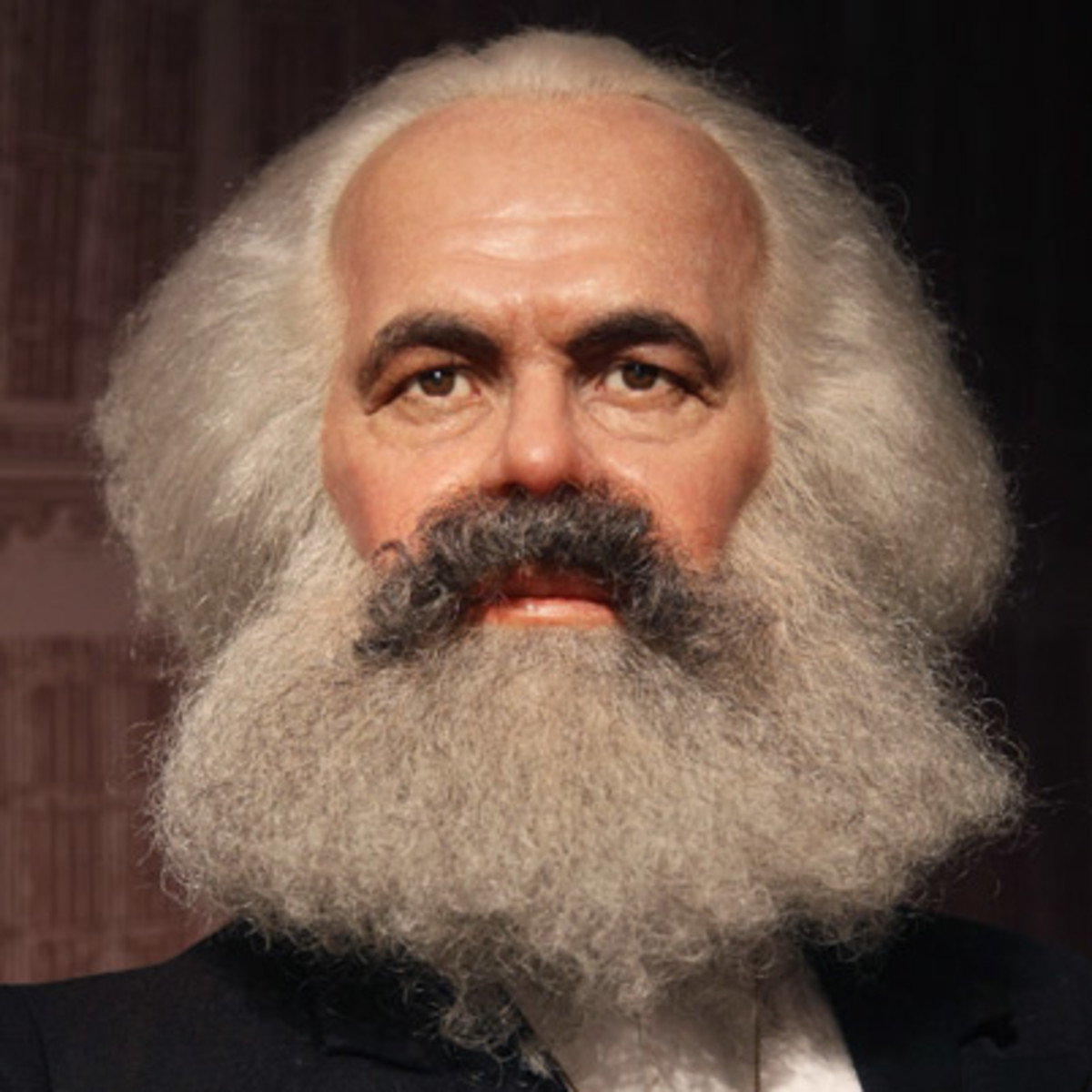
Marx at 200 and Robespierre at 260

This year is the 200th Anniversary of the birth of Karl Marx (1818-1883). A recent biography of Marx (reviewed here) places him very much as a man of his time. It is a sign of the success of Marx that his legacy is still so debated; it is a sign of his failure that defending Marx involves separating him, and his ideas, from the record of mass murder and tyranny of regimes calling themselves Marxist.

The latter line of apologia has a major problem: the prescient predictions of various of his contemporaries about where his ideas (and his praxis) would lead. If perceptive contemporaries could perceive the potential for disaster in his ideas in advance, it seems a bit otiose to deny the connection in retrospect.

Conclusions becoming premises
Part of the problem is that Marx was not ideologically consistent. His ideas of proper social goals become somewhat more grandiose and totalising over time. So, one can cite earlier writings as a defence against the implications and influence of the later writings. Which leads into the “good intentions” defence—if we cite Marx’s morally engaging statements, we can then claim that clearly he has nothing to do with what was done in his name (see here). Marx, after all, did famously state that he was not a Marxist.

But neither was Freud a Freudian, or Kuhn a Kuhnian and so on. This is the progression pointed out by Etienne Gilson (1884-1978)—the conclusions of the master are the premises of the disciple. Which is a very old pattern. When Philo of Alexandria used Greek natural law theory to effectively re-write the tale of Sodom and Gomorrah (Genesis 19), rejecting the rabbinical oral tradition and proposing a claim that sits poorly with the actual text, one can see both old and new interpretations in his own writing (in On Abraham XXVI-XXIX). Those that followed just took his natural law imposition on the text and dropped the complexities. As can be seen in St John Chrysostom’s homilies on Romans. So, what had been a story about God destroying societies which were anti-moral, which actively punished good behaviour, became a story about how people of the same sex having sex was treason against the purposes of the Creator (hence worthy of death). Which Philo himself, in his polemical war with Greek religious and sexual culture, was clearly just fine with (see Special Laws III: VII).

So, conclusions have consequences. Hence Bakunin (1814-1876) and other contemporaries picking accurately where Marx’s ideas would lead. It is misleading and dangerous to put so much weight on stated intentions, especially moral intentions as it is precisely the making-trumps element of morality which makes it so potentially oppressive. How things are framed (especially how other people are characterised), the means extolled, scale of the purposes embraced: these all matter at least as much, and often rather more, than intentions, however morally engaging they might be. But we live in an age where many people are deeply invested in moral entitlement status games based on their ostentatious moral intentions.

The Left that was
From 1789 to 1991, across the long C19th (1789-1914) and the short C20th (1914-1991), the term Left in politics had broadly consistent referents. The term started off with who sat where in the French National Assembly. The 1789-1991 Left was, in all its forms, a product of the Enlightenment and largely framed its moral and social analysis in terms of class. It was divided between the Radical Enlightenment; those who believed that applied human reason could transform man, that human nature was plastic to applied social action: and the Sceptical Enlightenment; those who believed that human reason could improve human social conditions but nevertheless had to deal with humanity as it was and had been.

This division, and associated (albeit often implicit) claims about human nature, went at least as far back as the Grandee-Leveller Putney Debates (1647) during the English Civil Wars with Henry Ireton (1611-1651) leading the Grandees, and Thomas Rainsborough (1610-1648), leading the Levellers. The antinomian aspirations and totalitarian tendencies of the Radical Enlightenment Left went even further back, to the radical heresy movements so brilliantly analysed by historian Norman Cohn in The Pursuit of the Millennium.

But that the Left did not erupt ex nihilo does not invalidate that there was a coherent Left in European and European-derived politics across the two centuries from 1789 to 1991—a product of the Enlightenment among whom various class-framings of politics and moral action were dominant. That Left has remarkably little in common with contemporary progressivism, as it has abandoned class framings and embraced Post-Enlightenment ideas (often, somewhat over-narrowly, labelled postmodernism). If one resurrected Karl Marx—or, for that matter Lenin (1870-1924) or Keir Hardie (1856-1915)—they would find familiar and congenial remarkably few of the concerns and obsessions of contemporary progressivism.

Conversely, if one resurrected Adolf Hitler (1889-1945), he would absolutely find familiar the concerns of contemporary progressivism. He would, of course, have a somewhat different take (apart from blame-the-Jews and a functional preference for Islam and Muslims over Christianity and Christians) but the concerns of contemporary progressivism (sex, the stories we tell about sex aka gender, sexuality, race, ethnicity, population movements, environmentalism and the valorisation of nature, identity, subjectivity and emotion over reason) were absolutely his concerns. Nor is this some sort of weird outcome; it flows naturally from the reality that the Post-Enlightenment, with its concern for emotion, experience and subjectivity, is the Counter-Enlightenment rebooted and Hitler was the embodiment of the Counter-Enlightenment as a political project.

The Jacobin curse
While I do not agree with anything close to an absolute separation of Marx’s ideas from the history of the attempt to operationalise them, it is still an error to put all the blame on Marx. For there was another figure whose influence on politics across those two centuries, and beyond, has been more disastrous.

That was Maximilien Robespierre (1758-1794) who, along with his political associates, such as Louis Saint-Just (1767-1794), created, not merely as conception but as practice, the Jacobin model of politics. The Jacobin model of politics is politics unlimited in means and unlimited in scope. That, is, politics willing to engage in any level of killing and repression, and willing to expand into any aspect of society and social interaction, to achieve its ends. A model of politics which relies on its sense of profound moral purpose to justify its refusal to accept limits in means and scope and, somewhat more implicitly, relies on its sense of profound social understanding to give the required confidence that what it does will lead where it intends.

That Marx’s ideas were profoundly congenial for the Jacobin model of politics is obvious. They bring together both the sense of profound, trumping moral purpose and the sense of profound understanding of human social dynamics. Lenin very explicitly saw himself as applying Jacobin politics to Marx’s ideas as the necessary way to operationalise them. A bringing together that successfully established the first enduring explicitly Marxist regime and led to, at its height, a third of humanity being ruled by such regimes. A bringing together, furthermore, that many, many intellectuals who regarded themselves as followers of Marx implicitly or explicitly endorsed.

Not all, of course; Rosa Luxemburg (1871-1919) famously demurred. But her murder amidst the failure of the Spartacus uprising both silenced her voice and associated her ideas with failure. And those political Parties which were officially Marxist, but remained committed to democratic praxis, came to abandon Marx’s ideas. Something of a hint there, methinks.

The reality is, Marx’s ideas were ideally suited for the Jacobin temptation and it has been only by acceding to that path that they have come anywhere near implementation. Of course, the conjunction turned out to be nothing like any form of human liberation: a warning in itself. It is, moreover, a general problem: what looks like Morality’s Empire so easily and recurrently becomes Moral Tyranny and then simply Tyranny. Marx’s ideas had particularly weak barriers to that progression. On the contrary, they slid down it oh, so easily.

But the poisonous influence of the Jacobin model extends well beyond the history of Leninism and its offshoots. Italian Fascism and German Nazism both represented the application of the Jacobin model to political projects: in the case of Fascism, to the project of Italian nationalism. In the case of Nazism, to the project of Aryan racial supremacy. If Lenin was Marx+Robespierre, Mussolini was Mazzini+Robespierre and and Hitler was Houston Stewart Chamberlain+Robespierre.

Of the three meldings of the Jacobin model of politics to political projects, Italian Fascism was by far the least morally and humanly disastrous. That was because Giuseppe Mazzini (1805-1872) was by far the most liberal thinker, compared to Marx or Chamberlain (1855-1927), and Italian nationalism was by far the most limited political project of the three.

Hiding from oneself
One of the purposes in the promiscuous use of the term Fascist!, even to claiming that German Nazism (whose victims number in the millions and whose ambitions ignited a world war) and Italian Fascism (whose domestic victims numbered in the hundreds and whose ambitions led to minor wars of opportunistic conquest) were just instances of the same phenomena, morally indistinguishable from each other, is to obscure the fact that, without Nazism, no modern political movement had remotely the record of tyranny and mass murder of various forms of Leninist regimes. It is deeply embarrassing to leave intensive manifestations of the Left as the peak of mass murderous tyranny, hence the endless invocations of Fascism! and of racism as the worst sin ever.

It is even more embarrassing to note that what made Nazism so horrible was not how different it was from the radical Left, but how similar it was. The grandeur of its ambitions for social transformation, the intensity of its mobilisation of society, the depth of its organised penetration of social institutions, all these were far more like the radical Left than any part of the broad non-Left (aka Right).

Nazi Germany institutionally resembled the Soviet Union far more than it did any of the Western democracies. Even now, as the People’s Republic of China retreats from command economics, it increasingly institutionally resembles Nazi Germany, without the Jew-hatred and Lebensraum ambitions (whatever its South China Sea ambitions, barely anyone actually lives there). Though the overseas Chinese communities provide some potential for irredentist politics.

So, it is very expedient for progressivists to shout “Fascism!” a lot and treat racism as the worst-thing-ever; to talk about Marx’s intentions and ignore the prescience of his contemporary critics. And do it even louder so as to obscure the abandonment of the concerns of the Enlightenment Left and the adoption of those of the Counter-Enlightenment, politically personified in Adolf Hitler. With Paul de Man (1919-1983), Heidegger (1889-1976) and Carl Schmitt (1888-1985), not to mention environmentalism, even providing ideological bridges.

A lot of the moral outrage and moral tub-thumping of contemporary progressivism is about hiding unfortunate political resonances and commonalities: above all, from themselves. But they are people obsessed with their sense of moral status and entitlement burbling endlessly on about equality; so there is a lot of cognitive dissonance to be hidden: above all, from themselves.

Is-people versus Ought-people
The history of the Jacobin model, of grand moral intentions and social understandings, gives us plenty of insights and warnings. But that is so only if you are an is-person who thinks that history is what has happened; that human nature is fairly consistent, so history is a source of warning and insight. If you are an ought-person, who elevates moral intentions as the measure of all things, for whom is history is about the glorious imagined and intentioned future, not limited by the constraints of human nature, then this is just a catalogue of past sins with which the well-intentioned need not concern themselves. And so they don’t, except to distance themselves from it.

Which also makes then not the people you want in charge of anything serious, given how many facts and historical lessons they are hiding from; so it is worrying how much they are now in charge of the culturally significant. In their informative and fun How Women Got Their Curves, the authors observe that:
the Second Law of Thermodynamics, which states that entropy or disorder increases in natural systems unless energy is available to counteract this process, applies to organisms no less than to nonliving, physical systems.
And also applies to social systems created by organisms. The assiduous efforts, in the name of morality's empire, to exclude people and concerns from social life, the war on inconvenient facts, the pervasive attack on the wellsprings of culture: folk pursuing such are an increasingly pervasive force for social entropy, and not in any good way.

A certain sense of impending slow disaster seems appropriate, this 200th anniversary of Karl Marx’s birth, 260th anniversary of Robespierre’s birth and 231st anniversary of Robespierre’s election to the Estates-General of the Kingdom of France.

ADDENDA: Branko Milanovic reminds us that, without Engels Marx might have passed into obscurity and without Lenin Marx would have nowhere near the global significance his thought achieved.

[Cross-posted at Skepticlawyer.]