Thursday, September 24, 2015

The EU's downward spiral

Econblogger Bryan Caplan is rightly sceptical of "it will end in civil war(s)" claims about the European Union's (EU) current travails, and is moreover prepared to put his money where his blogging is; hence he will accept bets on the issue.

Nobel memorial laureate and economic historian Robert Fogel argued that pressures over mass immigration were a significant aggravating factor in lead up to the US Civil War. Nevertheless, there is nothing remotely resembling slavery as a sufficiently explosive issue to spark civil war within EU member countries.

While civil wars within EU countries are not at all likely prospect, that does not mean that the EU is not in some serious trouble.

Kratos without demos
The EU lacks a demos; it lacks a common arena of public political bargaining encompassing the entire citizenry. Instead, it has 28 member countries, each with their own demos.

The European Parliament is, in practical terms, an arena for political display without effective political power. European voters clearly treat it as such, both in the serially declining voter turnout and the "treating it as a giant by-election" voting habits.

Lacking an EU demos, there is something of a "divide and conquer" pattern, where the central institutions of the EU -- notably the European Commission -- get elite agreement on policies and then manoeuvre their implementation with little or no effective input from voters, directly or indirectly. [As a British minister recently admitted.] Hence concern about the EU's democratic deficit. Ideas that elite folk are attached to but lack popular support (or even provoke popular antipathy) can be implemented in continual "end runs" around popular preferences.

This is such an excellent mechanism for getting things past voter resistance, that it has been expanding into a range of international organisations in the increasing internationalisation of policy-making -- not to be confused with globalisation, which is quite different. (Globalisation is the massive increase in international transactions, creating global markets and information networks.)

Broad political bargaining
The trouble with this approach is that there has been a strong tendency over recent centuries for expansion in both ambit and participation of the realm of political bargaining for good reason; such bargaining both engages broader social groups in the political process and forces policy-makers to pay attention to concerns and to factors they might otherwise discount or ignore. Such broadened political bargaining encourages policy more conducive to creating and maintaining productive and stable social orders that increase the ability of states to expropriate and mobilise resources.

So, one might expect that, if EU policy making is driven by narrow political bargaining, that there might be some tendency for policy-making to be not conducive to creating and maintaining productive and stable social orders. In particular, that there might be increasing signs of popular dissatisfaction, even voter anger.


Which is exactly what we see -- an increasing "angry vote" across EU countries. An "angry vote" which is not necessarily particularly ideological -- so it can be picked up by both "left" (Syriza, Podemos) and "right" (Front National, Sweden Democrats, UKIP, Freedom Party, Golden Dawn) political parties, the pattern depending on the dynamics of particular countries -- but which manifests in increasing support for previously not mainstream political parties and movements.

Narrow bargaining as dysfunction
The narrow-bargaining policy dynamics of the EU helps explain why the EU tends to be dominated by a combination of bad ideas of the left with bad ideas of the right. Start with labour markets regulated to protect job-incumbents, creating labour market insiders and outsiders. Import migrants not chosen for their ability to contribute to their new societies -- who are very much labour market outsiders -- while resisting notions that they adapt to their new societies (bad idea of the left). Add in monetary policy which obsesses over non-existent inflationary dangers and cannot tell the difference between hard money and sound money (bad idea of the right).

The interaction between these policies then amplifies their negative effects. Said negative effects, and the patent disregard for popular concerns, then amplifies voter alienation -- especially as European countries are very much not settler societies and there is a lot of popular scepticism about, or even antagonism to, immigration.

Healthy polities have mechanisms for correcting surges in angry votes. Thus Australia experienced an  "angry vote" upsurge in the Pauline Hanson/One Nation phenomenon. A mixture of making the case to voters (notably by Tim Fischer, head of the National Party), attack politics (led by an outraged Tony Abbott, who felt deeply personally betrayed when it turned out one of his staffers had also been organising for One Nation) and de-fanging policy adjustment (John Howard's "But we will decide who comes to this country and the circumstances in which they come" rhetoric and stop-the-boats policy) popped that particular "angry vote" surge.

This successful strategy may have worked with the voters, but generated a great deal of antipathy among progressivists. Since the fundamental principle of much contemporary progressivism is I am morally superior to you because I am more committed to equality than you, by the perverse dynamics of virtue signalling (see also here and here for earlier analyses), blocking popular preferences when they contradict the demands of such signalling have also become part of contemporary progressivism -- which makes contemporary progressivists in general ill-equipped to deal with "angry votes" but quite good at generating them. (Which then gives them even more people to signal superior Virtue against.)

Discounting popular sentiment
But the EU is not a health polity in the above sense, and not only because it is not fully a polity at all. The original motivating idea of the EU is that nationalism is the great sin and problem of European history. It is quite false: Europeans have never lacked reasons to kill each other (religion, class, ethnicity, language, ... ).

The great problem of European history has been unaccountable power. The solution to which is accountable power; political bargaining which encompasses the entire citizenry and makes those holding power in the state agents of said citizenry.

But if one diagnoses nationalism as the great sin, and given that nationalism is a popular sentiment, then popular sentiment is "the problem" and so one creates mechanisms for frustrating "dangerous" popular sentiments.

Or, in other words, another form of unaccountable power. Which has all the attractions of arrogance, status and convenience that unaccountable power offers its possessors.

So, we get policy making by an insufficiently accountable elite who regards popular sentiments as a source of dangers. This leads to policy making that generates "angry votes". The elite can then say to itself "see!, popular sentiment is dangerous -- look who people are voting for".  This derision of popular concerns, and continuation of "unaccountable business as usual", continues the pattern of policy making which annoyed many voters in the first place, which then increases the "angry vote", and so it goes.

This is a downward spiral that is not going to end well.

Unless some corrective mechanisms finally kick in. If they don't, then, while civil wars are not likely, the EU itself fracturing will become increasingly likely.


[Cross-posted at Skepticlawyer.]

Monday, September 21, 2015

States start with violence and expropriation

I came across this passage in a collection entitled States and Development: Historical Antecedents of Stagnation and Advance (pdf):
A realistic, even if stylized, account begins with the coalition building in which the elites of an emergent state are likely to engage, both with other power holders and with economically successful interests (p.11).
It is in a similar vein to this from a working paper entitled The Political Economy of Liberal Democracy (pdf):
When the propertied elite can rule on their own they establish an autocracy that protects their (property) rights and little else. This has been the usual outcome throughout the long arch of history (p.2).
Mehmet II entering Constantinople, 1453.
Friedrich Engels had a similar conception in The Origin of the Family, Private Property and the State (Chapter 9) 1884:
The state is, therefore, by no means a power forced on society from without ... Rather, it is a product of society at a certain stage of development; it is the admission that this society has become entangled in an insoluble contradiction with itself, that it has split into irreconcilable antagonisms which it is powerless to dispel. But in order that these antagonisms, these classes with conflicting economic interests, might not consume themselves and society in fruitless struggle, it became necessary to have a power, seemingly standing above society, that would alleviate the conflict and keep it within the bounds of 'order'; and this power, arisen out of society but placing itself above it, and alienating itself more and more from it, is the state.
As conceptions of the alleged inherent nature and origin of states, they are nonsense. States were frequently "power forced on society from without"--every time a pastoralist people conquered a river valley people, for example. All the (broadly Germanic) states created out of the ruin of the Western Roman Empire were forced on the subjugated peoples. Islamic states regularly took the form of "power forced on society from without". Any imperial conquest is "power forced on society from without". Even if the conquest is from within the society, as with Leninist states (those that were not themselves creations of imperial conquest from without).

A mamluk.
An extreme case of a state not being a product of its society was medieval Egypt. From the Fatimid period (969-1171) onwards, the most significant persistent state in Islam until the rise of the Ottoman Empire, was based on the Nile valley. There was a state in Egypt, but there was not an Egyptian state; the state's ruling elite was overwhelmingly foreign—Arabic-Berber under the Fatimids, Kurdish-Turkic under the Ayyubids (1171-1260), Turkic-Caucasian under the Mamluks (1260-1517). Indeed, the Mamluk elite was exclusively foreign, with the children of Mamluks being forbidden to hold tax-grant fiefs [at least in theory]. Moving into the local society moved them out of the state apparatus; at no stage during these centuries was the state in Egypt a product of the society it ruled.

For long periods, the state ruling Egypt was part of a larger empire originating somewhere else: Achaemenid (525-402BC & 343-332BC), Roman & Eastern Roman (30BC-620 & 630-641), Sassanid (621-629), Rashidun, Umayyad and Abbasid Caliphate (642-969); so very clearly not a product of Egyptian society. Even when the relevant state was centred in Egypt, the dynasty was foreign and deeply influenced by external models: notably the Ptolemaic dynasty (330-30BC) and Alawiyya dynasty (1805-1953). Egypt had not been under the rule of a local dynasty since the defeat of Pharaoh Nectanebo II in 342BC, nor would locals seize supreme power again until the Free Officers coup of 1952, over 2200 years later.

Expropriation first, other rules later
The origin of states starts with multi-generational authority and specialisation in violence -- a ruler and a bunch of warriors (perhaps soldiers, if matters are sufficiently organised)* -- able to expropriate local production. A process which was something of a series of political experiments until patterns and structures that worked could be developed.

The production of enough stored food able to be so expropriated is basic to the development of ranked societies, and social hierarchy more generally. Thus states evolved where (pdf) cereals (which are highly seasonal, so have to be stored, so can be expropriated) or seasonal tubers (potatoes, so ditto) dominated farming and not where non-seasonal tubers (which don't have to be stored, so can't be sufficiently expropriated) dominated farming. Hence also, for Malthusian reasons, such expropriation dominated the persistent creation of social surpluses (income above subsistence) until the outbreak of the Growth Revolution (aka Industrial Revolution), as noted in my previous post.

The state is the structure by which the ruler and warriors (or ruler and agents more broadly) routinely expropriate resources from those subject to their control. That is, subject to that routinised and expected control we call authority. There is nothing that requires any particular state to be, in any strong sense, a product of the society it rules. Nor is rule making other than a derivative function of the control and expropriation which makes a state, a state.

The first, and arguably greatest, of historical sociologists, Ibn Khaldun (1332-1406) defined royal authority as follows:
Royal authority, in reality, belongs only to those who dominate subjects, collect taxes, send out (military) expeditions, protect the frontier regions, and have no one over them who is stronger than they. This is generally accepted as the real meaning of royal authority (p.152).
Notice the total absence of any reference to making, or even enforcing, laws. Ibn Khaldun does discuss the preference of royal authority for social tranquility, but that is derivative of its nature, not central to it.

Cortez organising the replacement of the Aztec state.
Any rule-making engaged in by the state, including recognition of property rights, is dependent on the mechanics and exigencies of said expropriation. Thus, for example, whether farming was irrigation-dominated (so production was highly transparent to ruler or local elites) or rainfall-dominated (so production was much less so) directly affected who (pdf) was the effective owner of land: farmers, local elites or the ruler.

In Egypt, production was highly transparent to central authority (to the extent that revenue could be calculated by how high the annual flood reached on the Nilometer) so Egypt was a pioneer, and persistent example of, highly centralised state, with the ruler (and designated agents) being the effective landowner(s) because of their role in the state, not the other way around.

The degree of transparency of production to the state is a central dynamic. In the modern era created out of the Growth Revolution, increased transparency of production to the state, due to the rise of documented employment relationships, has greatly increased the state's ability to expropriate, mainly via making every firm into agents of the expropriation process.

Rules applying to the wider society are so not basic to the operation of the state that in Islamic states, law was dominated by Islamic clerics (Sharia) and in Hindu states, it was dominated by Brahmins (Manusmrti). While the Chinese state developed a remarkably minimalist approach to law because of the limits on the number of officials (pdf) the ruler could usefully supervise by the command-and-control mechanisms which dominated the operation of the state after the Song dynasty's (960-1279) establishment of examination as the only route to office holding.

Again and again, the "class structure" of a society was driven by the dynamics between local geography (hence dominant mode of production), the demands of expropriation, the transparency of production to any state and enduring religio-cultural constraints. States were far more drivers of social structures than creations of them as expropriation so dominated the creation of persistent social surpluses. (Especially when we consider the role of states in spreading religions.)

Types of states
In terms of the locus of decision-making, states can be divided into three types.

(1) Apparat state: the locus of political decision-making is entirely within the state apparatus itself -- any social bargaining is, at most, limited to the operation of state institutions, not their structure or form. Islamic states from the Abbasid Revolution until the later C19th, the Song, Ming (1368-1644) and Qing (1644-1912) dynasty states of China, and Leninist states are of this type.

(2) Bargaining state: bargaining with interest groups outside the state apparatus is extensive enough to affect the structure, form and operation of state institutions. Medieval and Early Modern European states were typically of this type.

(3) Participation polity: social bargaining has become so extensive as to dominate the state apparatus such that the key decision-making officers of the state are agents of the political nation. Functional democracies are of this form, but so were states such as the Serene Republic of Venice and many Greek polities.

The notion that the state is, by its nature, an instrument of the wider society (or the elite members thereof) is a product of a civilisation where the participation polity was either the dominant type of state in practice or normatively, the rest being bargaining states.

It is quite clear, reading Ibn Khaldun, that he has no such expectation whatsoever of the state being an instrument of the society it rules. Why would he? He lived under, and worked for, apparat states his entire life. Apparat states moreover whose standard pattern, which he brilliantly analysed, was of invading pastoralists conquering and ruling sedentary coastal and river valley dwellers, with the resulting state being their instrument of rule.

Laws and states
There were rules, even law (generally customary law), and property rights before there were states. But that rather reinforces the point; rules and the delineation of property rights are not basic to the operation of states. Typically, they are, at best, convenient for their operation. A state is not a rule-making club as implied by the above quotes, it is a structure of organised violence which supports itself by expropriation. Even in the modern world, the easier the expropriation, the larger the revenue of the state.

In his magisterial The Shield of Achilles: War, Peace and the Course of History, constitutional law academic Philip Bobbitt writes:
Law cannot come into being unless the state achieves of a monopoly on the legitimate use of violence (p.6).
Which is simply false. First, because law need not be a product of the state; stateless societies can have laws, albeit of a customary nature. Second, because even if there is a state, use of violence by folk or bodies which are not agents of the state may still be accepted practice. Duels, self-defence, armed retinues are all features of those franchised warrior states we call medieval (or, rather unhelpfully [pdf], feudal).  Note that Ibn Khaldun does not assume a monopoly of violence by royal authority, merely dominance therein.

Mathilda of Tuscany, presiding.
Any rule making, recognising or enforcing engaged in by a state flows from the state's fundamental basis of a structure of organised violence which supports itself by expropriation. Historical images of rulers giving judgement usually incorporate some reference to their ability to wield organised violence. But it is the organised violence sufficient for routinised expropriation which makes a state a state, not "a monopoly of the legitimate use of violence" and not law making. Thus ibn Khaldun is far more correct when he refers to "no one stronger than they" -- that is, being the dominant, as distinct from only, wielder of violence.

Stable social order is generally convenient for the expropriation of production by states--even preferable, as social stability generally increases the stream of resources available to be expropriated as well as the ease of expropriation. In particular, the more stably routine the expropriation, generally the better for the expropriators. (And the less overt the reliance on organised violence.)

Hence the paradox of politics or paradox of rulership:
We need the state to protect us from social predators but the state itself is the most dangerous of social predators.
Which Ibn Khaldun was expressed as:
[The residents] are thus prevented by the influence of force and governmental authority from mutual injustice, save such injustice as comes from the ruler himself (p.97).
This nature as social-predator-which-also-protects flows from states protecting in order to expropriate. There has always been an implicit protection deal attached to state expropriation, as live-and-productive farmers provided so much more to expropriate than dead-or-devestated ones.

So state societies (societies with a dominant wielder of violence) were safer than non-state societies and societies where the state was the effective monopoly wielder of violence have tended to be safer still. Yet the protection originates in the extraction, not the other way around. Hence, the more unrestrained the state is, the more predatory it is.

States do typically concern themselves, directly or indirectly, with ensuring social order. But they do not exist to create or sustain social order; anything they do create or sustain such social order comes first out of the needs of sustaining themselves through expropriation. Nor are they inherently products of the society they rule.

Which is why it has been such a struggle to develop states which are instruments of their society and do (usefully, and particularly broadly) serve social order and the inhabitants thereof, rather than imposing whatever is convenient. But that is not where states start, and simply assuming such an endpoint is no way to analyse the operation of states. Doing so is a classic example of looking back without realising that the past is a foreign country; they do things differently there. To usefully analyses states, one has to start with their core nature, their core origin; not some retrospective fairy tale about the same.


* Warriors own their own equipment and owe personal service; their reputation is based around honour. Soldiers use equipment owned by whom they serve; their reputation is based around duty. Soldiers are thus armed employees and require more centralised logistics than do warriors. 

[Cross-posted at Skepticlawyer.]

Saturday, September 19, 2015

History and surplus: 10,000 years in one blog post

Human history has largely been driven by the creation and use of surplus production -- that is, production beyond subsistence. (Subsistence meaning sufficient to sustain life and reproduction.) The change from prehistory to history is very much a matter of the generation and use of surplus production.

There are essentially only three ways for such surplus to be created.

(1) Labour scarcity
If the scarcity of labour compared to land and capital increases, then the return to labour rises as the marginal productivity of labour increases (since there is more land and/or capital per unit of labour) and so labour income can rise above subsistence. A demographic disaster such as the Black Death creates such labour scarcity.

Given the historical norm of low levels of capital in human societies, such labour scarcity as did occur was predominantly increased scarcity relative to available land. For most of human history, demographic disaster was the dominant way for labour scarcity to occur, apart from a sufficiently quick increase in the ease of calorie production (such as the introduction of potatoes and other crop transfers from the Columbian Exchange) raising the productivity of land.

Sufficiently quick because, in the normal course of events, any labour scarcity would be (literally) eaten away by increased production of babies. What is known as Malthusian dynamics. (The most accessible discussion of Malthusian dynamics is in Gregory Clark's A Farewell to Alms; though see Deidre McCloskey's response to his [pdf] explanation for the onset of the Industrial Revolution.)

Historically, most labour scarcity generating occurrences were once-off events with, due to Malthusian dynamics, temporary effects on labour scarcity. Hence, after the Black Death, across most of Europe (but strikingly not in NW Europe), wage rates declined back to their pre-Black Death level.

Until the Growth Revolution (i.e. the Industrial Revolution and associated changes), growth in production mainly went into increased population. That is the essence of Malthusian dynamics.

There were some exceptions, periods of economic efflorescence that various scholars have noted: the Greek city states; the Roman Republic and Early Empire; early Abbasid Mesopotamia; C18th Qing China; Tokugawa Japan; early modern NW Europe. But these periods and places were historically unusual (and are matters of lively debate among scholars) and were generally followed by return to Malthusian norms. Long-term population growth was very low -- slightly over 2 surviving children per woman.

Increased labour scarcity (relative to other factors of production) is the only mechanism for increasing average returns to labour other than increasing productivity of existing factors of production (which historically mean land, as capital was so limited) through technological change (e.g. increased calories production via new crops).

(2) Capital intensity
If resources are set aside from consumption, capital (the produced means of production) can be created. That setting aside creates an initial surplus. It can be done as a setting aside from reproduction -- say, to support religious devotions. It can also be done as a deliberate investment in higher quality children (i.e. with more human capital) rather than simply more children.

Whatever the motive for the original setting aside, capital so created can then generate surplus production and do so for the owners of the capital (for, if it does not, there won't be much capital creation). It, however, will only generate a surplus for the holders of capital unless the production of capital is of such a scale as to increase general labour scarcity.  (I.e. sufficient capital per unit of labour to raise labour productivity, giving labour a scarcity premium above subsistence.) Even then, the production of capital will only have a continuing effect if the resultant increase in the ratio of capital to labour is persistent: if the labour force is growing, that then requires capital to be created at the same, or faster rate, than the growth of the labour force. 

Central to the Growth Revolution was capital being continually created at a higher rate than the growth in the labour force; including investment in higher quality children. The latter effect eventually led to the demographic transition -- a dramatic drop in fertility rates. Especially as a drop in child mortality rates encouraged greater investment in child quality, rather than more children, while the increased role of capital in production, and concomitant increased labour scarcity, led to expanding economic role and status for women (who disproportionately bear the costs of child rearing; so giving them more say and options can be expected to lower fertility rates). The expansion of the importance of human capital further broadened benefits from capital deepening and increased capital complexity; both effects then moving societies even further away (pdf) from any worker-capitalist class dynamic.

As Adam Smith famously noted with his example of division of labour in pin manufacture, specialisation increases production; this, of itself, does not increase incomes above subsistence, apart from some initial labour scarcity effects eaten away by normal Malthusian dynamics. If specialisation does increase incomes above subsistence in any persistent way, it is usually to the owners of the capital involved, and may also involve some combination of human capital, specific-location resources, advantages in information and risk management. Specialisation increases the scope and scale of production and, typically, of markets but does not, thereby, increase labour income.

Note: one should generally not use the term capital accumulation to describe the process of expansion of capital. Capital does not "accumulate" like dust bunnies under the bed. Capital is the produced means of production; someone has to make the conscious decision to use resources to produce capital rather than simply consuming the resources; and to produce some specific capital. Who is making such a decision, why and in what circumstances is not some mere bagatelle, it is utterly central to understand any process of capital formation. The phrase capital accumulation does not put capital into history, it takes it out of history--that is, out of the realm of contingent human action.

Note also: in the Growth Revolution, innovation hugely dominated allocation. That is, it was not merely that resources were set aside for the production of capital, it was that--due to the invention and application of technology that we call innovation--the range and productivity of capital (and thus labour) that could be, and was, produced hugely expanded; notably through the expansion in access to, and use of, energy. The increase in the range and productivity of capital then further encouraged the further creation of capital and innovation, creating a reinforcing upward spiral.

It was not merely the "piling up" of capital that counted, but the institutions and habits for the expanding creation, and effective use, of capital. (The importance of effective use is a major reason why foreign aid has often had such disappointing results--including the, often dreadful, incentives it generates for authoritarian rulers.)

Economic historian Deidre McCloskey has written extensively on how innovation, and the habits and institutions thereof, came to dominate allocation; but the more general point of innovation hugely dominating allocation in explaining growth and expanded capacities of the Growth Revolution is widely acknowledged by those who attend seriously to the history of such matters. In Gregory Clark's words:
investments in knowledge capital that generate efficiency growth not only explain most modern economic growth at a proximate level, they explain all modern growth (p.207).
Thus, given any significant degree of potential technological dynamism, the costs of any scheme which sacrifices innovation for allocation (including redistribution) will expand dramatically over time.

NB: This section has been slightly expanded to (hopefully) clarify the importance of efficiency growth in the Growth Revolution.

(3) Expropriation
The third way to generate a surplus is to seize production before it can be use to support reproduction. That is, to expropriate it.

Mere increased production does not generate a surplus above subsistence. The normal historical effect of increased production is simply to support more babies. Expropriation allows production to be seized and diverted (pdf) before it supports more babies, thereby creating a social surplus.

Across human history, from the development of farming around 11,000 years ago until the Growth Revolution, what was the dominant way to create a social surplus? Expropriation.

Leaving aside low level thievery and brigandage, by far the dominant expropriators were wielders of organised violence. Which is why the history of major human constructions prior to the Growth Revolution is utterly dominated by such wielders. Either the rulers of states, or their agents, or those holding expropriation franchises under them.

Hence also, the production of enough stored food able to be so expropriated is basic to the development of ranked societies, and social hierarchy more generally. Thus social hierarchies, and ultimately states, evolved where (pdf) cereals (which are highly seasonal, so have to be stored, so can be expropriated) dominated farming and not where non-seasonal tubers (which don't have to be stored, so can't be sufficiently expropriated) dominated farming -- potatoes, being seasonal, had the same dynamics as cereals.

All of which meant that elite social position tended to be much more about one's (direct) relationship to the process of expropriation than to (what might be a quite indirect) relationship to the means of production. Thus, in medieval societies, that mounted armoured warriors were capable of dominating (and expropriating surplus from) local peasants was much more central to their social position than simply holding land--especially as, in the case of Islamic societies, they held tax grants, not land as such. (Tax grants were used rather than land grants, as owned land would be subject to Sharia inheritance laws, requiring division between heirs into holdings not large enough to support a mounted armoured warrior).

But even those who were directly involved in production had their lives profoundly affected by the processes of expropriation. Indeed, anthropologist and political scientist James C Scott has written a brilliant book on how basic mode of production (farming, horticulture, foraging), and even cultural identities, resulted from different social strategies regarding the process of expropriation. (Seriously, if you have any interest whatsoever in historical dynamics, one really should read Scott's The Art of Not Being Governed: An Anarchist History of Upland Southeast Asia.)

Expropriation could also be a way of blocking labour from enjoying the benefits of labour scarcity--through operation of human bondage (i.e. slavery or serfdom).

Providing so as to extract
It would be incorrect, however, to think that expropriation was merely extraction. To have stable expropriation, a certain amount of public goods had to be provided to establish and maintain the social order needed for routine expropriation.

State societies (societies with a dominant wielder of violence) were safer than non-state societies and societies where the state was the effective monopoly wielder of violence tended to be safer still. There was an implicit protection deal attached to state expropriation, as live-and-productive farmers provided so much more to expropriate than dead-or-devestated ones.

That the state both expropriates and protects (and protects in order to expropriate) is the basis of the paradox of politics or paradox of rulership. The fundamental idea was expressed by Ibn Khaldun (1332-1406):
[The residents] are thus prevented by the influence of force and governmental authority from mutual injustice, save such injustice as comes from the ruler himself (p.97).
The paradox can be expressed more generally:
We need the state to protect us from social predators but the state itself is the most dangerous of social predators.
A paradox that can never be solved, only managed more or less well. (Lebanon represents the technique of avoiding state predation by having a state so weak it fails to provide basic public goods.) The delusion that one has solved the paradox of politics typically just leads to much greater levels of state predation, since said delusion generally leads to abandonment of checks and balances on wielding state power. (The entire history of Leninism is one long, dreadful, series of examples of this principle.)

The struggle over expropriation
Until the Growth Revolution, production was overwhelmingly dominated by land (i.e. farming, fishing, mining); expropriation dominated the creation of social surpluses; and organised violence dominated expropriation. Therefore, violent struggles over land productive enough to support expropriation were a hardy perennial of human affairs. Even in our time, high value production fixed in location (such as oil or diamonds) is disproportionately important in promoting armed conflict (pdf).

Historically, trade complicated but did not transform matters. Trade was potentially mobile, so it was a somewhat more difficult expropriation problem than fleecing stationary standard-crops farmers, as trade typically required more specific provision of public goods.

But precisely because trade could swell or shrink in ways sensitive to state action (such as provision of public goods of what quality over what territory), and given its nodes-and-routes network structure and effects, trade almost certainly had positive economies of scale for revenue collection--unlike land, whose revenue possibilities likely simply scaled up proportionately for any given quality of land. Trade was thus likely disproportionately important for the size and scale of state activity; as revenue from trade counteracted diseconomies of scale in costs of control over territory while revenue from land generally did not. (Even gold and silver mining mostly got its revenue benefits from the value of gold and silver as trade goods.)

But taxing trade was not so much more difficult an exercise than fleecing stationary farmers that states did not also use organised violence to seize key trade nodes and attempt to dominate trade routes. This was the world aptly described by Nicolo Machiavelli (1469-1527) in his Discourses on Livy:
... it is not gold, as is vulgarly supposed, that is the sinews of war, but good soldiers; for while gold by itself will not gain you good soldiers, good soldiers may readily get you gold.
A transformed dynamic
The Growth Revolution's dramatic increase in the role of capital, especially given the diverse (i.e. heterogeneous) nature of capital, did transform matters. Expansion in the ways of producing social surplus made expropriation much more derivative in accessing any surplus, as it became much more about taxing surplus production after it was generated rather than creating surplus by seizing production before it was used to support reproduction.

But becoming more derivative did not mean that the return to expropriation declined. On the contrary, the Growth Revolution's expansion of documented employment arrangements has massively increased tax's share of total production (especially in societies which have adopted the full Growth Revolution deal), by making production much more transparent to the state and turning firms into agents of the expropriation process. But that is about accessing surplus production, not creating surplus by removal, so seriously shifts the expropriation incentives in dealing with those from whom production is to be expropriated.

Thus, the potential return to production-fostering (rather than production-seizing) government greatly increased (with the caveat about fixed-location resources noted above; though even there a certain competence in managing the resource is also required). Effects that have been further increased by innovation dominating allocation in expanding production. All of which has encouraged a strong tendency to broadening of political bargaining and participation.

The shift to taxing income (much of it labour or human capital income), the increased density and complexity of production, the political organising and bargaining implications thereof; all increased dramatically the return to linguistic homogeneity, and ethnic homogeneity more generally, for states. Linguistic and ethnic homogeneity increased the costs of exit, allowing higher taxation. Ethnic homogeneity reduced diversity in framings and preferences, allowing more efficient public good provision; while linguistic homogeneity improved the ability to negotiate taxation-public good trade-offs.

In other words, abstracting from other factors, the more ethnically homogeneous the citizens of a state are, the higher the taxation-expenditure trade-off can be expected to be; the less ethnically homogeneous the citizens of a state are, the lower the taxation-expenditure trade-off can be expected to be.

One of the inherent problems of the EU is that -- due to its ethnic and linguistic diversity -- it lacks a functional demos, a shared realm of political bargaining among citizens.

It is not surprising that the first political-organisation effect of the Growth Revolution -- massive increases in trade due to railways and steamships -- led to a surge in imperial expansion (i.e. territorially larger states) while the second political-organisation effect of the Growth Revolution -- particularly given the massive expansion in literacy-based markets -- was a dramatic surge in nationalism.

The latter effect, combined with the dramatic drop in the relative importance of land per se as a revenue source, then massively undermined territorial imperialism.  That is, territory became both less specifically important and more problematically differentiated (at least in the sense of resident populations): though a solution to the latter has been population exchange so as to achieve ethnolinguistic homogeneity.

More recently, globalisation of culture and the evolution of English as something of a global lingua franca has weakened these effects, at least in the developed democracies.

Expansion of political nations to include all adult citizens has tended to make such democratic states more squeamish about casualties from warfare. While the expansion of welfare states meant that colonisation of their own societies came to massively dominate colonisation of other societies as a source of expropriation-funded career paths (especially given externalisation of the welfare model -- i.e. foreign aid).

But, even among authoritarian states, the decline in the return to seizing land in general, and linguistically divergent populations in particular, probably has something to do with the general drop in violence, particularly wars, as well as the shift in wars being much more intrastate (i.e. fighting over access to, and direction of, existing expropriation processes) than interstate (disruptively seizing production). One notes that regions where various states share a single language, often without much deeper history as states (the Middle East), or where borders have a high rate of failure to match ethno-linguistic patterns (Africa) have been prone to higher levels of violent conflict.

It is also not surprising that states organised to expropriate labour surplus (i.e. all command economies)* have been more highly militarised than states with broader production of social surplus (and the politics that tend to evolve with that).

On the other hand, the decline in the material return to violence tends to make other motives more salient in the violence that does occur; motives such as status (notably avoiding or achieving domination) and search for transcendence (whether secular or religious).

Even so, that we live in a world where the production of social surpluses above subsistence is not dominated by expropriation (and violent struggles over the same) is just one of several ways we live in a very different world than did those before the Growth Revolution.


* Command economies control prices and wages. That means that prices and wages can be set so that basic wages are below subsistence, but "bonuses" from extra production push wages above subsistence, increasing the systematic extraction of labour surplus beyond merely paying subsistence wages. (Public choice economist Mancur Olson explains the mechanics nicely in his posthumous Power and Prosperity: Outgrowing Communist And Capitalist Dictatorships.) Hence command economies typically blocked exit--all labour surplus extraction systems rely on blocking alternatives for workers. (So, yes, exit-blocking command economies are in the same game as slavery and, especially, serfdom.) It is also why states that continue to have Leninist regimes (China and Vietnam) open their borders as they move away from being command economies; (1) they extract revenue from a widening range of transactions, so wish to expand the number of transactions, which closed borders militate against and (2) the less they rely on extracting labour surplus, the more the benefit in blocking exit declines.

[Cross-posted at Skepticlawyer.]

Friday, August 21, 2015

Open and closed state systems: the geography of regional unification

Recurring periods of unification were a notable feature of the history of China; notably the Qin-Han (221BC-220), Sui-Tang (589-907), and Yuan-Ming-Qing (1271-1912) periods of unification. (The Northern Song [959-1126] arguably do not count as a full unification, since they never controlled the northern regions, which was under the control of the Liao dynasty [907-1125].) Indeed, of all the major civilisation centres, China was unified more frequently than any other.

Conversely, Europe was never unified and the Mediterranean basin was unified only once--under the Roman Empire. So, why was China repeatedly unified, while the Roman Empire was a one-off?

Unification propensities
The first thing to note, is that we are looking at different propensities to be unified. There were centuries-long periods of Chinese history when it was not united: nevertheless, compared to other civilisation centres, it showed a relatively high propensity for unification. Conversely, the Mediterranean basin had a low propensity to being unified (it was unified once) and Europe as a whole effectively no propensity to being unified (as it never was).

Size of largest and second largest empire.
Note also that propensity to unification is not the same as any more general propensity to large states or mega empires. The former is about the propensity for a specific region to be ruled by a single state, not mere state size or capacity. (Though, of course, state capacity matters in the sense that the region has to be within the possible ambit of control by a single state, given the level of organisational capacity achieved by states in a particular time period.)

Both historical demographer Peter Turchin (here) and historian T. Greer (here) have posted on the contrast between China and Europe. Both of the them reject what Greer calls the fractured land hypothesis, which Greer describes thus:
... they suggest that China's political unity and Europe's perpetual disunity are reflections of the unbroken terrain of the first and the disparate geography of the second. Two prominent examples can be found in Paul Kennedy's Rise and Fall of the Great Powers: Economic Powers and Military Change, 1500-2000 and Jared Diamond's Guns, Germs, and Steel: The Fate of Human Society.
Turchin and Greer both argue that the geography of China is more similar to Europe's than the hypothesis requires.

I completely agree with them, the fractured land hypothesis is not at all a satisfactory explanation of the different propensities to unification. Greer concludes his post with:
A close examination of the geography of East Asia suggests that there is no geographic feature capable of explaining the divergent paths of European powers like Germany, France, and the Netherlands that cannot be found in China. Chinese unity did not come because of its geography. It came in spite of it.
While completely agreeing with the unsatisfactory nature of the fractured land hypothesis, I completely disagree with Greer's wider conclusion. China's geography does explain why it had a relatively high propensity to unification--provided we look at in terms of the interaction between geography and state systems.

State systems: how bounded?
In using the concept of a state system, I am adopting the terminology and definition of historical sociologist Charles Tilly in his seminal Coercion, Capital and European States: AD 990-1992:
States form a system to the extent that they interact with each other regularly, and to the degree that their interaction affects the behaviour of each state (p.162).  
To explain varying propensities to unification, we have to examined how open or closed, how bounded, a particular state system is. A state system is completely open if it has no borders without effective states (or power projection by states). The contemporary global state system is completely open, it has no such geographical borders. But we have not always had a global state system: in fact, far from it.

A state system is completely closed if it is bounded on all sides by borders without effective states (or power projection by states). Apart from some early periods of state formation in various regions, this has essentially never been the case. A state system can be relatively closed, however. If, for example, all but one border is without effective states (or power projection by states).

The closed and controllable state systems of China
Which is precisely the situation that China was in for most of its history. Until the C19th, no state projected significant state power across its coasts. With the exception of the relatively brief Tibetan Empire (618-842)*, no state projected significant state power into China across a South-to-West-to-North arc from the Vietnam border to the steppes. For most of its history, the only open border for the projection of state power into China was the steppes border.

The interaction between the people of the plough (the Chinese) and the people of the bow (the pastoralist nomads) has been central to Chinese history. But it has been central to Chinese history precisely because, for the overwhelming majority of Chinese history, it has been the only open border across which external state power was projected into the farming lands of China. And that was most emphatically been a product of the geography of China. That its agrarian heartland is a series of river valleys bordered by coasts, jungles, mountains and deserts across which state power was not seriously projected from outside (with the above noted relatively brief Tibetan exception) and by the steppes, across which it was. 

Why does that matter for the propensity to be unified? Because the area that is so bounded was able to be controlled (given the transport and communication technology available) by a single state. So, in a period of disunity, if and when one state gained a military advantage over the others, the geography of China meant that the period it needed to sustain that military advantage to roll up the other states in the bounded state space was relatively short. Short enough to generate China's relatively high propensity to be unified. And, since there was effectively only one border across which rival state power could be projected, there were considerable economies of scale in military effort to be reaped once unification was achieved.

As we are looking at the interactive dynamics of state systems--that is, their movement through time--both military and administrative technology matter. In particular, what level of resource mobilisation states in the relevant state space have the organisational capacity to do, matters. It may take considerable time before one participant develops the organisational capacity to overwhelm the other states in the relevant state space. Hence centuries of disunity even in the case of China. Since we are looking at varying propensities, while geography remains essentially a fixed constraint, only explanation in terms of dynamics--specifically, state system dynamics, given that we are looking at the propensity for the state system to evolve into a single state--has any chance of explaining the pattern.

The Roman exception
If we look at propensity to unification in terms of characteristics (and the dynamic possibilities and patterns therefrom) of state systems, we can see why Europe had effectively no propensity to unification. Once state formation had spread beyond the Mediterranean littoral, it was never a closed state system in the above sense. There were too many borders across which state power could be (and was) projected into too large an area for establishing and maintaining unified control. Which meant too many directions from which unity could be blocked and (especially) military dominance blocked (as a series of would-be hegemons found).

The centuries earlier Mediterranean world that the Roman Republic confronted was quite different. There were no states beyond the Mediterranean littoral, except in the East. The forests of Europe, the deserts of the Sahara, were either empty of states or too much of a barrier for effective projection of state power. Only eastwards--in particular, the Iranian plateau--were there state(s) able to project state power into the Mediterranean littoral. Which was not enough to block Mediterranean littoral unity if one state had enough of a military advantage for long enough. 

The Mediterranean littoral was a large area, even given the utility of the Mediterranean itself for transport and communication. So, a state had to sustain a significant military advantage for a significant period of time to roll up all the other states and unify the Mediterranean littoral. But, if a state did, then the only border confronting significant state power was with the Iranian plateau. A geographical pattern which could generate significant economies of scale in military effort, if and when unification was achieved.

Which it was, because the Roman Republic did sustain such a military advantage for a long period of time, winning every external war for about three centuries. Long enough, indeed, to roll up every other Mediterranean littoral state and unify the entire Mediterranean littoral under one state.

Success that blocked replication
But the very success of Rome ensured that such a unification was a one-off, as the example of Rome spread the techniques of state formation beyond the Mediterranean littoral, which never again became a closed state system.  The Umayyad Caliphate and the Ottoman Empire made notable attempts at unifying the Mediterranean littoral, but it was precisely the Sahara-flanked region of the Mediterranean littoral--not that bordering the now too-deep European state system--which they united with the Middle East. Though neither controlled the entire African coast of the Mediterranean for as long as the Romans did.

So, I agree, the fractured land hypothesis does not explain the relatively high propensity for unification of China and the effectively zero propensity for unification of Europe; or why the Roman Empire was a one-off. But the interaction between geography and its effect on the dynamics of state systems does very definitely explain those patterns.

Geography matters in history; particularly before the Growth Revolution (to use T. Greer's nice phrase) from the 1820s onwards: for geography provided powerful, continuing constraints on human affairs. Only with steamship and railroads, from the 1820s onwards, (along with the development of telegraph systems from the late 1830s onwards) did humans develop any significant technological capacity to overcome the constraints of geography. It is not surprising that a recent study found that, prior to said Growth Revolution, geography appears to have dominated institutions in explaining the average long-run incomes of regions.

China was a relatively closed state system, with blocking boundaries, so had a high propensity to unification. The Mediterranean basin stopped being a relatively closed state system, so never repeated the Roman unification. While, once there was a European state system, it was never sufficiently bounded to be unified. All the results of the interaction of state system dynamics with geography.


[Cross-posted at Skepticlawyer.]

* The period of the Tibetan Empire coincided with the Sui-Tang unification, so China was already unified.

Sunday, August 16, 2015

Lenin, Luxemburg and Gorbachev's failure (a Vladimir, Rosa and Mikhail story)

Vladimir Lenin gave his name to Leninism, a way of operationalising revolutionary socialism. In fact, essentially the only way that has proved effective, based on adopting the Jacobin model of political action. That is, totalist politics--no limit on the range, or means, of political action in pursuit of a specific political project.

Lenin was happy to adopt the title of Jacobin:
A Jacobin who wholly identifies himself with the organisation of the proletariat—a proletariat conscious of its class interests—is a revolutionary Social-Democrat (1904).
And also:
Bourgeois historians see Jacobinism as a fall ("to stoop"). Proletarian historians see Jacobinism as one of the highest peaks in the emancipation struggle of an oppressed class. The Jacobins gave France the best models of a democratic revolution and of resistance to a coalition of monarchs against a republic. The Jacobins were not destined to win complete victory, chiefly because eighteenth-century France was surrounded on the continent by much too backward countries, and because France herself lacked the material basis for socialism, there being no banks, no capitalist syndicates, no machine industry and no railways.
“Jacobinism” in Europe or on the boundary line between Europe and Asia in the twentieth century would be the rule of the revolutionary class, of the proletariat, which, supported by the peasant poor and taking advantage of the existing material basis for advancing to socialism, could not only provide all the great, ineradicable, unforgettable things provided by the Jacobins in the eighteenth century, but bring about a lasting world-wide victory for the working people.
It is natural for the bourgeoisie to hate Jacobinism. It is natural for the petty bourgeoisie to dread it. The class-conscious workers and working people generally put their trust in the transfer of power to the revolutionary, oppressed class for that is the essence of Jacobinism, the only way out of the present crisis, and the only remedy for economic dislocation and the war (1917).
Lenin was also clear on what that political approach involved:
Of course, the application of this principle in practice will sometimes give rise to disputes and misunderstandings; but only on the basis of this principle can all disputes and all misunderstandings be settled honourably for the Party. ... The principle of democratic centralism and autonomy for local Party organisations implies universal and full freedom to criticise, so long as this does not disturb the unity of a definite action; it rules out all criticism which disrupts or makes difficult the unity of an action decided on by the Party (1906).
In shorthand terms, Leninism was Karl Marx + Robespierre.

Revolutionary Marxist Rosa Luxemburg famously disagreed with Lenin's approach to political organisation:
Freedom only for the supporters of the government, only for the members of one party – however numerous they may be – is no freedom at all. Freedom is always and exclusively freedom for the one who thinks differently. Not because of any fanatical concept of “justice” but because all that is instructive, wholesome and purifying in political freedom depends on this essential characteristic, and its effectiveness vanishes when “freedom” becomes a special privilege. ...
Public control is indispensably necessary. Otherwise the exchange of experiences remains only with the closed circle of the officials of the new regime. Corruption becomes inevitable. (Lenin’s words, Bulletin No.29) Socialism in life demands a complete spiritual transformation in the masses degraded by centuries of bourgeois rule. Social instincts in place of egotistical ones, mass initiative in place of inertia, idealism which conquers all suffering, etc., etc. No one knows this better, describes it more penetratingly; repeats it more stubbornly than Lenin. But he is completely mistaken in the means he employs. Decree, dictatorial force of the factory overseer, draconian penalties, rule by terror – all these things are but palliatives. The only way to a rebirth is the school of public life itself, the most unlimited, the broadest democracy and public opinion. It is rule by terror which demoralizes.
When all this is eliminated, what really remains? In place of the representative bodies created by general, popular elections, Lenin and Trotsky have laid down the soviets as the only true representation of political life in the land as a whole, life in the soviets must also become more and more crippled. Without general elections, without unrestricted freedom of press and assembly, without a free struggle of opinion, life dies out in every public institution, becomes a mere semblance of life, in which only the bureaucracy remains as the active element. Public life gradually falls asleep, a few dozen party leaders of inexhaustible energy and boundless experience direct and rule. Among them, in reality only a dozen outstanding heads do the leading and an elite of the working class is invited from time to time to meetings where they are to applaud the speeches of the leaders, and to approve proposed resolutions unanimously – at bottom, then, a clique affair – a dictatorship, to be sure, not the dictatorship of the proletariat but only the dictatorship of a handful of politicians, that is a dictatorship in the bourgeois sense, in the sense of the rule of the Jacobins (the postponement of the Soviet Congress from three-month periods to six-month periods!) Yes, we can go even further: such conditions must inevitably cause a brutalization of public life: attempted assassinations, shooting of hostages, etc (1918).
Looking back on the history of Leninism, Rosa Luxemburg seems absolutely vindicated, prescient in her criticism of Lenin's approach to politics. 

Both correct
The arrest of Robespierre.
The problem is, this was a dispute where both disputants were correct. Yes, Lenin's approach led straight to the brutalising dictatorship and rule by Party-bureaucrats, so Rosa Luxemburg was correct.  But Lenin was also correct; the Jacobin model of totalist politics was (and remains) the only way to make revolutionary socialism operational.

Which makes the entire revolutionary socialism project deeply problematic. Given that revolutionary socialism has been reduced in Western capitalist countries to undergraduate parlour politics, a few academic fossils and some lingering tiny networks of activists without supporting masses to activate, that seems to be a widely held judgement about the lessons of history. 

One of the earliest obituaries on Lenin's project was delivered in July 1920 by former radical socialist Benito Mussolini:
Lenin is an artist who has worked men, as other artists have worked marble or metals. But men are harder than stone and less malleable than iron. There is no masterpiece. The artist has failed. The task was superior to his capacities.
Coming out of the same revolutionary socialist milieu as Lenin (they even both had been in exile in Switzerland; Mussolini as a draft-dodger from 1902-4: Lenin as a political exile 1903, 1904-5, 1907-8, 1913-1917), Mussolini was an informed and acute observer of the Bolshevik Revolution.

The collectivism of nation
The experience of the Great War convinced Mussolini that the collectivism of nation was more powerful than the collectivism of class. This led Mussolini to create Fascism, which was Mazzini + Ropespierre by way of Charles Maurras's "integral nationalism"; identifying nationalism with the power of the state. In Mussolini's words:
All within the state, nothing outside the state, nothing against the state (1928).
The citizen in the Fascist State is no longer a selfish individual who has the anti-social right of rebelling against any law of the Collectivity (1928).
If the 19th [century] was the century of the individual (liberalism means individualism), you may consider that this is the "collective" century, and therefore the century of the state (1932).
And by way also of Georges Sorel on violence as activism and ideology as energising myth. As Mussolini was quoted as saying:
I owe most to Georges Sorel. This master of syndicalism by his rough theories of revolutionary tactics has contributed most to form the discipline, energy and power of the fascist cohorts.
As Mussolini's project of Italian national greatness was a much more limited project than Lenin's, the death toll of Italian Fascism was a tiny fraction of that of Leninism.

Uncooperative nature
In the 1920 quote on Lenin's failure, Mussolini puts his finger directly on the problem of the revolutionary socialism project--to work, revolutionary socialism required human nature to be malleable in specific ways. For Leninism to work, human nature has to be malleable by Lenin's vanguard Party. Neither was true, hence Lenin's project failed in its own terms and, in so failing, fulfilled Rosa Luxemburg's predictions, becoming a vehicle for brutalising dictatorship and rule by party-bureaucrats, the nomenklatura.

In the case of North Korea, Leninism even became a vehicle for dynastic rule under the Kim dynasty. (We shall see if Cuba is also going to be a case of Leninist multigenerational dynasticism, depending on who succeeds Fidel Castro's brother Raul Castro.) There is nothing stopping the control of the mechanisms of totalist politics being captured by a particular family. The would-be transformers of human nature are as caught in its consistencies as is their project--hence what their project becomes. 

Failed reconciliation
That Lenin and Luxemburg were both right also, ironically, framed the end of the Soviet Union. Historian Stephen Kotkin, in his Armageddon Averted: the Soviet Collapse 1970-2000, argues that Gorbachev was both much the cleverest political operator in the Soviet Politburo and a sincere Leninist. Indeed, his actions make much more sense if we see Gorbachev as someone who wanted to reconcile Lenin with Luxemburg. That is, he wanted the transformational project of Lenin without the problems presciently analysed by Luxemburg.

It is possible that Gorbachev envisaged something like a Leninist "Deep State" on the Iranian model. That is, the Communist Party of the Soviet Union (CPSU) would continue to set the boundaries of political action, within which more freedom and openness would operate. If that was so, there was a series of basic problems for any such project.

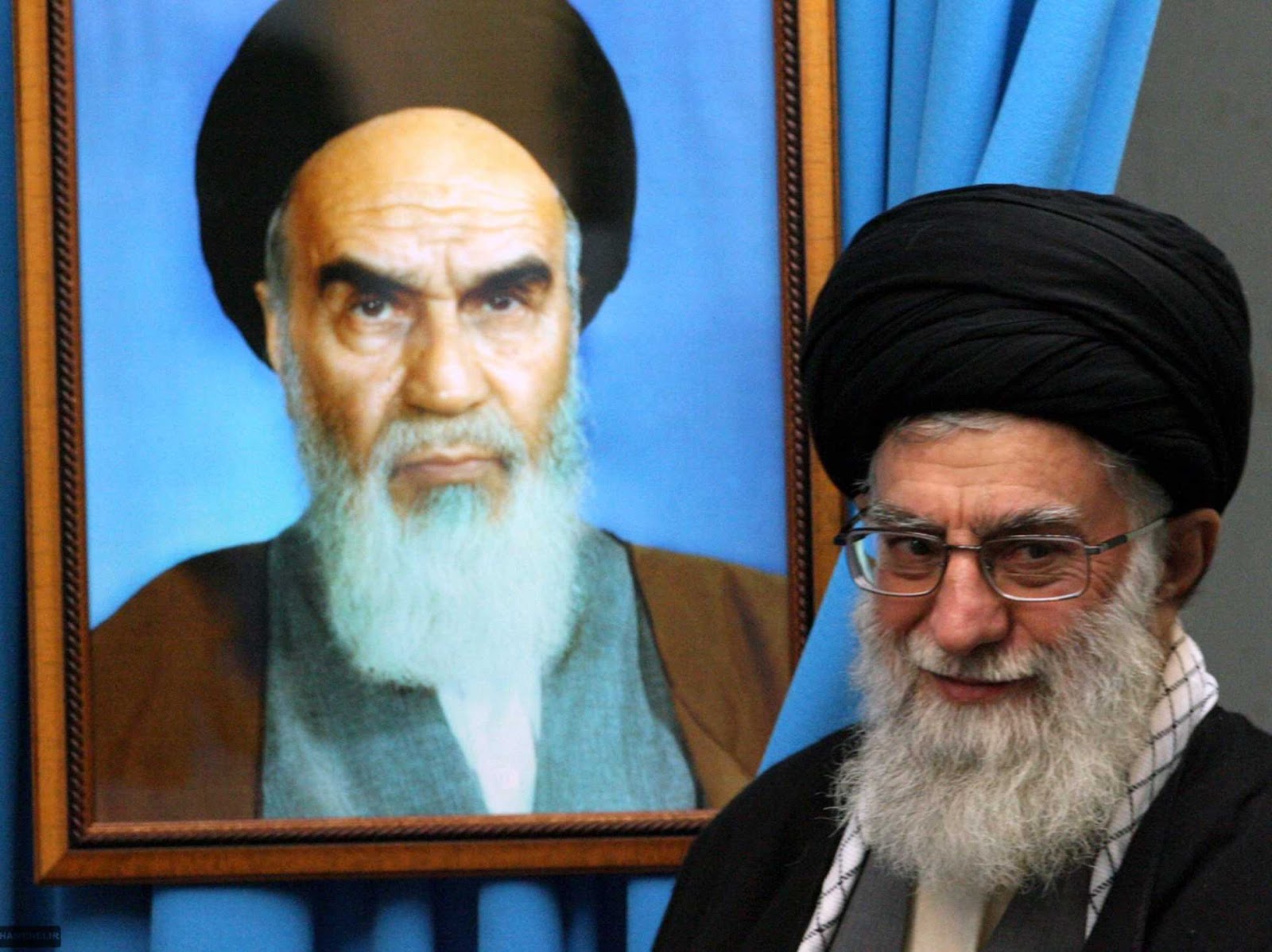
The first was the burden of history. When Ayatollah Khomeini set up the Supreme Leader system, the Islamic Republic of Iran was a new state (in the sense of a new constitutional order), fresh out of the 1979 Iranian Revolution. It had all the excitement of a new revolutionary project without any burden of past failure.

By contrast, that Gorbachev was trying to change so much was a massive signal that the CPSU had a legacy of failure. Why would anyone believe in its capacity to guide Soviet society when the entire enterprise of reform, of perestroika and glasnost, was an admission of failure? As Alexis de Tocqueville pointed out, the most dangerous time for a bad regime is when it attempts to reform:
The regime which is destroyed by a revolution is almost always an improvement on its immediate predecessor, and experience teaches that the most critical moment for bad governments is the one which witnesses their first steps toward reform.
Not only is there the burden of past oppressions and failures--which the attempt to reform itself is an admission--but there is also the signalling effect between people, as Tocqueville also noted:
It is almost never when a state of things is the most detestable that it is smashed, but when, beginning to improve, it permits men to breathe, to reflect, to communicate their thoughts with each other, and to gauge by what they already have the extent of their rights and their grievances. The weight, although less heavy, seems then all the more unbearable.
Which steadily and increasingly became a problem for Gorbachev; particularly as national identities and grievances came to the fore. That national identities had far more enduring power than Soviet identity would have surprised Mussolini not at all. People simply did not believe in Leninism: at least not insofar as it was built around the vanguard role of the CPSU. Conversely, in Iran, Islam has continued to have the coordinating power of shared belief.

Loss of asabiyyah
After the coup attempt of August 1991, Gorbachev had a much more personal problem. The leaders of the coup were the people he had picked, and they had attempted to overthrow him. Nor could he take credit for the defeat of the coup. Boris Yeltsin, who could and did, mercilessly and publicly used that Gorbachev himself had appointed the coupists against him. Gorbachev's personal authority was fatally undermined, and with it any lingering notion of a Leninist "deep state" melted away.

Indeed, so weak had the power of Leninism as a coordinating belief system become, even the coup plotters themselves were pathetically unable to act effectively. As Rosa Luxemburg had predicted, the only "live" element left in Lenin's project was bureaucracy, and it turned out that bureaucratic self-interest alone simply could not provide the coordinating impetus needed in a crisis situation.

Leninism is a secular philosophy, promising transformation in this world. After 73 years of the CPSU's failure to achieve any such transformation, why would anyone believe in it or its motivating ideology? Even if their own position rested on that claim. (In some ways, especially so--at least in a crisis situation.)

Gorbachev might had believed, since it buttressed his authority, but it could no longer provide him with the necessary number of sufficiently dedicated cadres. Not least, because his policies were so overtly a departure from the past, that it became very unclear where he was leading people to.

Ibn Khaldun (Cairo).
To use the language of the first (and arguably greatest) of historical sociologists, ibn Khaldun, the asabiyyah of the Party-State elite had dissipated and so the regime crumbled. (A nice discussion of ibn Khaldun's concept is here.) Especially when Gorbachev's own policies allowed folk to publicly signal how much they did not believe, while propaganda was no longer signalling the strength (pdf) of the regime.

The Islamic Republic of Iran continues to be able to use Shia Islam as coordinating belief for its necessary controlling cadre running the "Deep State". The contrast with "we are the end of History" Leninism is a rich irony for those familiar with modernisation theory.

A doomed project
But any project of trying to marry Lenin with Luxemburg was doomed. The project of social and human transformation requires such a concentration of social power that any attempt to bridge the gulf between those doing the transforming and those being transformed must fatally undermine the entire project. For if those being transformed have sufficient standing to have a serious say, how can the transformers possibly have the knowing authority to undertake the transformation? If mechanisms are created that give those being transformed as serious say, how can those doing the transformation have sufficient power to do so?

Which is why Lenin and Luxemburg were both right. Yes, that level of concentration of power is needed for the project to be attempted (Lenin) but doing so creates brutalising dictatorship where bureaucracy (the power of the Party-State apparatus) becomes the only "live" element (Luxemburg). So, you have to pick one. You either go with the Jacobin model as updated by Lenin and give up any notion of significant popular participation in politics. Or, you accept the human costs are too high and accept the primacy of popular participation in politics--the Social Democratic option. Which, given the limitations of command-and-control for economic coordination, means going down the capitalist road of market economics.

Though there is, in fact, a third option. You keep the political domination that totalist politics involves but give up the transformation project; accept the limitations of command-and-control for economic coordination and go down the capitalist road without popular participation in politics. The path that the People's Republic of China and the Socialist Republic of Vietnam are on. Both are states with ruling Leninist parties presiding over market economies but retaining their political domination. A path where national greatness rather than social transformation becomes the central political project.* Hence contemporary China resembles the vision of Chiang Kai-shek far more than it does that of Mao Zedong. [See also.]

Mussolini would approve. He would also feel vindicated. For that is precisely how he built Fascism--accepting the totalist model of politics Lenin had updated but changing the political project. You might even call it the Third Position.


* Of course, Slobodan Milošević of Serbia also went down that path. Wasn't that fun.

[Cross posted at Skepticlawyer.]