Thursday, September 26, 2013

Thompson troubles


Economist Earl Thompson (1938-2010) developed a theory which (pdf) postulated that defense externalities are what made (pdf) taxing imported consumer durables such a common tax policy. The idea being that build-up of local capital made a taxing-jurisdiction more of a target for aggression, so taxing such goods and various forms of capital adjusted for the increased danger; it internalised the costs of said danger. A "coveted capital" theory of taxation. A theory extended to postulating the role of guilds (pdf) as limiting capital formation to reduce the "coveted capital" defense externality, providing a city defense force and a source of emergency war finance.

Easy tax targets
As someone conversant in Australian political history (pdf), and aware of how well Ronald Rogowski's application (pdf) of the Stolper-Samuelson theorem and Heckscher-Ohlin analysis (abundant factors of production favour free trade, scarce factors favour protection) explains patterns of C19th trade policies, I find the thesis on the levying of tariffs deeply unpersuasive. (Do we really want to postulate that protectionist Victoria felt more vulnerable to aggression than free trade New South Wales or Western Australia?)  This is not helped by Thompson's fantasy economic history which sees competition for productive individuals as a fundamental driver of historical taxation strategies.

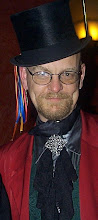
Earl Thompson
Earl Thompson
Firstly, the classic response to serious competition for productive individuals--that is, labour scarcity--was bondage; serfdom or slavery. Serfdom if the targeted population was local (it required less effort than slavery and did not affect fertility), slavery if the labour needed to be imported (as they were stripped of any connections--enslaving was "social death", typically in situations where actual death was the alternative--it was easier to make people property and they could be replenished by further imports).

Moreover, consumer durables are an easy taxation target (hence export or import tariffs being levied on them at different times and places). Given the historical importance of administrative costs in driving policy (particularly tax collection), no further explanation is needed for taxation to target high-value, relatively easily spotted, goods. Particularly as, before the Industrial Revolution, land and trade were the dominant (pdf) revenue sources and the dominant targets of aggression. (Nomad peoples had their herds, but they were difficult targets except from other nomad peoples.) Any accumulations of capital were overwhelmingly trade-derived. Thus, accumulating consumer durables and fixed capital were by-products of much more basic targets for aggression. People did not think folk magically acquired wealth. Walls around cities not only protected residents and their wealth, they also protected the trade-nodes, and provided a base to dominate the farm lands, which generated said wealth.

Hoping to acquire some moveable wealth
To the extent that Thompson has a point, it would make rather more sense to say that taxing imported consumer durables, or structuring your tax system so as to target wealth concentrations, is aiming for an optimal trade-off of where the revenue is most accessible and who has most to lose from successful aggression against the state and its trading interests (internal or external). One does not have to postulate some extra defense externality, given that defense and public order are already public goods. Especially as states were generally keen to grab what trade or land income they could. Indeed, the revenue value of trade and land generally dominated fixed capital or moveable wealth quite strongly for those organised to extract same. Thieves, raiders and looting soldiers would be more attracted by moveable wealth (rather than the fixed capital that Thompson focuses on), but that goes back to who had most to lose.

Missing the past
Since Thompson claimed his original insight came from looking at the American tax system, he may have simply failed to grasp how relatively unimportant capital was as a source of wealth and revenue in pre-industrial societies compared to capital's post-Industrial Revolution dominance of both. He certainly does not seem to have grasped the importance of the labour/capital ratio for wage levels, given his speculations about (pdf) wages possibly heading back to subsistence levels. (Regarding the importance of land/factor ratios, bondage systems were typically attempts to evade the return-to-labour implications of high land-to-labour ratios and/or trade effects driving up the value of easily-supervised labour.)

As for competing for productive individuals via tax policy; where competitive jurisdictions operated, far more basic matters of protection of person, property and commerce were typically much bigger factors in policy competition than mere tax policy. Indeed, places which offered the best protections of person, property and commerce could typically tax significantly more than places which did less well at such. Hence parliaments provided a taxing advantage (pdf) as they allowed negotiation of higher tax-benefits trade-offs. The extreme example being the United Kingdom at the time of the Opium Wars squeezing close to fifty times more (pdf) taxes per head out of its population than did Qing China--taxing a richer population (itself not an outcome independent of Parliamentary mechanisms) about nine times the Qing rate per head--such that the central government of the United Kingdom had four times the gross income as did the central government of Qing China.

Guilding the lily
Thompson seems to regularly fall into a trap that is perhaps natural for modern analysts--to discount how pervasive and basic concerns for internal public order, and how constraining administrative costs, were for past societies. His discussion, in his analysis of the defense role of guilds (pdf), of the length of time apprentices were bound to their masters misses the point, for example, that young men without family or property attachments were, quite reasonably, regarded as prime threats to social order. Legislating to bind them to their masters until they were 25 might indeed have provided a pool of military manpower for a town or city (though surely not a particularly large one; the role of craftsman in city defense extends well beyond just apprentices) but it also acted as a mechanism of social control. While standard periods and ages for indentures reduced transaction costs for enforcement in societies where enforcement was a serious issue.

Guild members using their fixed capital
There is also something of a tension in arguing that guild restrictions reduced the "coveted capital" defense externality by reducing capital formation (internalising the increased defense risk) while also claiming that guilds were a key source of emergency war finance. (A role which, along with the contribution of apprentices to city defense, is postulated but never quantified; even for rough orders of magnitude.) In the medieval period, general tax levies and bankers were the dominant sources of war finance. The most obvious exception being Venice developing the first bonds, the prestitiin 1171. That in a city with, as Thompson notes, a strong guild system.

Moreover, indentureship was a widespread mechanism across complex societies which had the normal effect that binding to a workplace did--it reduced the cost of labour. In the case of apprenticeships of various forms, it helped to generate a more reliable return from training. Arguing, as Thompson does, that the negotiated upfront lump sum used to purchase an indentureship blocked the effect misses the role that the lump sum played in compensating the master for risks involved in the untested aptitude, character and commitment of the (very) young apprentice-to-be. After all, if the upfront lump sum used to purchase the indenture could deal with the return-to-training-effort, why bother with any set indenture time at all? Conversely, if time-required covered the risks, why bother with the upfront lump sum? (There is some analogy here with charging both a base fee to enter a network plus a fee for usage.)

Even for training systems aimed explicitly at training warriors, time-serving requirements seem to have been dominated by return-for-effort considerations. The page-squire foster-training system of the knights was less time-serving constrained than apprenticeship typically was because part of the trade-off was establishing connections between knightly families (and the knight provided training but not their squire's equipment). Conversely, slave-soldier systems (notably mamluks) were (far) more time-serving constrained than apprentices (mamluks stopped being slaves once trained but their obligation to serve continued) as the cost of training and equipping a mounted armoured warrior was so high and there were typically no outside connections to trade-off against (precisely the attraction, but also the danger, of such warriors).

Guild heraldry showed who they were protecting
The most curious absence from Thompson's analysis of guilds as the apparently absolutely militarily and economically crucial institution from the early medieval period to as late as 1900 in Russia is; what was in it for the guild members? As Thompson points out, guilds typically set maximum prices and minimum quality standards (the reverse of what a conventional monopolist would do) and limited the ability of masters to expand their operations. Since guilds only made sense if they helped their members, surely the first place to look is to ask what benefit such provisions provided to guild members.

Limiting the scale of operations spread the commercial joy, making it easier to cooperate, and increased the number of masters (and journeymen), giving them more collective weight in city affairs. (Unions make similar trade-offs when, for example, teacher unions agitate for limits on class sizes.)

Moreover, a guild could not be a conventional monopolist because it was not a single firm but a collection thereof. Any restrictions had to benefit all the members without requiring excessively costly negotiation of distribution of gains or enforcement costs; a guild was at best a cartel rather than a conventional monopoly. One, moreover, that could not ensure complete exclusion of outsiders, as city authorities could, and periodically did, grant the "freedom of the city" to crafters refused guild membership. Maximum prices and minimum quality standards provided positive branding for guild members and had much lower enforcement costs than did the reverse. This gave guilds standing, which made them much more effective as political organising and protection devices for their members. Highly desirable to have in a medieval world of expanding trade and complex jurisdictional interactions.

Guilds were first and foremost embedded in the commercial life of cities, and it is there that analysis has to look first to to explain their characteristics; not the taxing of postulated extra defense externalities which also contradict their (completely unquantified) alleged value as sources of emergency finance. Especially as church and merchants were more important concentrations of urban wealth than crafters.

Thompson is also quite wrong to claim that tax levels rose to tax away (pdf) the labour scarcity effects of the Black Death; the later C14th and C15th were periods of sustained higher incomes for peasants and workers across most of Europe. (Not so much in Spain [pdf], but that was because it disrupting trading networks in what was already a labour-scarcity economy.) Neither the standard "labour trapping" techniques of bondage or walls were employed--likely not the former because European states lacked the military incentive to support re-introduction of bondage while the latter was not a practical option. So competition for labour drove wages up.

Missing the present
Even on contemporary dynamics, Thompson's characterisation of the Western victory in the Cold War as reducing competition for (pdf) productive individuals also seems wrong-headed. Yes, it has weakened the bargaining position of states vis-a-vis the US and Western-supported international organisations, but competition for productive individuals seems to have, if anything, become more intense; it is just that the effect has been more than counteracted by the massive broadening of labour supply for globally-traded goods. Contra Thompson, in explaining the US experiencing prolonged economic expansion in the 1990s without median wage growth, December 1978 is a much more important date than November 1989 or December 1991.

Similarly, his suggestion that (pdf) US support for policies which produced the German and Japanese economic miracles were a form of "hostage" wealth rather misses the point that it was in the US interest for countries bordering Command economies (West Germany, South Korea, Japan, Taiwan) to do as well as possible to sharpen the competition and that there was an explicit US defense guarantee for all four countries precisely because they were border states. (The outbreak of the Korean War being a salutary lesson in what happens when one fails to be explicit about such matters.)

Missing both
The first time Thompson's economic history annoyed me was when he characterised China as (pdf) having been on the gold standard. Apart from the southern Warring State of Chu, gold has not been (pdf) a significant monetary metal in China. Silver was often a medium of account in Chinese history, but characterising that as a "gold standard" for definitional simplicity is to feed the way overdone mystique of gold.

Thompson dismisses free rider issues with remarkable abandon when convenient, treating notions of collectively-acting ruling classes and providers of "ideology" as unproblematic. Given the challenge the work of Mancur Olson posed on the difficulty of collective action, the work of Elinor Ostrom on what is required for effective management of common property, and the work of Peter Turchin (building on the original insights of Ibn Khaldun) on the difficulties in generating and maintaining asabiyyah (common feeling or group coherence), this is not a persuasive way to proceed. Moreover, Thompson treats the issue of the power of "ruling classes" over policy and institutions as unproblematic whenever convenient but it suddenly becomes contestable when that is convenient. Indeed, Thompson's notion of (pdf) "poison pill" asset bubbles designed to forestall revolution descends into history-as-conspiracy. (Just think about the information control requirements, let alone the wider coordination issues, for such a putative policy.)

Given that autocracy has been historically the most common political form, the principal-agent problems all have rulers faced, and how contested political power perennially is within and between power groups, Thompson assumes away much of the stuff of history--particularly in the evolution of institutions and public policy. It is one thing to analyse, for example, status behaviour as a club good; quite another to postulate high levels of collective action in situations of intense competition for power (or, for that matter, intellectual prominence). Some of the analytical consequences of doing so, such as his "bad economic theory" explanations (pdf) for the collapse of the (Western) Roman Empire and French Revolution, are just bizarre. Thompson's apparent notion that laissez faire free trading views have been the prime significantly policy-distorting beliefs (apart from what he calls Hellenism*) is not much better.

Thompson's use of democratic and democracy is also unfortunately loose; he applies the labels to times and places which were not remotely democratic in any serious meaning of the term. Thus, when C19th thinkers argued that democracies could not manage, let alone survive, great crises (such as wars and civil wars), the success of the United Kingdom in its Second Hundred Years War with France was, quite reasonably, not counted as a counter-example. Thompson calling the 1688 Glorious Revolution "democratic" is, to put it mildly, a stretch. Using the far more accurate term Parliamentary might have productively expanded Thompson's concern for coordinating mechanisms. While referring to (pdf):
Byzantium's unique form of democracy (p.162)
is simply bizarre. Referring to (pdf):
an early-ninth-century renaissance in ancient Chinese religion and effective democracy (p.1)
is hardly less so. Whatever he meant by the term, it does not have much connection to anything resembling normal usage.

I am also not much impressed by claims such as that his brilliant insight on taxing to deal with defense externalities was rejected because (pdf) it upset the preconceptions of, and demand for, economists. The Austrians play this game about why economists in the 1930s, after a brief surge of interest, rejected the Mises-Hayek Austrian business cycle explanation of the Great Depression. However flattering it is to the adherents of the theory ("we are so much more public-spirited than you lot") I find a much simpler explanation to be that neither theory is a persuasive explanation of what it purports to explain. And my income or potential income does not depend in the slightest on whether I agree, or disagree, with either theory.

Earl Thompson is fondly remembered by various prominent economists, was clearly an original thinker and his papers on monetary matters (pdf) in particular (pdf) can be read with profit (pdf); though I prefer David Glasner's reworking of Thompson's discussion of classical monetary theory. Thompson also has a rather delicious (pdf) rational expectations and efficient market analysis of the 1630s Dutch Tulip mania. Thompson's more general economic history is, however, not to be relied upon. He seems to have become far too wrapped up in his "coveted capital" theory of taxation, the explanatory power of its alleged defense externality and the analytical presumptions needed to make it all hang together.

Note
Hellenism (pdf) (the curse of Plato, Aristotle and Socrates):
... gives a social thinker a hubristic, unrealistically positive, self-image, and a similarly unrealistic image in the eyes of a similarly educated employer ... Its effect on bureaucratic decision making has been to give bureaucrats a license to interpret facts so as to benefit the classes of people they consider most deserving. In particular, a bias against successful investors is observed among Hellenists (p.152).

[Cross-posted at Skepticlawyer.] 

Wednesday, September 18, 2013

Ronald Coase 1910 - 2013


Ronald Coase, the 1991 Nobel Memorial Laureate in Economics, passed away on 2 September at the age of 102.  He was working to the end, having recently published a co-authored book on China. A good one.

0226111016
I have loved Coase's work ever since I first came across it. He won his Nobel Memorial for essentially two articles. One he wrote as an undergraduate in his 20s, the 1937 article The Nature of the Firm (pdf).  The other was published in 1960, The Problem of Social Cost (pdf), the most cited law article. Both pieces, plus his somewhat notorious The Lighthouse in Economics (pdf) and some other key articles and essays, were published in 1988 in his The Firm, the Market and the Lawavailable on Amazon in Kindle edition for $US15.12.

Buy or do?
Coase is best known for a concept he did not name--transaction costs--and a theorem he did not formulate--the Coase Theorem. The concept of transaction costs first appears in a 1931 article by economist John R. Commons. Coase, however, elaborated the concept and applied to a very practical problem--why do firms exist? Why is not the price mechanism always used? Why does everyone not operate as sole traders trading their services in the market place?

As he sets out in his Nobel Memorial Prize lecture, having completed the course requirements for his degree in Commerce from the LSE in two years, but graduation requiring three years attendance, he spent the third year traveling the US studying vertical and horizontal integration of firms. Thomas Hazlett describes nicely what young Coase did in the introduction to a 1997 interview with Coase:
Coase's scientific methodology? He asked businessmen why they did what they did. One key question, for instance, involved why firms chose to produce some of their own inputs (vertical integration), and why they sometimes chose to use the market (buying from independent suppliers). He was fascinated by their answers, but even more by their astute calculation: Firm managers were keenly aware of all the relevant trade-offs.
Coase identified the costs of transacting as the key variable determining the answer and therefore the existence, and boundaries, of firms. Firms existed because it was cheaper to do some things within a firm than in a market place; that there were costs to using the price mechanism. One of those insights which is blindingly obvious once someone has pointed it out.

ronald-coase1
Ronald Coase
In doing so, he explicitly disagreed with economist Frank Knight's analysis that risk led to non-market transactions, establishing an on-going pattern where risk and transaction costs are the key factors used by economists to discuss institutional arrangements. For example, Deidre McCloskey and Stefano Fenoaltea's debate over the structure of medieval manors turns very much on the relative importance of transaction costs and risks. Similarly, a paper on (pdf) taxation policy in the Ottoman Empire looks at the balance of risk and transaction costs according to what level taxes were levied at. If risks were more constraining, it made sense to tax at a more territorially encompassing level, so risks could be pooled. If transaction costs were more constraining, it made sense to tax at a more local level, so local knowledge could be used.

Economist Yoram Barzel has offered an analysis of the boundary of the firm which puts risk back at the centre, the boundary being set by the range of transactions guaranteed by the equity capital. Though transaction costs are hardly irrelevant in that decision. Especially as risks can be transferred--to other transactions, to other agents, across time--while risks and transaction costs overlap.

Coase's insight also make it easier to see how the IT revolution and the Internet has affected both the structure of firms and the variety of commercial and other arrangements.

While Coase's insight on the boundary of the firm may be obvious in retrospect, the insight remained remarkably fallow in economics for decades. As Coase himself noted in his Nobel Memorial lecture, the concept needed to be "operationalised", quoting 2009 Nobel Memorial Laureate Oliver Williamson. As was done by such scholars as Williamson himself, Steven Cheung and Harold Demsetz. But informing and inspiring the work of other scholars is what makes great insights intellectually productive.

Social costs going both ways
If the idea at the heart of The Nature of the Firm seems obvious in retrospect, there is nothing obvious in the massively counter-intuitive idea at the heart of Coase's other seminal piece, The Problem of Social Cost, which is that, in a world with costless bargaining, it may make no difference to the net social outcome whether a producer has liability for the damage they cause or not. If they have liability, they can pay others for the damage caused to them. If they have no liability, they can be paid by others not to do the damage. Either way, the same level of production will be agreed to. As Coase himself put it in that 1997 interview:
The law of property determines who owns something, but the market determines how it will be used.
The operative term is in a world of costless bargaining. Coase's intent was to draw attention to the role and importance of law in a world of positive transaction costs and to the reciprocal nature of the problem of damage (i.e. both the doing and the not doing cause costs to someone). But it is much easier to model a world with zero transaction costs. Economists became entranced by the world of what 1982 Nobel Memorial Laureate George Stigler termed the Coase Theorem--that, in a world of zero transaction costs, private and social costs were the same. It was a world without externalities (a term Coase did not approve of) because they could all be bargained away.

This fascination with an unreal zero transaction costs world of tractable models frustrated Coase. As he wrote in Notes on the Problem of Social Costs:
The world of zero transaction costs has often been described as a Coasian world. Nothing could be further from the truth (p.174).
But this unreal world was great for mathematical models. As Coase wrote at the end of Notes on the Problem of Social Costs:
In my youth it was said that what was too silly to be said may be sung. In modern economics it may be put into mathematics (p.185).
It was not that Coase was against the use of mathematics in economics. Far from it. He just wanted the maths to have a strong connection to the world we actually live in.

Which is a world where price mechanisms are not always used because it is a world of positive transaction costs. Hence not only firms but also laws and institutions. Coase's insights became central to analysis of firms, to law--the entire field of law and economics flows from his insights--and economic history. The last is most obvious in the work of 1993 Nobel Memorial Laureate Douglass North with his analysis of institutions as ways of dealing (indeed minimising) transaction costs but it also lurks underneath 1993 Nobel Memorial Laureate Robert Fogel's work on the efficiency of slavery. Anyone who reads a significant amount of economic history becomes very aware of how basic transaction costs are to making sense of history because they are so important to making sense of law, rules and institutions. No wonder economic historians find Coase's insights so useful.

(As an aside, the committee which picks Nobel Memorial Laureates does seem to like folk who extend the ambit of economics, the most imperial of the social sciences.)

Institutions can be analysed longitudinally (across time) but also laterally (across space). Coase's insights are a fundamental building block of 2009 Nobel Memorial Laureate Elinor Ostrom's work on common property and the evolution of rules to manage them.

Coase himself pointed out that what became known as transaction costs had already been basic in economic analysis of the origins of money--particularly in the famous coincidence of wants problem. Search costs are a basic transaction cost and a reason to have money. More recent work on "money is memory" (pdf) and money as a response to limited enforcement is yet another form of transaction cost analysis.

Coase was very aware of the difference in how lawyers and how economists think while linking between the two mindsets. As he notes in The Problem of Social Cost, lawyers are concerned first with establishing who has the legal right to do what, and then working through the consequences. Economists look to what bargains can be made.

Coase pointed out that exchange was not merely about physical items, but about bundles of rights to bundles of attributes. Harold Demsetz's famous beaver trade analysis (pdf) of the origins of property rights based on the cost and benefits of internalising externalities is very much based in such Coasian perspectives.

Coase's insights made it easier to see that any exchange is first and foremost an exchange of ownership. Mere physical possession can be resolved in any particular instance by force; who is functionally stronger and sufficiently motivated? It is accepted rights to which create enduring bargains.

Spreading influence
It is an instructive exercise to go through the list of Nobel Memorial Laureates and see for how many of them their seminal work was based--explicitly or implicitly--on the insights of Ronald Coase. Insights conveyed clearly and lucidly without any more mathematics than simple algebra and arithmetic.  Indeed, his two seminal articles should be read by anyone interested in social analysis.

nobel_economics_medium
Ronald Coase was not, however, a public intellectual in the way of KeynesHayekFriedman or Krugman. Though his work was instrumental in developing the key arguments for privatisation: indeed, the Problem of Social Cost was written as a result of a previous article on privatising the radio spectrum being challenged by Milton Friedman and other University of Chicago economists in a memorable night of argument.

Coase drew attention to the necessity of laws, rules and institutions, but also wanted economists to be a bit more sceptical about government intervention than they had been--as he pointed out governments are not immune to transaction costs. One of the reasons he disliked the concept of externalities (apart from obscuring the reciprocal nature of the issue of effects) is because he thought it encouraged intellectually lazy presumptions about government intervention. Particularly when economists did not stop to enquire how much of current private actions rested on government protections and exemptions.

Or whether other possibilities had arisen. Coase's The Lighthouse in Economics points out that the historical record regarding lighthouses does not conform to "no private provision of lighthouses is feasible" presumption of prominent economists. Elinor Ostrom's investigation of the wide range of possibilities between private ownership and government control in governing of common property is very much in the same spirit--yes, but what do people actually do, and why? There is a Coase Institute which seems to be motivated by the spirit of its namesake.

Coase may not have been a public intellectual in the way of more famous economists, but that apparently did not stop him attracting the ire of would-be policers of academic opinion. Both he and 1986 Nobel Memorial Laureate James Buchanan were apparently encouraged to leave (via) the University of Virginia because they were regarded as too "right wing". Coase refers to the hostile sentiment in the aforementioned 1997 interview:
They thought the work we were doing was disreputable. They thought of us as right-wing extremists. My wife was at a cocktail party and heard me described as someone to the right of the John Birch Society. There was a great antagonism in the '50s and '60s to anyone who saw any advantage in a market system or in a nonregulated or relatively economically free system.
A particularly silly view of Coase, as British pragmatism seems to be the best description of his views: but insisting on evidence-based policy can get in the way of all sorts of glib presumptions. As Dr Barry Marshal, the 2005 Nobel Laureate in Medicine, was also encouraged to leave said university, the University of Virginia may have an inglorious record in the number of Nobel Laureates discouraged from working there. (Though comfortable conformity is, I suppose, a branding.)

The economic blogosphere has some fine posts on Coase, with more good things in comment sections. Scott Sumner has a nice short post, Lynne Kiesling has a post with lots of links. Peter Boettke has an nice discussion of Coase's contributions.

Coase himself said of his work that:
I’ve never done anything that wasn’t obvious, and I didn’t know why other people didn’t do it. I’ve never thought the things I did were so extraordinary.
But is not pointing out the obvious-in-retrospect a mark of truly great intellectual contributions? To me, Coase is the most important economist of the C20th as his insights so expanded the ability of economics to usefully analyse social phenomena. If you think that claim of importance is too big a claim, I refer you back to the list of Nobel Memorial Prizes in Economics and how many of them had their seminal work based, at least in part, on Ronald Coase's insights.

Which he originally came to by asking folk about how they reached particular decisions. Businessfolk often seem to be the only living group academics feel entitled to analyse without ever seriously (or even not seriously) talking to any about what they do and why or ever using any work or evidence from someone who had. Here's a challenging thought: without Coase's work, how many economists would be in that situation?

[Cross-posted at Skepticlawyer.]

Thursday, August 1, 2013

I will return

I have been blogging regularly at Skepticlawyer.  My posts there will turn up here, eventually.

Tuesday, April 30, 2013

Of fact and fiction


Novelist Kerry Greenwood (the author of the Phryne Fisher books, now a successful TV series), has recently published a book on the Somerton Man mystery, Tamam Shud: the Somerton Man Mystery. The book interweaves Kerry's memories of her late father--a wharfie who loved telling stories--and her memories of Adelaide with the famous mystery of the unidentified man dead of unknown causes found on Somerton Beach in 1948. The tale being one of her father's stories--odd and memorable because it had no conclusion. The title of the book comes from the torn-out scrap of The Rubayiat of Omar Khayam that was found in a secret pocket in the dead man's suit. It is not really "true crime" because it is not clear there was a crime; it may have been murder, but it could also have been suicide, or natural causes. (Declaration of interest: I did some of the research for the book.)

A review of the book in the Sydney Review of Books notes with some emphasis Kerry's comfort with her working class origins and bemoans an allegedly missed opportunity to challenge the distinction between fact and fiction:
Someone in love with their form can see infinite potential within it, and Greenwood’s storytelling is impeccable, engaging, great fun. But someone in love with their form can also miss the potential that lies in breaking away from it, shifting familiar parameters to suit the demands of a different kind of story. Greenwood’s curiosity is so infectious, her stories so interesting, and the mystery of Somerton Man so fascinating, that this flaw can easily slip past us. And yet Tamam Shud strikes me as a missed opportunity to challenge the separation of fiction and non-fiction, and bring them together in some kind of whole. It’s almost as if the book is haunted by Adelaide’s psychic dualities.
Actually, the reviewer writes 'fiction and non-fiction', which lacks the blunt directness of 'fact and fiction'. The latter phrasing can be expected to resonate with someone who is legal aid solicitor operating in magistrate courts, where separating fact from fiction is rather the point of the exercise. Facts about the law, facts about the case.
4398914-3x4-700x933
In fact, an unsolved mystery such as that of Somerton Man rather starkly reveals the distinction. Fact turns on what is known, fiction has no such limitation. For it is a work of creation, constrained in what can be known about the characters and their motives only by the decisions of the writer.

Fiction has other limitations. To be successful, it has to generate what J. R. R. Tolkien called (in On Fairy Storiessecondary belief. We have to be transported into the imagined world and held there.

The various forms of fiction also impose particular limitations. As Kerry Greenwood points out, a crime novelist has expectations to fulfil:
No coincidences are allowed in fiction … It is because readers of crime fiction rightly demand three things – a crime, a detective and a solution. Crime fiction is a puzzle and the author must play fair.
But fiction does not have the limitation of lack of knowledge--at least not about the characters, their action and purposes--because fiction is an act of creation. Where knowledge cannot take us, imagination can still venture. But then it is not fact, but fiction or speculation.

It is not that there was no complete story about Somerton Man. As the fictional crime novelist Castle observes in the pilot episode of the TV series of the same name in an exchange with detective Kate Beckett:
Richard Castle: I'm here for the story.
Kate Beckett: The story?
Richard Castle: Why those people? Why those murders?
Kate Beckett: Sometimes, there is no story. Sometimes, the guy is just a psychopath.
Richard Castle: [scoffs] There's always a story, always a chain of events that makes everything make sense. Take you for example. Under normal circumstances, you should not be here. Most smart good looking women become lawyers, not cops. And yet here you are. Why?
Kate Beckett: I don't know, Rick. You're the novelist. You tell me.
Richard Castle: Well, you're not bridge-and-tunnel. No trace of the boroughs when you talk. So that means Manhattan. That means money. You went to college, probably a pretty good one. You had options. Yeah, you had a lot of options, more socailly acceptable options. But you still chose this. That tells me, something happened. Not to you. No, you're wounded, but you're not that wounded. No, it was someone you care about, it was someone you loved. And you probably could have lived with that but the person responsible was never caught.
Richard Castle: [silence]
Richard Castle: And that Detective Beckett, is why you are here.
Kate Beckett: Cute trick. But don't think you know me.
Richard Castle: The point is there's always a story. You just have to find it.
Kate Beckett: [opens up letter and eyes grow wide] I think I just did.
[shows Castle letter with a drawing of the crime scene]
There is (or rather was) a chain of events which makes what happened to Somerton Man make sense. The facts are that much of that chain of events is lost in the passage of time, likely never to be recovered. It is not that there is no story, it is just that not enough is known for us to have the story. The story is not accessible, it is lost to the realm of speculation.

A guide to the land of Faerie
Which makes it splendid fodder for fiction, since the writer can do what reality can likely no longer do--provide a coherent story. Somerton Man does not blur the difference between fact and fiction at all, but renders the constraints of fact particularly stark. We are pattern-seeking beings, and having merely bits of the pattern, so that the story is lost, is frustrating. Hence the urge to find the missing pieces, the enticement of an unsolved mystery. Unsolved because the key bits of the pattern we want to discern, the story, the chain of events which makes things make sense, are lost to us.

But the distinction between fact and fiction is not quite the same has that between fiction and non-fiction. For fact has no audience, it just is. It may or may not be discovered, but is not less real for not being known--otherwise the process of discovery is something else. Non-fiction and fiction both have an audience (or at least seek to do so). They are aimed at an audience, at garnering a readership or viewers. One is an audience for facts, presented coherently; the other for tales, which offer a more complete coherence.

Non-fiction accepts the constraints of fact; which are heavy constraints. But does so without the joy and burden of creation that fiction both instantiates and labours under. Indeed, the constraints of fact are so heavy, much non-fiction fails to abide by them, intentionally or unintentionally, to a greater or lesser extent.

The commonalities of seeking an audience, and providing pattern and structure, do not, however, relieve the writer of the constraints of the difference between fact and fiction. On the contrary, they make those constraints of distinction even more important. To blur the distinction so that the reader does not know whether they are dealing with fact or fiction is not to play fair with the reader, with the audience. It is a distinction with a difference and a conscientious writer is always acutely aware of it.

Hence novelists, particularly historical novelists, typically research the facts of a period so they can invoke it more effectively. Getting the period details right also plays fair with the reader, that the world they are being asked to believe in could have happened; the more we believe in the possibility of its reality, the more we are transported into it. The more it has secondary belief.

Fiction can, after all, not only provide us with a sense of the past (or the future) but also the present. Over the years, many an observation by a novelist (particularly female novelists) on abiding emotional truths about people, and the interactions they have, has provided me with enlightenment, or solace, or both. Nor am I the only one, as this classic blog post I am a Dark Elf expresses nicely; how a Muslim immigrant can find inspiration in the story of a drow from tales set in the Dungeons & Dragons universe. A story has that much more power the more it is embedded in the reality of people, in emotional truth.

Yet, they remain made-up stories, things of secondary belief, of sub-creation, however great the art and perception they may embody.  The story of Somerton Man is not made up; it is opaque to us precisely because it is not made up. As Tolkien says of Fantasy, but applies to fiction generally:
Fantasy is a natural human activity. It certainly does not destroy or even insult Reason; and it does not either blunt the appetite for, nor obscure the perception of, scientific verity. On the contrary. The keener and the clearer is the reason, the better fantasy will it make. If men were ever in a state in which they did not want to know or could not perceive truth (facts or evidence), then Fantasy would languish until they were cured. If they ever get into that state (it would not seem at all impossible), Fantasy will perish, and become Morbid Delusion.
For creative Fantasy is founded upon the hard recognition that things are so in the world as it appears under the sun; on a recognition of fact, but not a slavery to it. So upon logic was founded the nonsense that displays itself in the tales and rhymes of Lewis Carroll. If men really could not distinguish between frogs and men, fairy-stories about frog-kings would not have arisen.
How real are you? Real enough for emotional power?
The appeal of fiction is precisely that it invokes the reality we live in but is not entirely constrained by it. In particular, it does not have the epistemic constraints of reality. There is precisely the level of mystery about people, their action and motives that the author chooses, and no more. Reality is nowhere near as obliging. We can only work with what we have or can find, with no guarantees or promises that it will be enough.

As reading Kerry Greenwood's rather splendid rendition of the mystery of the unknown man, dead of unknown causes, found on Somerton beach in 1948, makes very clear; a rendition interwoven with her past and that of her father's. To seek to blur the distinction between fact and fiction is not to provide new understanding, it is to betray the understandings that both can give us.

[Cross-posted at Skepticlawyer.]